
Mosquitoes can turn a relaxing backyard into a constant itch-fest. The good news? If you attack the problem the right way, you can stop them before they multiply. I’ve learned that the fastest wins come from finding where mosquitoes breed (usually standing water) and removing it. I’ll walk you through a simple, practical routine for both your yard and the spots around your home where they might slip inside. You’ll also get options for those stubborn water sources you can’t fully eliminate, plus guidance on safer sprays and repellents. By the end, you’ll have a clear “do this first, then this” plan that actually reduces bites.
Key Takeaways
- The most effective way to get rid of mosquitoes is to remove standing water where they lay eggs.
- Mosquitoes show up in two ways: breeding/production sites and resting sites—so you need to address both.
- Do a quick sweep of your yard for tiny water traps (even small containers and clogged drains).
- For standing water you can’t remove, use targeted larval control like mosquito dunks.
- If you also want bite protection, use EPA-registered repellents and sprays responsibly and follow label directions.
Quick Answer
To get rid of mosquitoes in your house and yard, I start by eliminating every source of standing water around my property (containers, clogged gutters/drains, tarps that trap rain, plant saucers, buckets, debris). Then I check likely hiding spots like shaded, damp areas near doors, windows, and dense plants. For standing water I can’t remove, I use mosquito dunks to stop larvae from developing. Finally, I protect myself with EPA-registered repellents or sprays for yard use when I’m outside.
What You Need
| Item | Purpose | Notes |
|---|---|---|
| Rubber gloves (optional) | Protects hands during cleanup | Helps when handling debris or wet containers |
| Flashlight | Helps spot water in dark corners | Great for garages, under steps, and shaded areas |
| Trash bags / buckets | Collects water-holding items | I toss or empty anything that can hold water |
| Long-handled tool / trowel | Reaches low spots and tight areas | For checking pot rims, saucers, and debris |
| Mosquito dunks (or similar larvicide) | Kills larvae in standing water | Use only where you truly can’t remove the water; follow label |
| EPA-registered insect repellent | Personal bite protection | Choose one suitable for your needs and follow directions |
| EPA-registered mosquito spray for yards (optional) | Reduces mosquitoes on surfaces/grass | Pick products approved for humans/pets/pollinators; use responsibly |
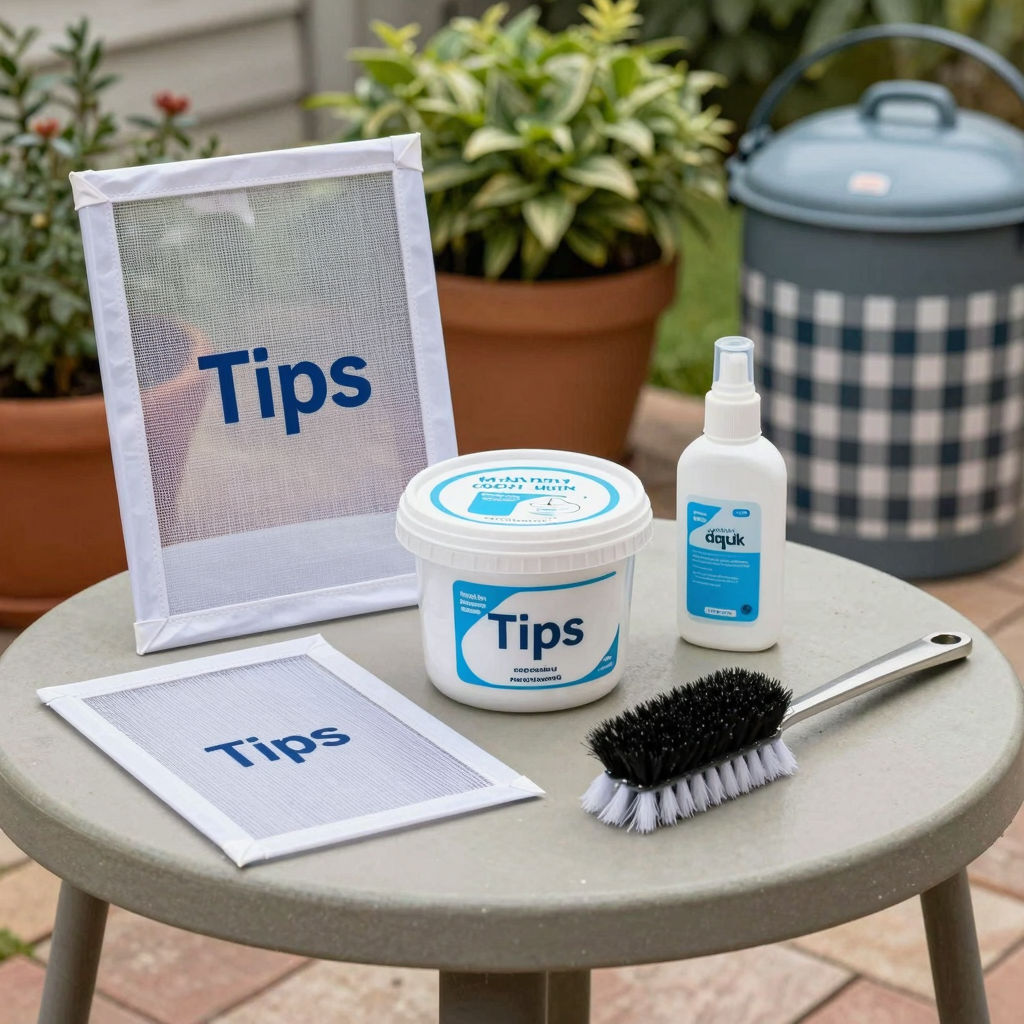
| Fine mesh screen / weather stripping (as needed) | Keeps mosquitoes out of the house | Repair gaps around doors/windows |
| Drain cleaner or tool (as needed) | Clears clogged drains | Used for gutter/downspout/drainage issues |
Step 1: Know what you’re really fighting (production + resting)
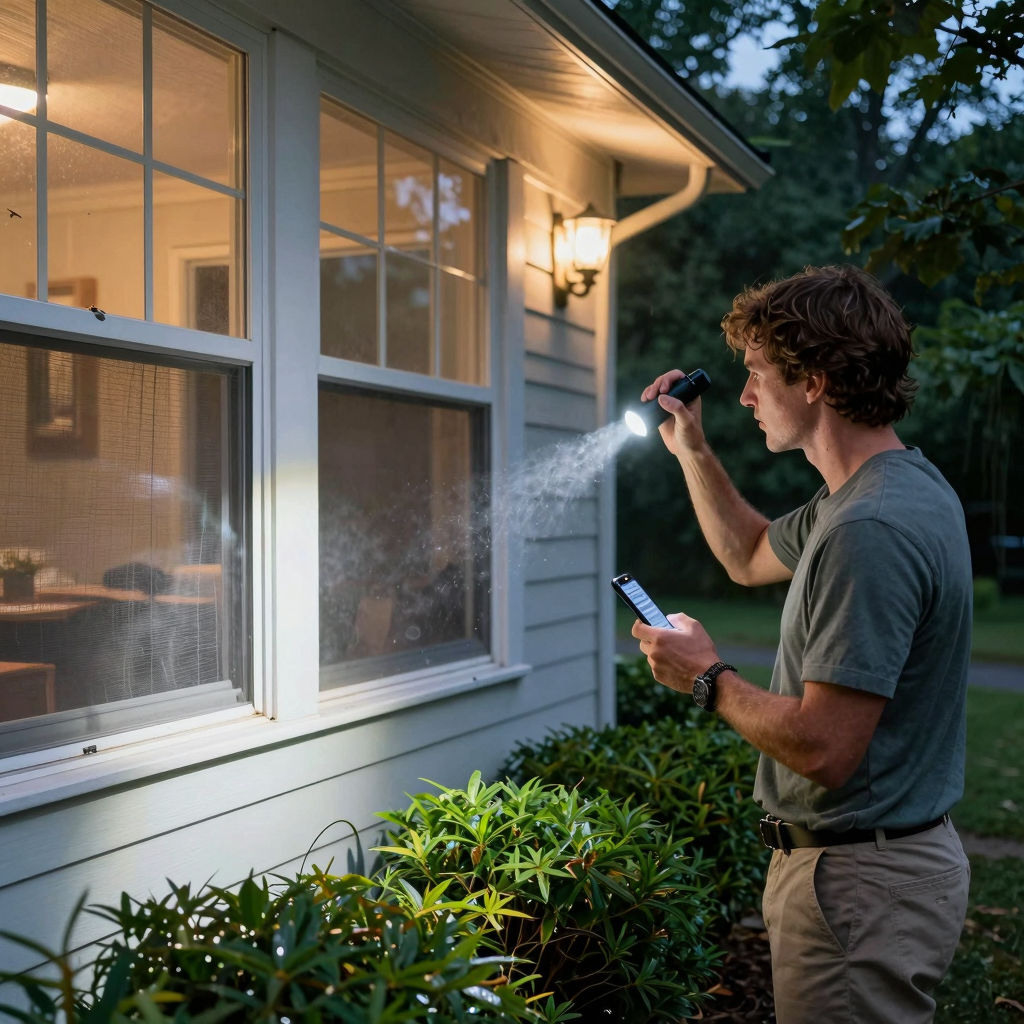
Before I start spraying or buying gadgets, I remind myself that mosquitoes don’t just “appear.” They’re usually coming from two types of places:
- Production sites: places that hold water long enough for eggs/larvae to develop.
- Resting sites: shaded, sheltered spots where adult mosquitoes hang out between bites.
Most yards have tiny overlooked water areas—a plant saucer that collects rain, a tarp that holds puddles, a bucket left outside, or a clogged drain. If I remove the breeding water, I’m removing the “factory,” not just swatting the adults.
Step 2: Do a standing-water sweep (yard + house)
This is the step that makes the biggest difference.
I walk my property slowly with a flashlight and keep an eye out for anything that can collect water, even for a day or two. Then I check:
- Buckets, planters, and trash cans
- Kids’ toys left outdoors
- Wheelbarrows, tarps, and covers
- Wheel ruts/low spots that hold rainwater
- Tree holes (if any)
- Buckets or containers under outdoor spigots
- Bird baths (if not maintained properly)
If I find water, I don’t just ignore it—I either empty it, tip it so it can’t collect, or remove the container entirely.
Step 3: Fix the “easy breeding zones” right now
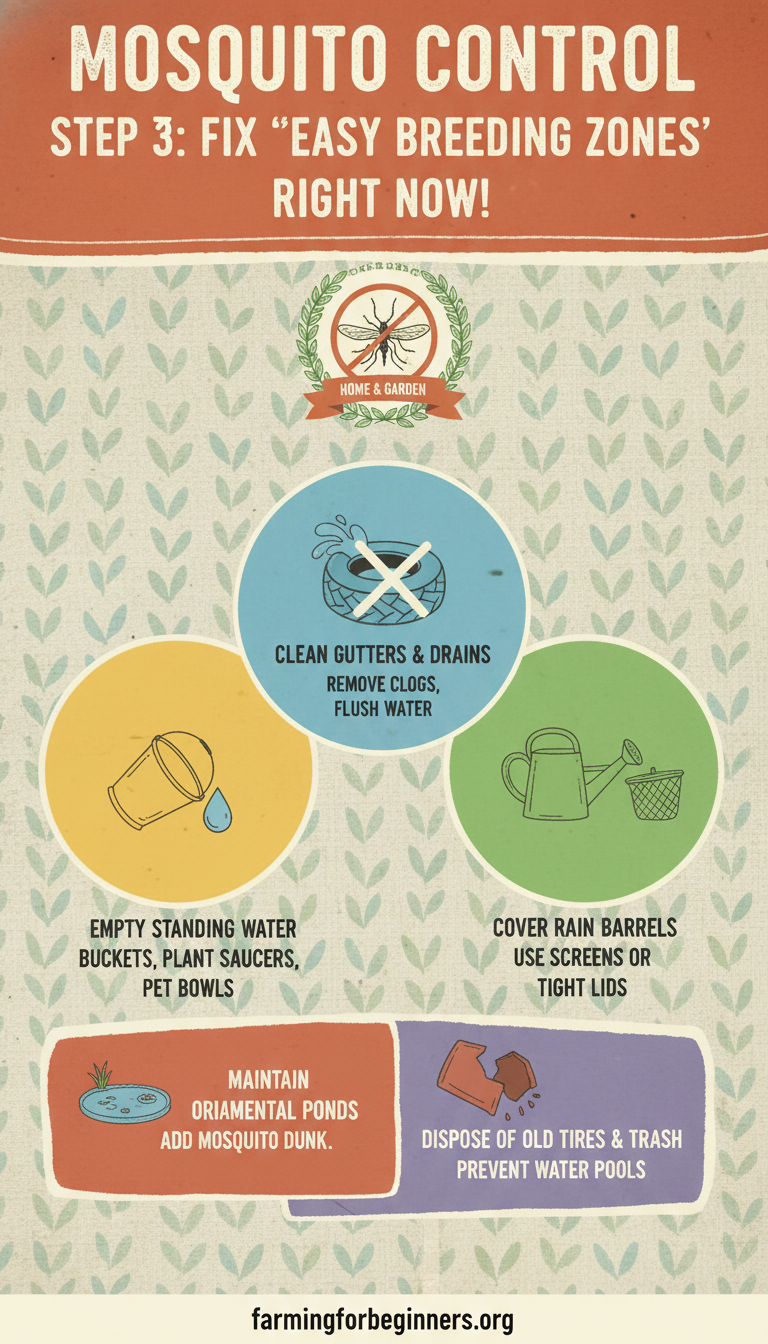
Now I tackle the most common problem areas first because they’re often close to where mosquitoes fly and bite.
Here’s what I typically do:
- Empty and store anything that holds water when I’m not using it (tools, buckets, planters).
- Check under plants and in garden beds—small cups or hidden hollows can hold water without me noticing.
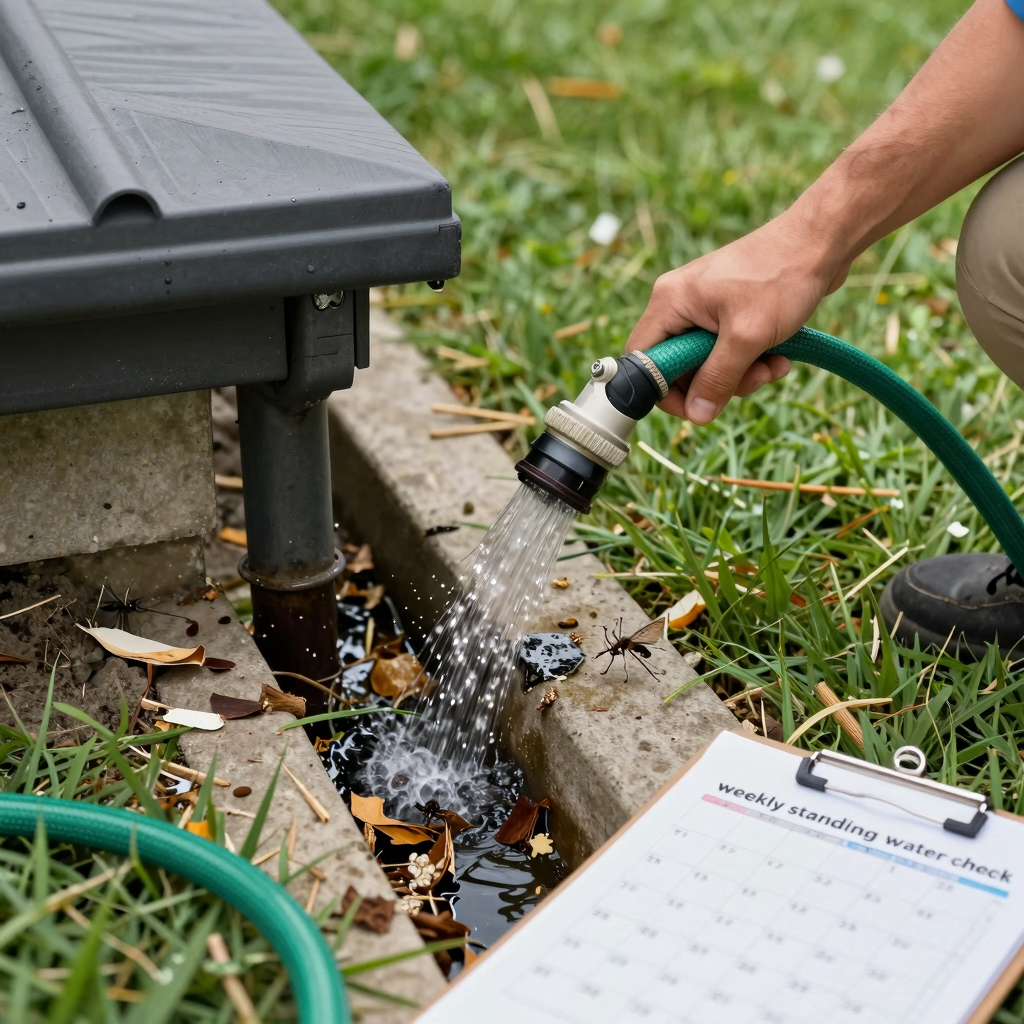
- Clean and maintain gutters and downspouts so rain doesn’t pool.
- Clear clogged drains and fix drainage issues in low spots.
- Remove debris that can trap water (leaves, branches, mulch piles near containers).
One mistake I used to make: thinking only “big” puddles matter. But even small water pockets can create a lot of larvae.
Step 4: Do a “before they fly” checklist around patios and landscaping
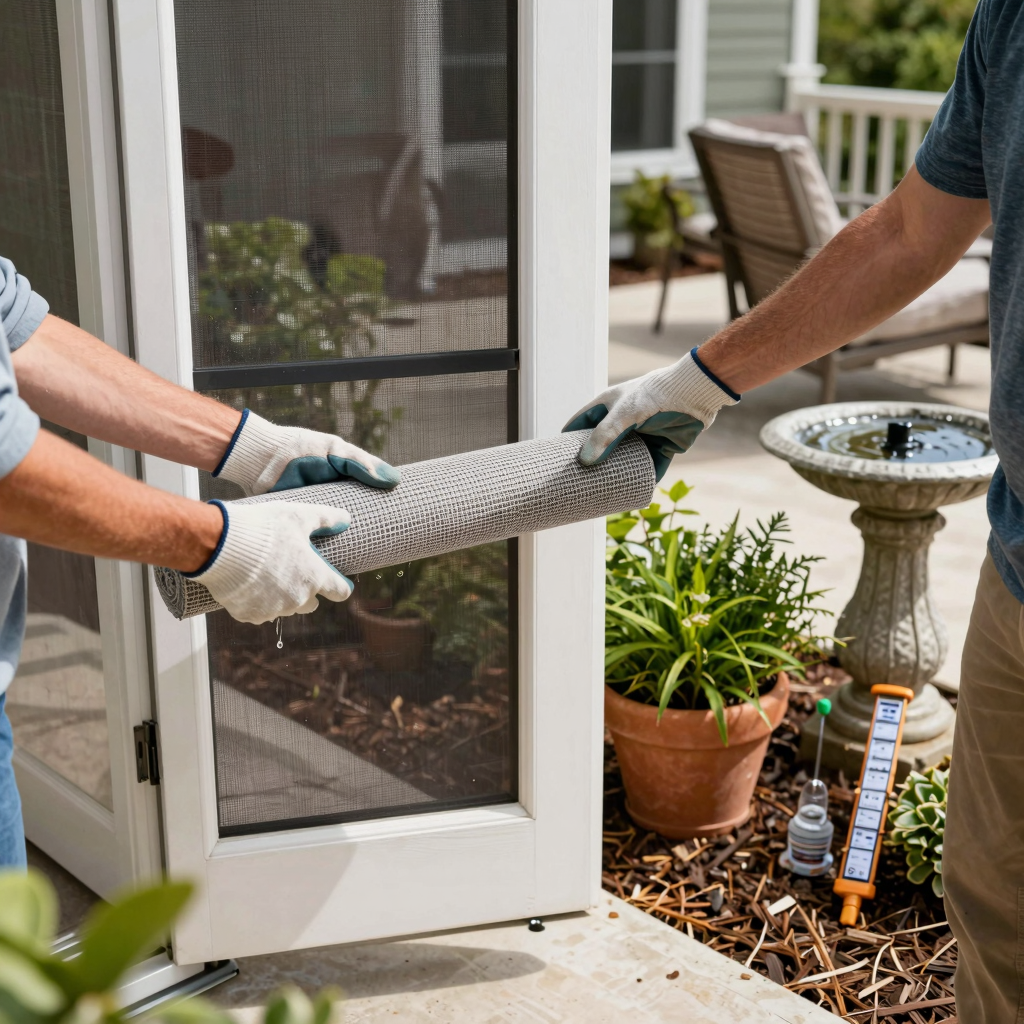
Once the big water sources are handled, I do a more focused check near the places I actually sit and walk—because that’s where bites often happen.
I inspect:
- Patio edges and any containers near outdoor seating
- Around landscaping features (rock beds, decorative pots, planters)
- Under steps/deck corners where rain can collect
- Near outdoor furniture covers (these trap rainwater)
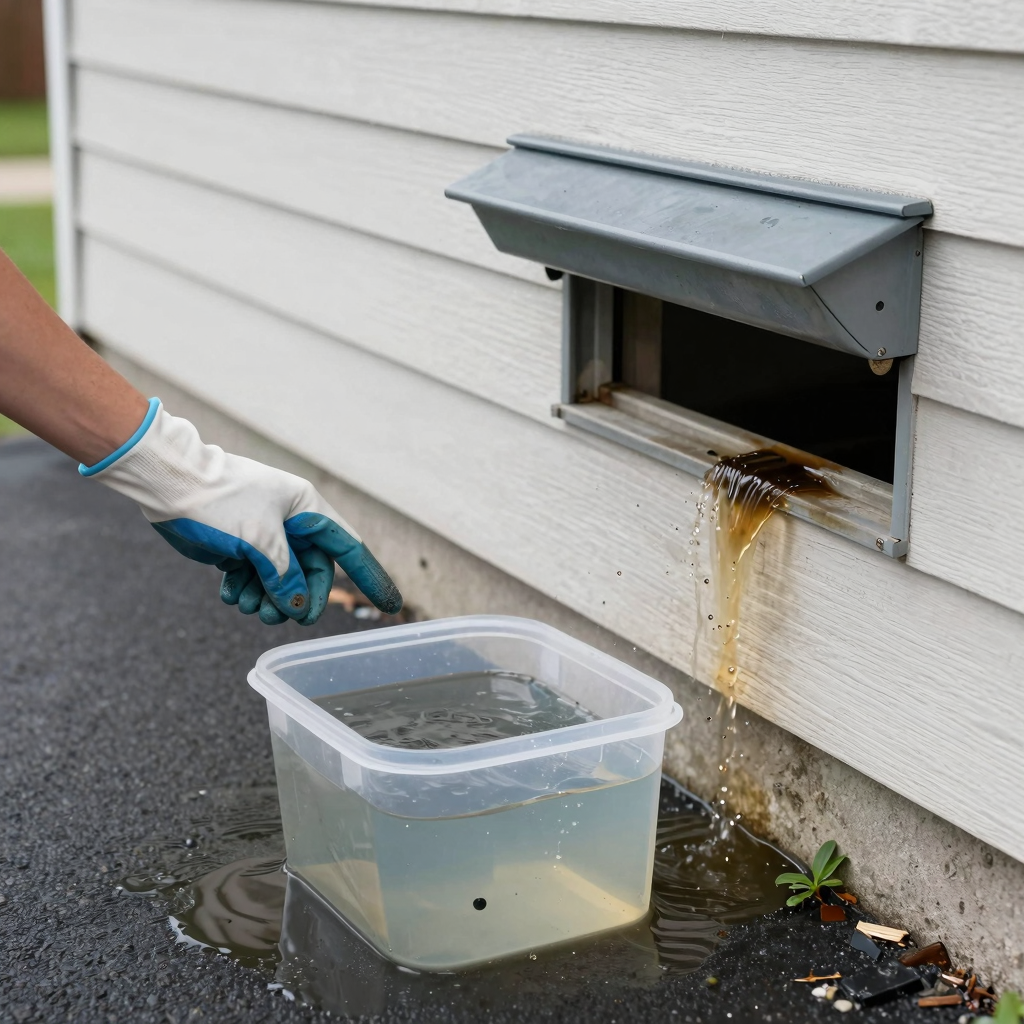
- Near window wells (common hidden pool area)
I also look in places that are easy to miss:
- The rim of a planter that holds rain
- A tarp sagging in the middle
- A clogged gutter section that creates a small overflow puddle
Then I set a quick routine so I’m not “one-and-done.” If weather changes (especially after a heavy rain), I re-check.
Step 5: Stop mosquitoes from getting into the house
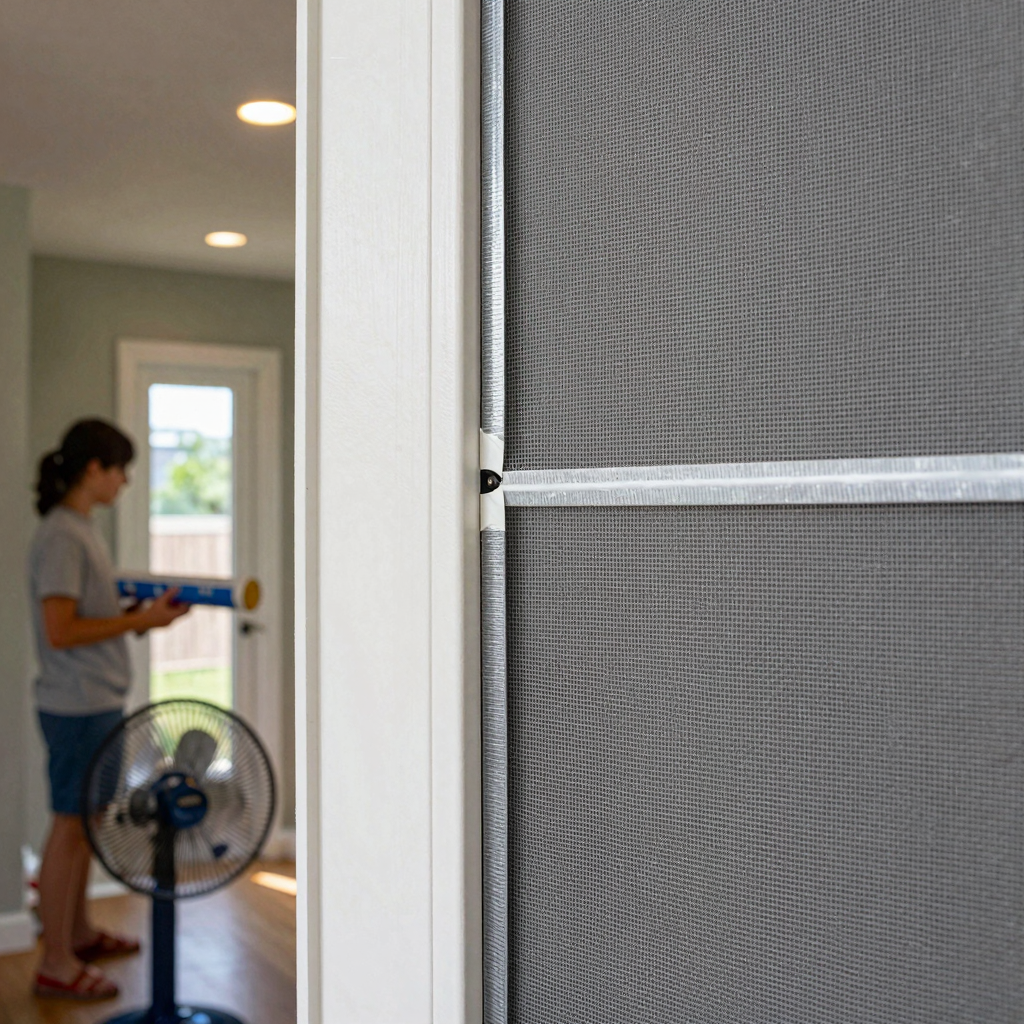
Even if I clear my yard, mosquitoes can still come inside through openings or gaps. So I make my house harder to access.
I focus on:
- Doors and windows: check screens for holes and fix gaps
- Weather stripping: replace anything torn or loose
- Garage entry points: small gaps matter when mosquitoes are active
- Lights near doors: if I leave them on at night, I try to limit “attracting” mosquitoes
If I notice mosquitoes indoors, I try to figure out where they’re coming from. Often it’s a gap I didn’t see until I looked closely—or a nearby breeding spot that still needs attention outdoors.
Step 6: When you can’t remove standing water—use larval control (mosquito dunks)
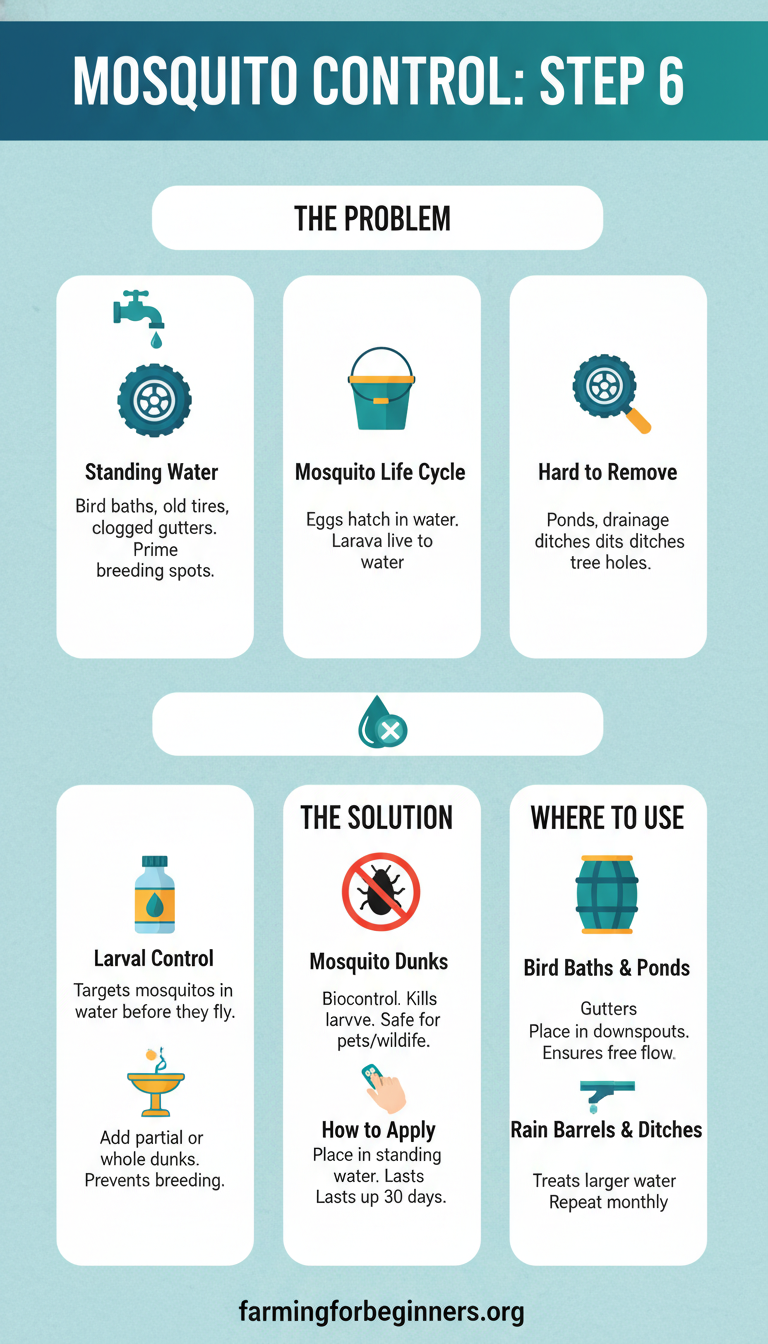
Sometimes standing water is unavoidable (a decorative feature, a spot with poor drainage, or a water-holding area I can’t fix immediately). In that case, I don’t rely on adult-killing sprays alone. I use targeted larval control.
Mosquito dunks work by targeting mosquito larvae in standing water. Here’s how I use them:
- I apply them according to the label directions (this is important).
- I use them only where water truly can’t be removed.
- I still do habitat removal everywhere else, because dunks are part of the plan—not a full replacement for removing breeding sites.
This approach helps reduce the next generation of mosquitoes, which makes everything else easier.
Step 7: Add repellents and mosquito sprays (responsibly) for immediate bite protection
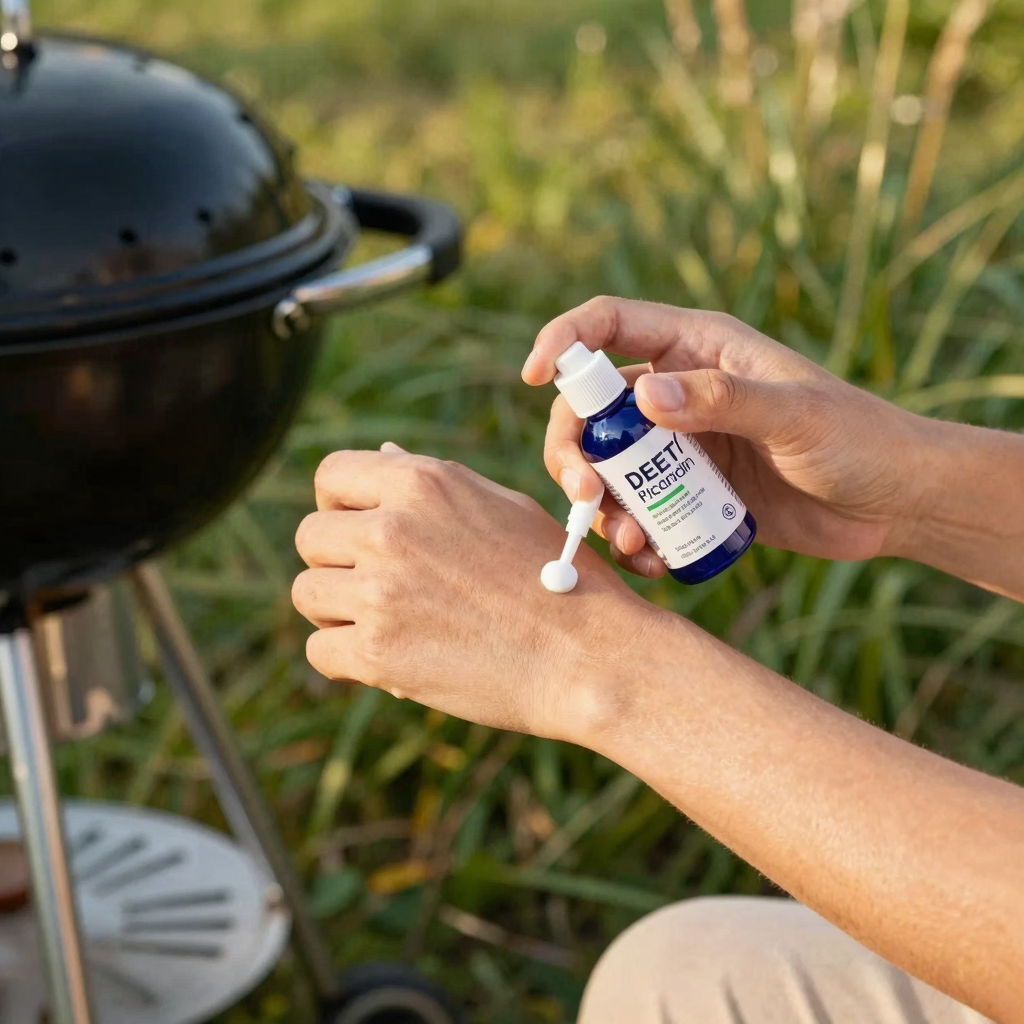
When mosquitoes are actively biting, I don’t wait weeks for perfect prevention. I add bite protection while I work on breeding sites.
For repellents and sprays, my rule is:
- Choose products that are EPA-registered and approved for relevant use (including guidance for people, pets, and pollinators when applicable).
- Follow the label for timing, amount, and safety.
I use sprays for yard comfort selectively—especially around areas where I’ll sit. I’m careful not to over-apply. And I make sure I’m still working on the main cause (standing water), so I’m not just treating symptoms.