

Gravel patios keep popping up because they deliver big outdoor style without the big construction cost. A well-designed gravel patio can turn a plain backyard into a cozy hangout in a weekend or two. Gravel also gives you design freedom: you can go casual, modern, rustic, or even European-inspired without needing a full concrete slab. This matters most when you want something that looks intentional, feels nice underfoot, and stays budget-friendly as your yard grows. If you’re planning a patio that works for your space and your lifestyle, these ideas will help you choose the right gravel type, layout, and extras so you get results that look great and last.
Quick Answer
If you want the most reliable “starter wins,” I’d start with a clear focal point (like a fire pit or bistro set), choose the right gravel texture (pea gravel for comfort), then finish the edges with edging or complementary paving so the whole patio reads as a real outdoor room. For lots of additional inspiration, you can browse gravel patio photo galleries from Houzz and DIY-focused lists from Family Handyman to see what different layouts look like in real homes.
Key Takeaways
- Gravel patios can work in both small and large backyards, especially when you define the space with a focal feature.
- Pea gravel is often a go-to if you want a smoother, softer texture underfoot.
- Mixing gravel with paving, borders, or walling helps the patio look “complete,” not temporary.
- Low-budget “wow factor” usually comes from fewer, smarter choices: one seating zone, one standout element, and clean edges.
- Planning material quantity ahead of time helps you avoid surprises. A cubic-yard estimate approach is a common budgeting step in gravel guides.
1. Fire Pit Centerpiece on Gravel

A gravel patio with a fire pit feels instant cozy, like your backyard just gained a whole new “room.” It’s especially effective because the fire pit naturally becomes the visual anchor, so you don’t have to overcomplicate the rest of the layout. According to Houzz’s gravel patio inspiration, layouts often shine when you choose one standout feature—fire pits are a frequent favorite for that reason.
How I’d lay it out
- Place the fire pit near the center of the patio area, then keep surrounding seating slightly angled toward it.
- In smaller yards, use fewer pieces of furniture so everything feels intentional rather than crowded.
- Use gravel depth and edging so the patio stays neat as people walk in and out.
What to pair it with
From a design standpoint, Yardzen’s hardscaping guidance frames gravel as a flexible base for mixed outdoor features, including settings where plants and ornamental details do the finishing work around the hardscape. That makes it easy to pair your fire pit with nearby greenery, lanterns, or a simple planter border.
2. Bistro Seating Gravel Patio (European-Style)
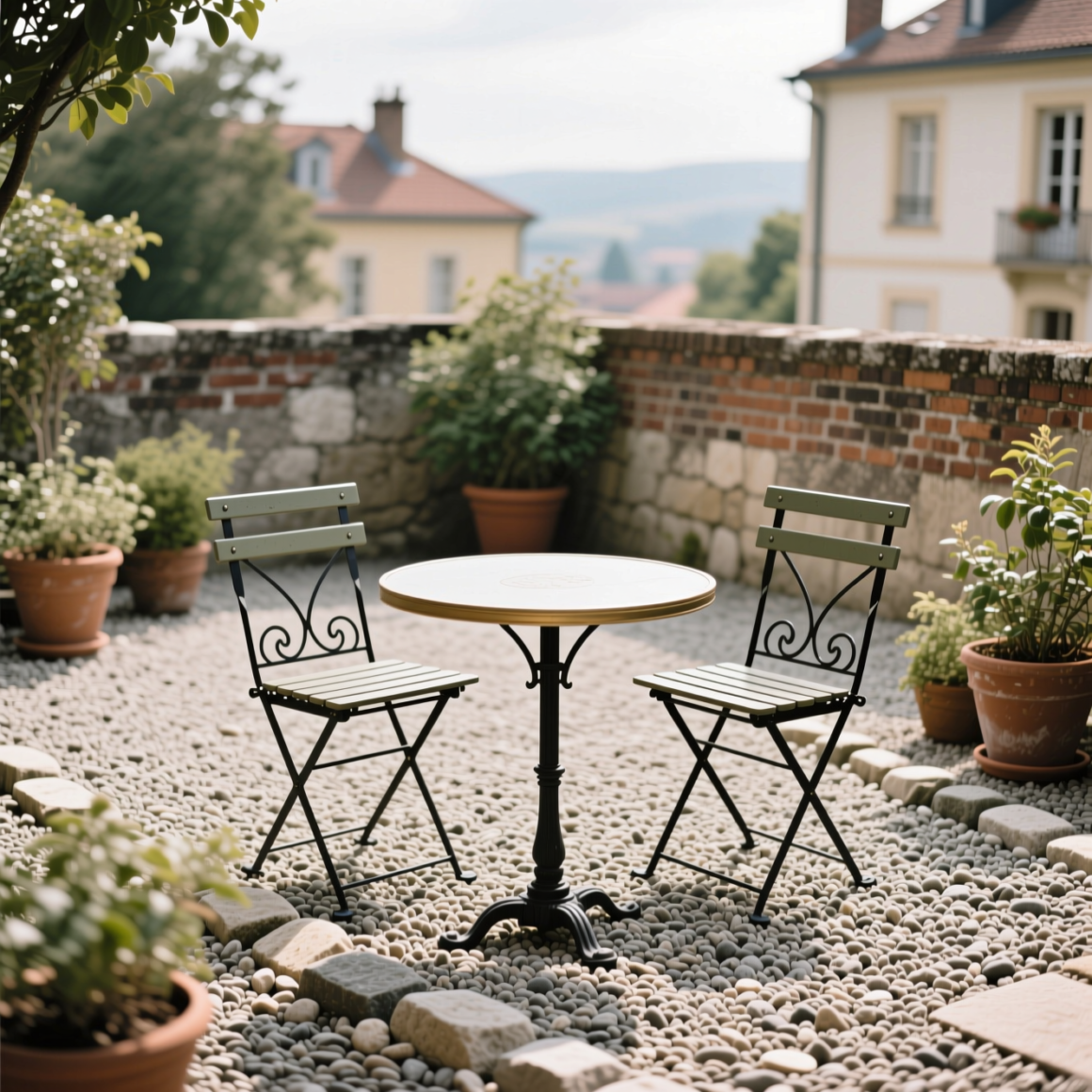
If you love a relaxed, café vibe, a gravel patio with bistro seating is a stylish way to keep your yard feeling charming and lived-in. It also works well when you don’t have much space, because a small table and two chairs can do a lot visually without needing a big footprint. Houzz inspiration repeatedly highlights gravel patios paired with European-style bistro sets, especially for smaller outdoor areas that still want “destination” energy.
Quick design moves
- Choose a compact bistro set, then add plants or a low border along one side to frame the seating spot.
- Keep the gravel area clean and uniform so the furniture reads as the main event.
- Add simple lighting (like a few warm string lights or pathway lights) to make evenings feel special.
Why it works
Bower & Branch describes gravel as a versatile, budget-friendly material with many ways to create landscaping scenes, from decorative beds to structured outdoor spots. That versatility is why bistro patios look so good: gravel creates a neutral “canvas,” while your plants and furniture provide color and character.
3. Pea Gravel Comfort Patio for Soft Footing

If you want comfort underfoot, pea gravel is one of the easiest upgrades you can make. Many people like it because it’s smoother and softer than many sharper gravel types, which helps when you’re walking without shoes or hanging around for longer stretches. Research context from World of Stones USA highlights pea gravel as an affordable option with a smooth, soft texture suited for patios and pathways.
Where I’d use it
- Patios where people will linger near chairs or under a table.
- Pathways that connect your patio to a gate, door, or garden area.
- Play-friendly zones where a gentler texture matters.
Finish details that matter
A comfort patio still needs clean edges. Pairing gravel with appropriate paving and walling elements is a common recommendation for achieving a cohesive look, and World of Stones USA specifically mentions that you can combine pea gravel with suitable paving and walling for a welcoming vibe.
4. Mix Gravel with Paving and Walling for a “Complete” Look
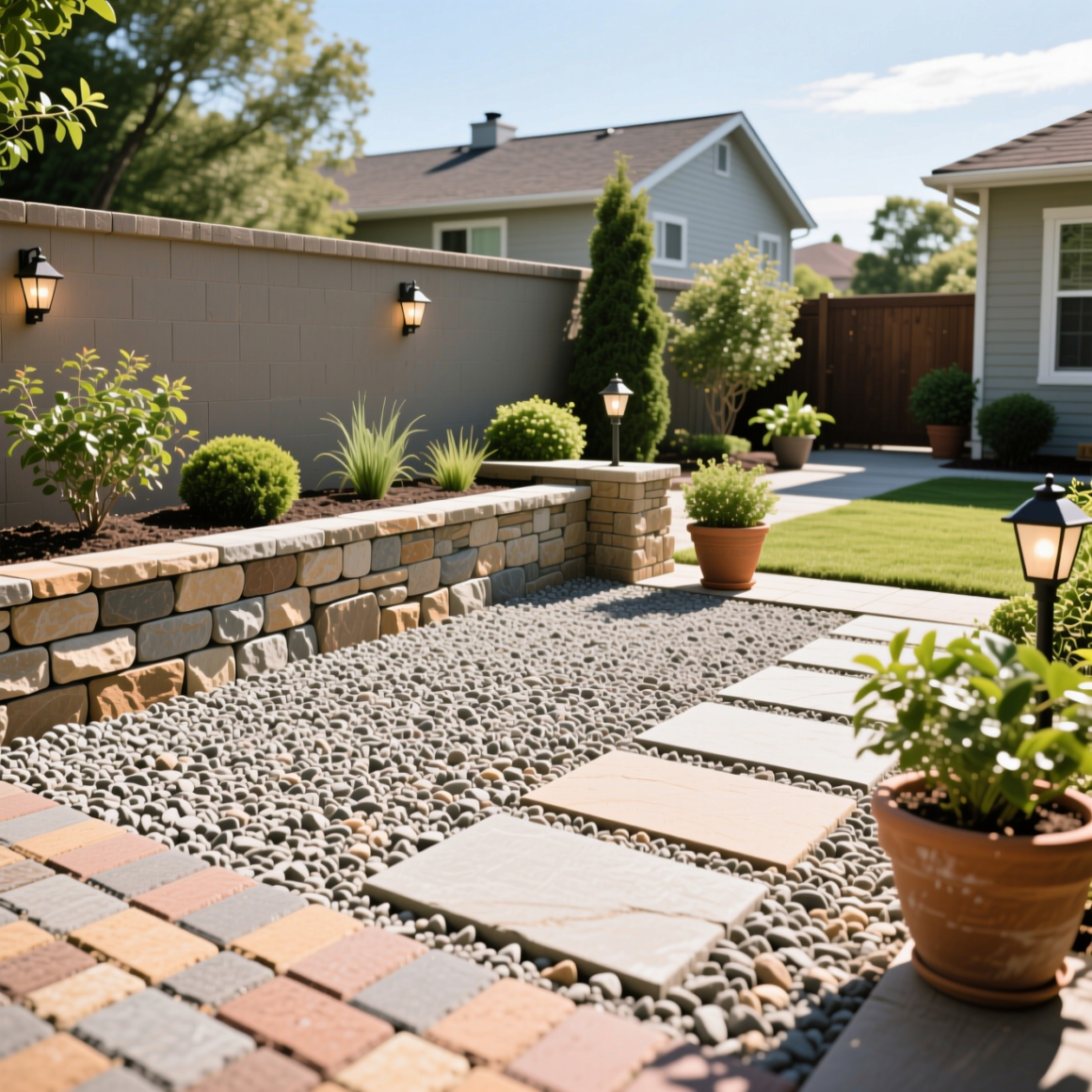
Gravel-only patios can look beautiful, but the “finished” feel often comes from adding structure. That’s where paving slabs, stone stepping areas, or small border walls help a lot. Family Handyman’s gravel patio inspiration emphasizes DIY-friendly approaches and often shows how gravel works when it’s paired with other materials instead of sitting alone.
Easy ways to add structure
- Create a gravel base, then add a few paved “landing spots” for foot traffic.
- Use stepping stones to guide movement from the door to the seating zone.
- Add a low wall or border to define the patio perimeter and keep the gravel where it belongs.
The design payoff
A gravel patio can be charming, but structure makes it look intentional. Yardzen also frames gravel as a hardscaping foundation that can be combined with other yard elements, including planting and mixed features, so the patio fits smoothly into the rest of your outdoor layout.
5. Low-Budget “Backyard Wow” Design Strategy
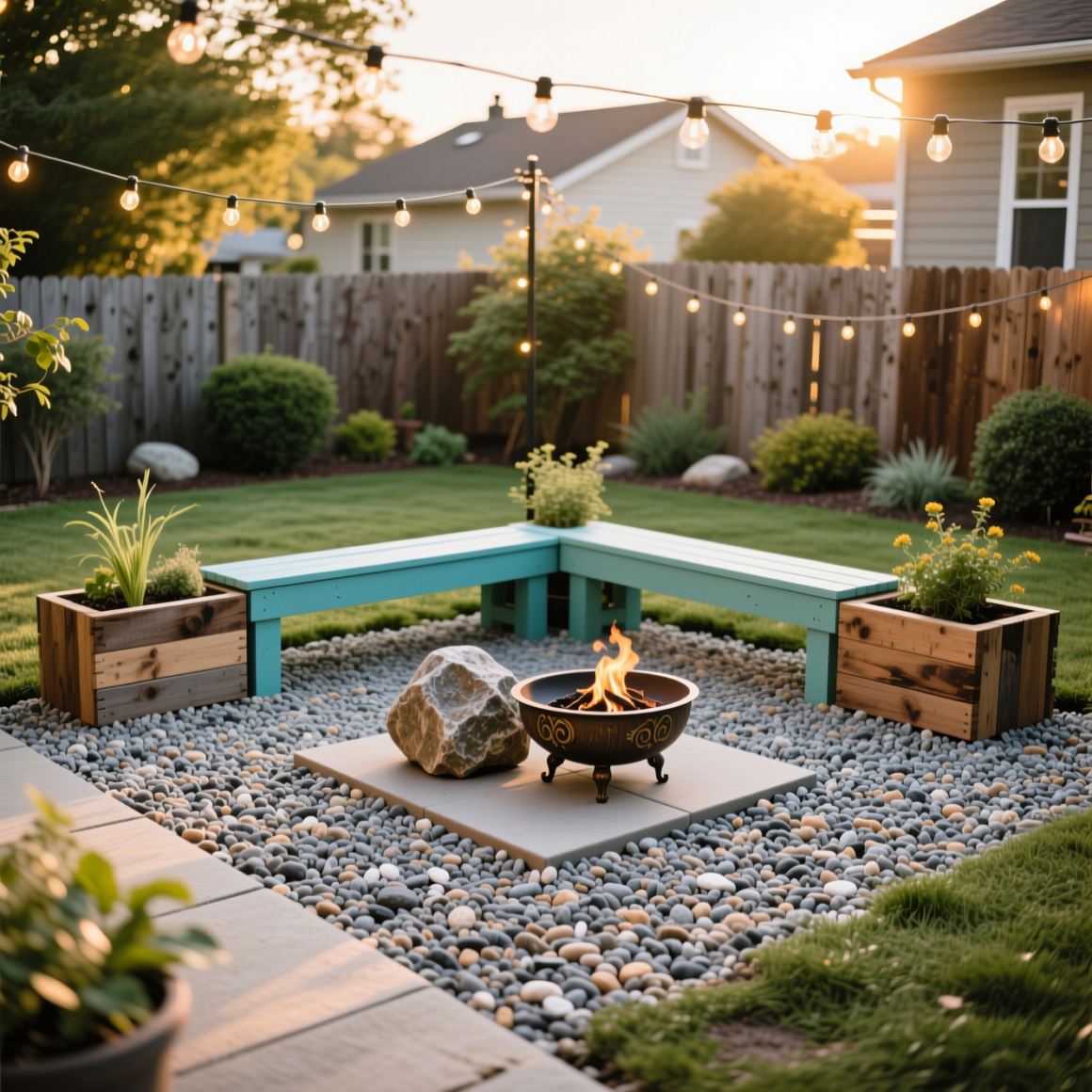
You don’t need to renovate everything to get a big style upgrade. In most budget-friendly gravel patios, the trick is picking one clear goal and building outward from it. Family Handyman’s budget-friendly gravel patio roundups are full of the same idea: choose a main feature, then make smart, affordable choices that support it.
My “backyard wow” formula
- Pick one primary function: a sitting zone, a dining zone, or a relaxation corner.
- Choose one gravel type that matches how you’ll use the space (pea gravel for comfort is a great example).
- Keep the furniture selection simple and sized for your area.
- Use borders or edging to make the patio look crisp, even if it’s low cost.
A practical tip for staying on budget
World of Stones USA highlights that pairing gravel with the right paving and walling can help your design feel cohesive without needing expensive materials everywhere. When your edges and transitions look good, your eye reads the whole yard as “designed,” not “unfinished.”
6. Gravel as Part of a Larger Hardscape Layout
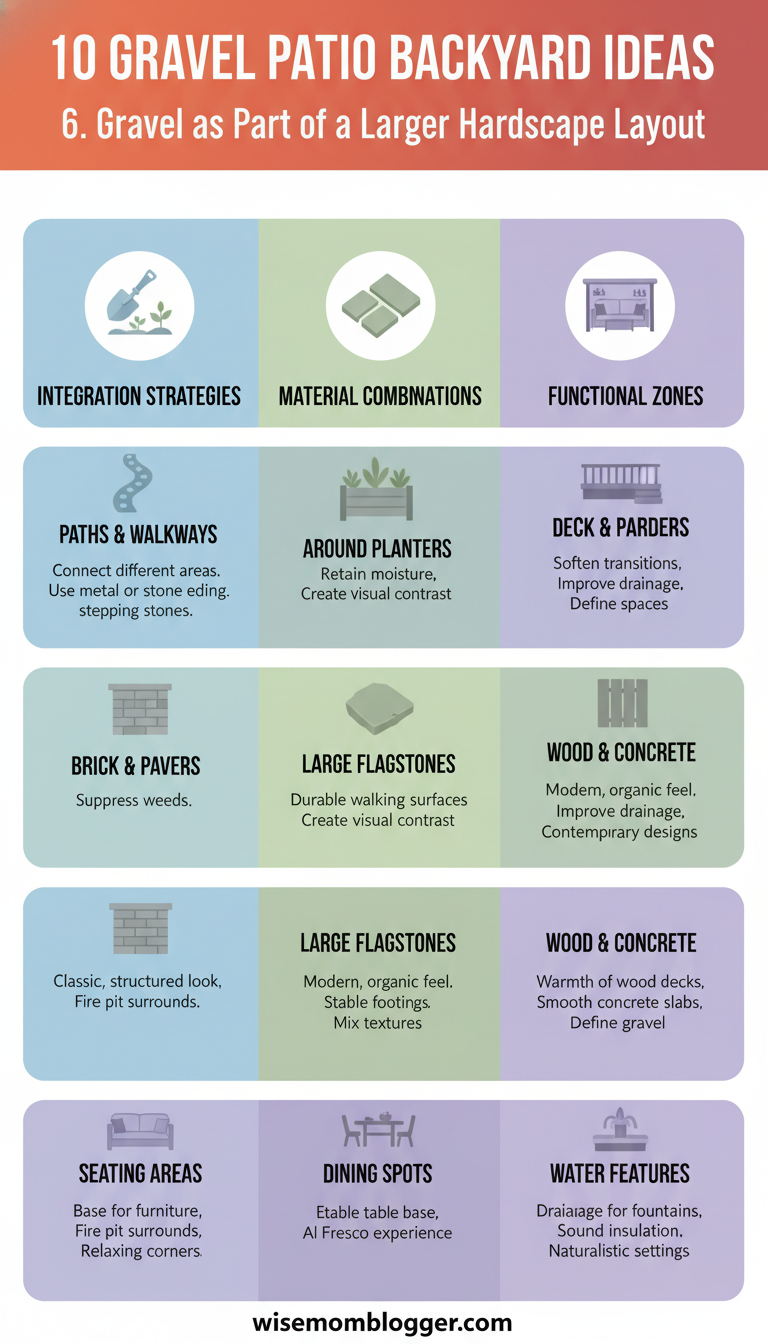
The best gravel patios don’t feel isolated. They connect to the rest of the yard, like a central hub that blends with plants, paths, and other outdoor features. Yardzen’s hardscaping approach positions gravel as a foundational material that can support integrated layouts, including mixed outdoor amenities and planting pairings.
How to connect everything
- Use gravel to bridge transitions between zones: patio to garden bed, patio to walkway, or patio to seating nook.
- Add plantings along one edge to soften the hardscape and reduce visual “blankness.”
- Keep the materials consistent across adjacent paths so the yard looks planned.
Where this shines
This approach is great if your backyard already has pieces you like—maybe a small shed patio area, a grill station, or a garden border—because gravel can visually tie those parts together.
7. Planning and Material Quantity for Cost Control
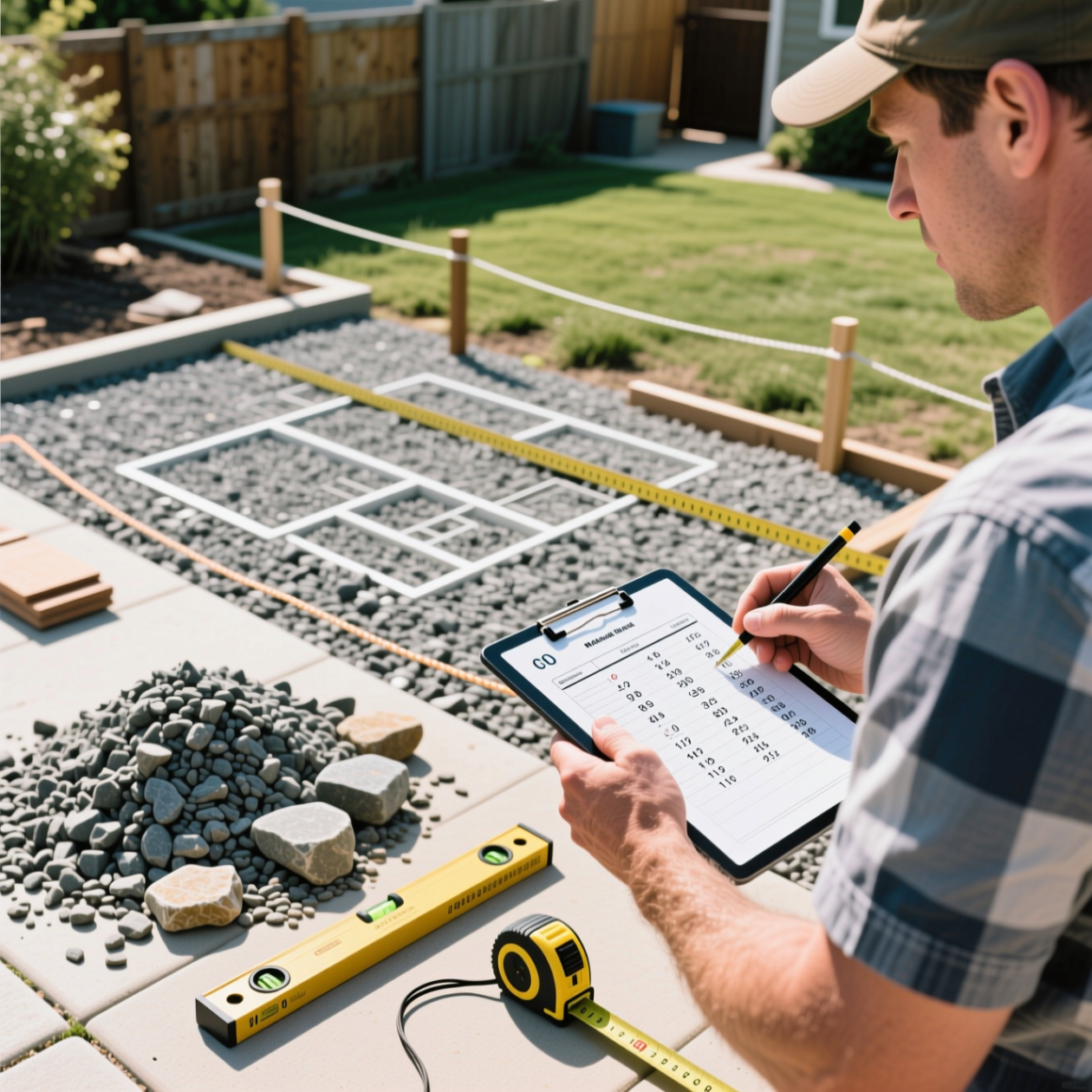
Nothing kills patio momentum like running out of gravel mid-project. Planning coverage and depth before you buy is the easiest way to prevent that. Many gravel guides recommend using a volume estimate, and the research context notes that tools like cubic yard gravel calculators help with better budgeting and cost control. Bower & Branch even mentions a cubic yard gravel calculator as part of its gravel planning guidance.
A simple planning checklist
- Measure the patio footprint (length and width).
- Decide the depth you want (often varies by use and gravel type).
- Use an estimate tool to convert your area and depth into cubic yards.
- Add a small buffer for uneven ground and settlement.
Why I take this seriously
When you plan correctly, you avoid expensive emergency trips and color mismatch if you end up buying from different loads. It’s a small step that can save both time and money.
8. Build a Patio That Fits Any Backyard Size

Gravel patios are flexible enough for tiny yards, medium spaces, and big layouts. Houzz’s gravel patio inspiration notes that it’s possible to create a gravel patio that invites you to linger in both small and expansive backyards, often by focusing on one key feature if space is limited.
Small yards: go focused
- Choose one focal point (like a fire pit or bistro set).
- Keep furniture minimal.
- Use edging so the shape stays clear and doesn’t “spread.”
Medium yards: create one zone
- Define a seating zone and keep circulation paths clean.
- Use plants as soft separators.
- Add one secondary feature like a small path or stepping stones.
Large yards: define multiple zones
- Build zones intentionally: seating, dining, and a walkway line.
- Use borders, planters, or paving accents to keep spacing tidy.
- Consider how people naturally move through the yard so gravel doesn’t become messy or inconvenient.
9. Texture + Plant Pairings for a Softer Look
Gravel doesn’t have to feel harsh or bare. Pairing gravel with the right plants can make the whole patio feel lush and welcoming. World of Stones USA notes mixing gravel with low-maintenance plantings and flowers for a low-effort, attractive look, especially when you want a planted vibe without constant yard work.
Planting ideas that work well with gravel
- Low shrubs along one or two edges for a clean frame.
- Ornamental grasses for movement that looks great next to gravel.
- Flowering borders that give color contrast against the neutral gravel tone.
Design tip I use a lot
Avoid placing plants so close that they constantly spill over the patio edges. Instead, aim for a tidy planting border that supports the patio shape.
10. Staged Gravel Layouts: Patio + Path + Entry Upgrade
Want the patio to feel like it belongs to your home? Build it as part of a wider layout: patio area plus an approach path. Family Handyman’s idea roundups often show how gravel can be used beyond one square area, including walkways and other outdoor sections that make the yard feel cohesive.
A simple staged plan
- Start with a main patio seating zone.
- Add a gravel path that guides footsteps from the door or driveway.
- Finish with a small entry or threshold detail (like a border line or a small paving pad near steps).
The visual benefit
When the patio and path share the same gravel style and consistent edging, your whole backyard feels more “put together,” even if you build in stages.
Quick Comparison Table: Pick the Best Gravel Patio Idea for Your Goals
| If you want… | Best gravel patio idea | Why it fits |
|---|---|---|
| Cozy evenings | Fire pit centerpiece on gravel | The fire pit becomes the anchor so the layout stays simple |
| A café vibe in a small space | Bistro seating gravel patio | Compact furniture keeps the zone focused and charming |
| Softer comfort underfoot | Pea gravel comfort patio | Pea gravel is known for a smoother, softer texture |
| A crisp, finished look | Mix gravel with paving and walling | Structure at edges and transitions makes it feel complete |
| Maximum impact on a tight budget | Low-budget backyard wow strategy | One goal, smart gravel choices, and clean edges go far |
| A unified backyard plan | Gravel as part of a larger hardscape layout | Gravel connects zones and works with planting details |
| Fewer surprises during building | Planning and material quantity | Estimating cubic yards helps you avoid overage or shortages |
| One design that works anywhere | Patio fits any backyard size | Scale the same concept with focal points or zones |
| Softer, greener appeal | Texture + plant pairings | Plants add color and soften gravel visuals |
| A backyard that feels cohesive | Staged gravel layouts | Patio plus path creates a connected “outdoor journey” |
Common Mistakes
- Skipping edging or borders. Without them, gravel can migrate into grass and walkways, and the patio starts to look messy fast.
- Choosing a gravel type that doesn’t match comfort needs. If barefoot comfort matters to you, pea gravel is the common choice for a smoother, softer feel.
- Overbuilding in a first phase. Starting with too many features at once often leads to a cluttered look and budget strain.
- Ignoring material quantity planning. If you don’t estimate cubic yard amounts based on area and depth, you can run short or end up with excess.
- Making the layout too uniform. Gravel is flexible, but a little structure (like a paved landing spot or defined zones) keeps it from looking flat.
- Forgetting how you walk. If the patio path doesn’t match how you actually move, you’ll step off gravel frequently and create worn paths where you didn’t plan them.
FAQ
What gravel is best for a patio?
In many cases, pea gravel is chosen for patios that need softer footing, especially for sitting areas and pathways. For a more structured look, people also mix gravel with paving stones or borders to create clear movement and sharper edges. Research context from World of Stones USA calls out pea gravel’s smooth, soft texture for patios and pathways.
Can a gravel patio work in a small backyard?
Yes. Houzz notes that small to expansive backyards can all support gravel patios, and it often works best when you focus on one standout feature (like a fire pit or bistro set). In a small yard, fewer furniture pieces and a clear focal point make a bigger difference than adding more elements.
How do I keep gravel from spreading everywhere?
Use proper edging and define the perimeter clearly. A border wall, landscape edging, or a mix of paving transitions can help keep gravel contained. Family Handyman’s gravel patio inspiration also reflects how many designs focus on layout and edging rather than leaving gravel “open.”
Is gravel cheaper than pouring concrete?
Gravel is often viewed as a more budget-friendly approach than full hard surfaces. According to Bower & Branch, gravel is positioned as a versatile, budget-friendly material used in many types of landscaping projects, including outdoor patios.
Do I need to plan gravel depth?
Yes, depth planning helps you estimate quantity and cost more accurately. Bower & Branch mentions using a cubic yard gravel calculator as part of planning, which is a smart step to avoid buying mistakes.
What’s the easiest way to make a gravel patio look finished?
Add structure. That can mean paved stepping areas, a small border wall, or a defined plant border. Yardzen explains gravel’s role as a hardscaping foundation that pairs well with other yard features, and that combination is often what makes a patio look like a real designed space.
Latest Updates or ## 2026 Trends
As we move through 2026, I’m seeing more “layered simplicity” in outdoor design: gravel patios that look styled but are still easy to maintain. Houzz’s 2026 gravel patio idea inspiration reflects this, especially with fire pits, bistro seating, and gravel layouts that focus on one clear feature in smaller yards. On the practical side, guides like Yardzen and planning-forward resources like Bower & Branch keep emphasizing the same trend: define zones, use gravel strategically, and handle material planning so the project stays clean and predictable.
Conclusion
Gravel patios are one of my favorite backyard upgrades because they’re flexible, affordable, and easy to customize to your space. When you choose a concept with a clear focal point, pick a gravel type that matches how you’ll use the area, and finish the edges with borders or complementary paving, the result looks intentional instead of temporary. Start simple with one seating zone or a connected path, plan your gravel quantity ahead of time, and build up from there as your backyard grows. If you’re ready to turn your patio into a real hangout spot, pick the idea that best fits your yard size and your lifestyle today.
References
- Houzz. (2026). 75 Gravel Patio Ideas You’ll Love. Houzz. https://www.houzz.com/photos/gravel-patio-ideas-phbr1-bp~t_725~a_39-256
- Family Handyman. (n.d.). 10 Gravel Patio Ideas That Are Gorgeous and Affordable. Family Handyman. https://www.familyhandyman.com/list/gravel-patio-ideas/
- World of Stones USA. (n.d.). 10 Low Budget Backyard Designs with Gravel to Add Wow Factor. World of Stones USA. https://worldofstonesusa.com/blogs/all/low-budget-backyard-designs-with-gravel
- Bower & Branch. (n.d.). The Ultimate Guide to Gravel for Landscaping Projects. Bower & Branch. https://bowerandbranch.com/blogs/landscape-design/ultimate-guide-to-gravel
- Yardzen. (n.d.). Hardscaping 101: Gravel. Yardzen. https://yardzen.com/yzblog/gravel-landscape

Samuel Michael
I've have been involved in Backyard Farm for over 15 years, especially livestock and market gardening. I blog at my free Time and ive My most helpful thoughts on this blog.

