

If you’ve ever spotted a squirrel staring at you like, “Hey, got anything good?”—you’re not alone. Feeding squirrels the right way can help them find energy-rich foods while you learn what they naturally love. I’ll show you how to match their diet using common, realistic food options—from acorns and nuts to seeds, fruit, and even a few garden-friendly favorites. You’ll also learn what to expect (squirrels cache food, they forage boldly, and they can be picky about certain seeds). Most importantly, you’ll have safer, smarter feeding ideas that are more likely to be taken and less likely to cause problems. Let’s get into the best options for feeding a squirrel.
Key Takeaways
- Squirrels naturally eat hard “mast” like acorns, hickory nuts, pecans, and black walnuts, plus many other plant foods depending on season.
- If you’re offering feeder-style food, black oil sunflower seeds are often a big hit.
- Fruits, vegetables, and garden treats (like leaf buds, shoots, and flowers) are commonly taken when available.
- Squirrels may also eat fungi/mushrooms, pollen, bulbs, bark, sap tissue, and sometimes bird eggs (when they can find them).
- Some seeds are less liked at feeders—Nyjer® (thistle) seed is often described as a least-favorite option for squirrels.
- Feeding can bring repeat visits, because squirrels may consume a lot of energy-rich foods weekly and may store (bury/cache) leftovers.
Quick Answer
For most backyard situations, I feed squirrels a simple mix that mirrors their natural menu:
- Nuts/mast: acorns (if you have them), hazelnuts, walnuts, pecans, hickory nuts, and plain peanuts
- Seeds: especially black oil sunflower seeds (and sometimes pumpkin seeds)
- Small amounts of produce: bits of apple, grapes, berries, or a few veggie pieces like carrots or peas
I avoid “random bird seed” choices that don’t match what squirrels prefer, and I keep it clean and seasonal.
What You Need
| Item | Purpose | Notes |
|---|---|---|
| Black oil sunflower seeds | High-probability feeder food | Often a favorite for feeder-style offerings |
| Pumpkin seeds (optional) | Energy-rich seed option | Offer a small amount to start |
| Nuts (unsalted): acorns, hazelnuts, walnuts, pecans, hickory nuts, peanuts | Mimic natural mast foods | Choose whole, natural-looking nuts when possible |
| Small fruit pieces (apple, grapes, berries) | Add variety and quick energy | Cut into bite-size pieces; use sparingly |
| Small veggie pieces (carrots, broccoli, peas, zucchini, yellow squash) | Extra variety | Not required, but often accepted |
| A shallow dish or feeder tray | Keep food accessible and tidy | Place where you can see it and clean up easily |
| Trash bag/gloves + paper towels | Quick cleanup | Prevent mold/spoilage and reduce mess |
| Optional: plain, unsalted seed/nut “mix” | Make a simple menu | Avoid mixes loaded with seeds you rarely see squirrels take |
Step 1: Match what squirrels eat in the wild
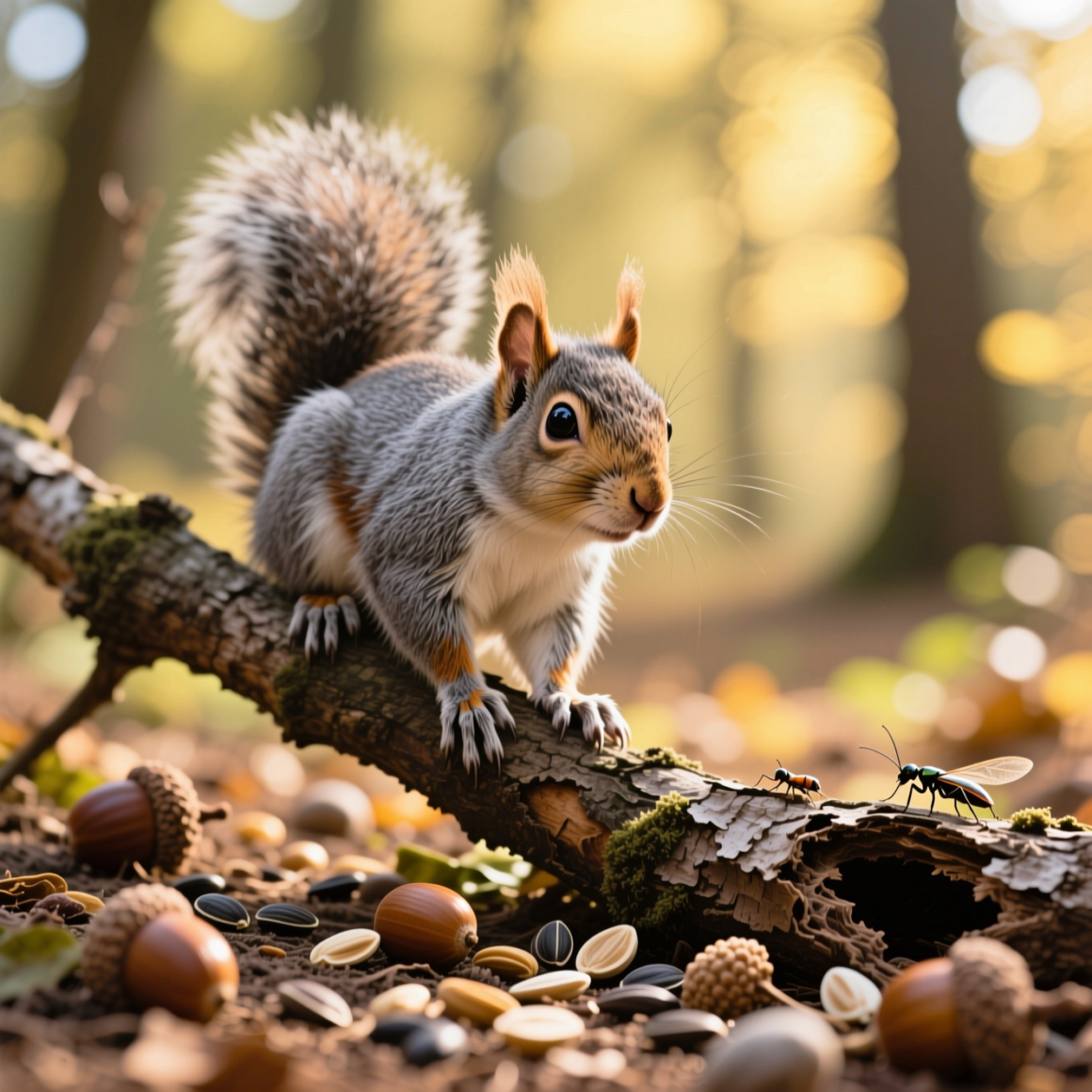
When I think about what to feed a squirrel, I start with the big idea: squirrels aren’t just “seed eaters.” They’re foragers who use whatever their environment offers—especially hard, energy-rich foods.
In the wild, many tree squirrels rely heavily on hard mast and nuts, including acorns, hickory nuts, pecans, and black walnuts. They also eat seeds from trees and plants, and their diet shifts with seasons. Winter is a big deal: for tree squirrels, acorns are a key winter food, and gray squirrels often depend on acorns as a primary stored resource.
So if I want my feeding to actually work, I offer foods that fit those natural categories: nuts + seeds + a little fruit/vegetable, with attention to what’s most available.
Step 2: Start with the “most likely to be taken” seed

If you’re choosing just one feeder item, I go with black oil sunflower seeds. They’re widely cited as a favored feeder food. You can offer them in a shallow dish or on a tray.
Why I like this option:
- It’s realistic for a backyard setting.
- It’s energy-dense, so squirrels come back when they find it.
- It reduces the chance you’re wasting food on something squirrels ignore.
I usually start with a small amount and watch what happens for 30–60 minutes. If I’m seeing active interest, I keep it consistent.
Step 3: Add nuts that resemble the squirrel’s natural mast

After sunflower seeds, I add nuts in whole or near-whole form because squirrels are built for that kind of food.
Good nut options I’d offer (plain/unsalted):
- Acorns (if you have them and they’re safe for your area)
- Hazelnuts
- Walnuts
- Pecans
- Hickory nuts
- Peanuts (in the shell if possible, or plain peanuts without flavorings)
This works well because squirrels in many places naturally prefer these hard foods. Also, squirrels often store food for later, so leaving a few nut choices can lead to repeated visits.
Tip: If you’re using a nut variety mix, avoid anything heavily salted or flavored.
Step 4: Offer small amounts of fruit and berries for variety

Once the nuts and seeds are in place, I add small fruit pieces. Squirrels will commonly take plant foods like:
- Apples (small pieces)
- Grapes
- Berries such as blackberries, blueberries, and raspberries
I keep these amounts modest because fruit spoils faster than nuts and seeds. If I’m feeding in warm weather, I reduce fruit even more and clean up leftovers quickly.
Step 5: Try a few “garden-style” plant foods (buds, shoots, flowers)

Here’s a funny truth: squirrels often get food from yards and gardens anyway. If you’ve ever seen buds disappear or watched a squirrel investigate flowers, you’ve basically seen their menu in action.
Foods that squirrels commonly take from gardens and yards can include:
- Leaf buds, tender shoots, and stems
- Flowers and catkins
- Sometimes tree bark and sap tissue (especially if food is scarce)
I don’t recommend you damage trees on purpose—but if you want to share something naturally, you can offer small, fresh plant items you’ve already got (like a few safe pieces of produce greens from your kitchen garden, not anything treated with chemicals).
If you’re wondering why squirrels may still “go after” your garden: they’re opportunistic, and feeding can increase foraging behavior.
Step 6: Use vegetables as a supplemental “bonus,” not the main course

Vegetables are optional, but when I add them, I pick the ones squirrels are often described as taking, such as:
- Carrots
- Broccoli
- Peas
- Yellow squash
- Zucchini
I offer small pieces rather than a lot. Think “snack-sized,” not “meal-sized.” Also, veggies are easier to spoil than dry foods, so I clean up after a short time—especially in heat.
Step 7: Understand the “foraging variety” (and why it matters)
Squirrels aren’t robots eating the same exact thing forever. Their diets can include a wide range of items.
Depending on the type of squirrel (like red vs. gray) and the local habitat, they may also eat:
- Fungi and mushrooms (noted especially in some red squirrel diets)
- Pollen
- Bulbs
- Bark and sap tissue
- Bird eggs when available
They may also include things like soil or tree bark in their diet, which can add roughage or minerals.
So when I plan feeding, I focus on practical, safe foods I can offer—nuts and seeds, plus small amounts of produce—rather than trying to “recreate” every wild item. The goal is to support and satisfy, not to mimic every detail.
Step 8: Know what’s likely to be taken vs. ignored at feeders
This is where expectations matter.
Foods squirrels are likely to take:
- Black oil sunflower seeds
- Seed mixes that center on sunflower and pumpkin-type seeds
- Mast-like items (acorn-like nuts and hard nuts)
Foods described as less preferred:
- Nyjer® (thistle) seed is often cited as a least-favorite feeder food for squirrels.
Also, squirrels can be bold. If they decide they want the food, they may:
- Dig or cache it (bury/store it)
- Take it quickly and come back later
If you’re feeding, I plan for recurring visits and a bit of mess from natural squirrel behavior.
Step 9: Choose based on the species and your location (if you can)
I don’t always know whether I’m looking at a red or gray squirrel, but it helps to understand the difference when I’m choosing foods.
- Red squirrels are often associated with conifer seeds like spruce/pine, and their diets can include a wider mix that’s sometimes described as fungi-rich, plus nuts, acorns, flowers, shoots, pollen, bulbs, bark, and sap tissue.
- Gray squirrels are often described as opportunistic feeders that eat many plant parts (buds, catkins, flowers, stems) and may strip bark and bury seeds/nuts. They also commonly rely on acorns as a major winter resource.
If you live where acorns are common, offering acorn-like nuts and sunflower seeds usually makes sense. If you’re surrounded by conifers, you may notice conifer seed interest too—but for backyard feeding, sunflower and nuts are still the most reliable picks.
Step 10: Put it all together with simple “do this” feeding ideas
If I were setting up a practical squirrel feeding routine, I’d do it like this:
- Base on nuts + sunflower seeds
– Provide a small handful of black oil sunflower seeds – Add 1–2 nut options (walnuts/pecans/hazelnuts or plain peanuts)
- Add one variety item
– A few berry pieces or a couple small apple/grape pieces
- Optional veggie bonus
– A small piece of carrot, broccoli, or peas
- Watch behavior and adjust
– If they ignore something, I stop using it – If they cache everything, I reduce the portion so nothing rots
For food sourcing, I keep it simple: use widely available foods that match the categories squirrels take naturally—especially sunflower seeds and hard nuts.
And I manage expectations: squirrels may bury food, chew through things, and sometimes increase garden foraging because you’re adding an extra food source nearby.
Tips
- Keep feeding small and fresh: Nuts/seed last longer; fruit/veg spoil faster.
- Clean up daily when it’s warm: Moldy food isn’t helpful and can attract unwanted pests.
- Use unsalted, unflavored foods: Avoid seasonings, sweet coatings, and “human snacks.”
- Skip Nyjer® (thistle) if possible: It’s often described as a least-favorite squirrel feeder seed.
- Don’t rely on garbage or leftovers: Squirrels may take human food, but it can be less healthy and can create mess and smell.
- Offer on the ground or a stable tray: It helps reduce spillage and makes it easier for squirrels to access food.
- Be mindful of local rules: Some areas have guidelines for feeding wildlife.
FAQ
Is it okay to feed a squirrel peanuts?
Yes—plain, unsalted peanuts are a good option. I prefer peanuts in the shell when possible because they resemble the “hard food” behavior squirrels naturally use.
What’s the best seed to feed squirrels?
In most backyard situations, I’d start with black oil sunflower seeds. They’re commonly described as a favorite at feeders, and squirrels are also drawn to mixes that include them.
Will squirrels eat bird eggs?
Squirrels can eat bird eggs when they have access, and it’s reported as part of their natural diet in some accounts. If you keep bird feeders, consider that squirrels may also investigate nesting areas.
Can I feed squirrels bread or crackers?
I don’t recommend it. Squirrels can take human foods, but those items aren’t a good match for their natural diet and can lead to unhealthy eating patterns and waste.
Should I feed red squirrels and gray squirrels differently?
You can, if you know which species you have. Red squirrels are often linked with conifer seeds and a diverse diet that can include fungi and more. Gray squirrels are often opportunistic and rely heavily on acorns in winter. In practice, nuts + sunflower seeds work as a reliable baseline for both.
How often should I feed a squirrel?
If you’re offering food, I keep portions small and watch how quickly it’s taken. Because squirrels may consume meaningful amounts of energy-rich foods and may cache them, feeding daily or every other day (in small amounts) is often enough without overloading the area.
What foods should I avoid?
Avoid:
- Salted/flavored snack foods
- Sweet treats
- Moldy or spoiled food
- “Tiny feeder seeds” that squirrels don’t prefer (like Nyjer® thistle) if you have better options available
Conclusion
If you want to know what to feed a squirrel, the best answer is: feed what it’s built to love—hard nuts and mast, favored seeds like black oil sunflower, and small, fresh bites of fruit or veggies. I’ve found that when I mirror those natural food categories, squirrels show up reliably and stick to the “right kind” of snacks. I also make sure to keep things clean and fresh, because fruit and veggies spoil faster than dry foods. And since squirrels are opportunistic foragers who may cache food or investigate gardens, I start small and adjust based on what they actually take. If you set up a simple, squirrel-friendly menu and keep it consistent, you’ll be doing something helpful—for the squirrel, and for your own peace of mind.

Samuel Michael
I've have been involved in Backyard Farm for over 15 years, especially livestock and market gardening. I blog at my free Time and ive My most helpful thoughts on this blog.
