
Dragonflies are like living sparks of summer—fast, graceful, and surprisingly helpful. If you’ve ever watched one land on a garden plant and disappear into the sun, you know how magical that feels. The good news: you can make your yard much more welcoming by giving dragonflies what they need at each stage of life. That usually means clean, calm standing water, the right plants around the edges, and a “less disturbance” approach so larvae aren’t harmed. You’ll also get bonus benefits like more pollinators and often fewer biting insects, because dragonflies can help keep mosquito numbers in check. Let’s set you up with practical, yard-friendly steps you can use right away.
Key Takeaways
- Dragonflies are attracted to yards that offer standing water where they can lay eggs in water or mud.
- The nymph (larva) stage lasts the longest, so stable water habitat matters more than a quick splash.
- Plant for multiple life stages: oxygenating plants, emergent stems for egg-laying, and floating cover.
- Gentle, unobtrusive water movement helps protect delicate larvae compared with harsh turbulence.
- If a full pond isn’t possible, you can still create dragonfly habitat with smaller, safer standing-water options.
- With the right conditions, dragonflies arrive naturally—there’s usually no need to “stock” your yard.
Quick Answer
To attract dragonflies, create (or mimic) standing-water habitat in your yard and plant a varied mix of aquatic, shoreline, emergent, and floating plants. Keep the water fairly still or gently moving, avoid anything that churns or shocks the water, and maintain that habitat through late spring and summer when dragonflies breed most actively.
What You Need
| Item | Purpose | Notes |
|---|---|---|
| Standing water feature (small pond, basin, or water container habitat) | Gives dragonflies an egg-laying site | Dragonflies lay eggs in water or mud; stability matters |
| Aquatic plants (varied types) | Supports larvae and adults with cover and habitat | Choose a mix so you’re covered across life stages |
| Oxygenating aquatic plants | Adds oxygen and protective cover for larvae | Often helps keep habitat healthier |
| Emergent plants (stems above the surface) | Provides places for egg laying and resting | “Edge zone” plants are especially useful |
| Floating plants | Creates shelter under leaves for larvae and egg-laying support | Floating cover can make the habitat feel safer |
| Water-loving shoreline plants near the feature | Attracts pollinators and creates natural edges | Examples include black-eyed Susan in marsh-like conditions |
| Gentle water circulation (optional, but helpful) | Reduces stagnation without disturbing larvae | If you use a fountain, keep movement unobtrusive |
| Basic monitoring (bucket check, simple observation) | Helps you maintain safe, lasting habitat | Watch for algae balance, plant coverage, and water levels |
Step 1: Understand what dragonflies actually need (it’s not just “water”)
When people say “add a pond,” they’re right—but dragonflies need more than a puddle for an afternoon photo. Their life cycle is tightly connected to water.
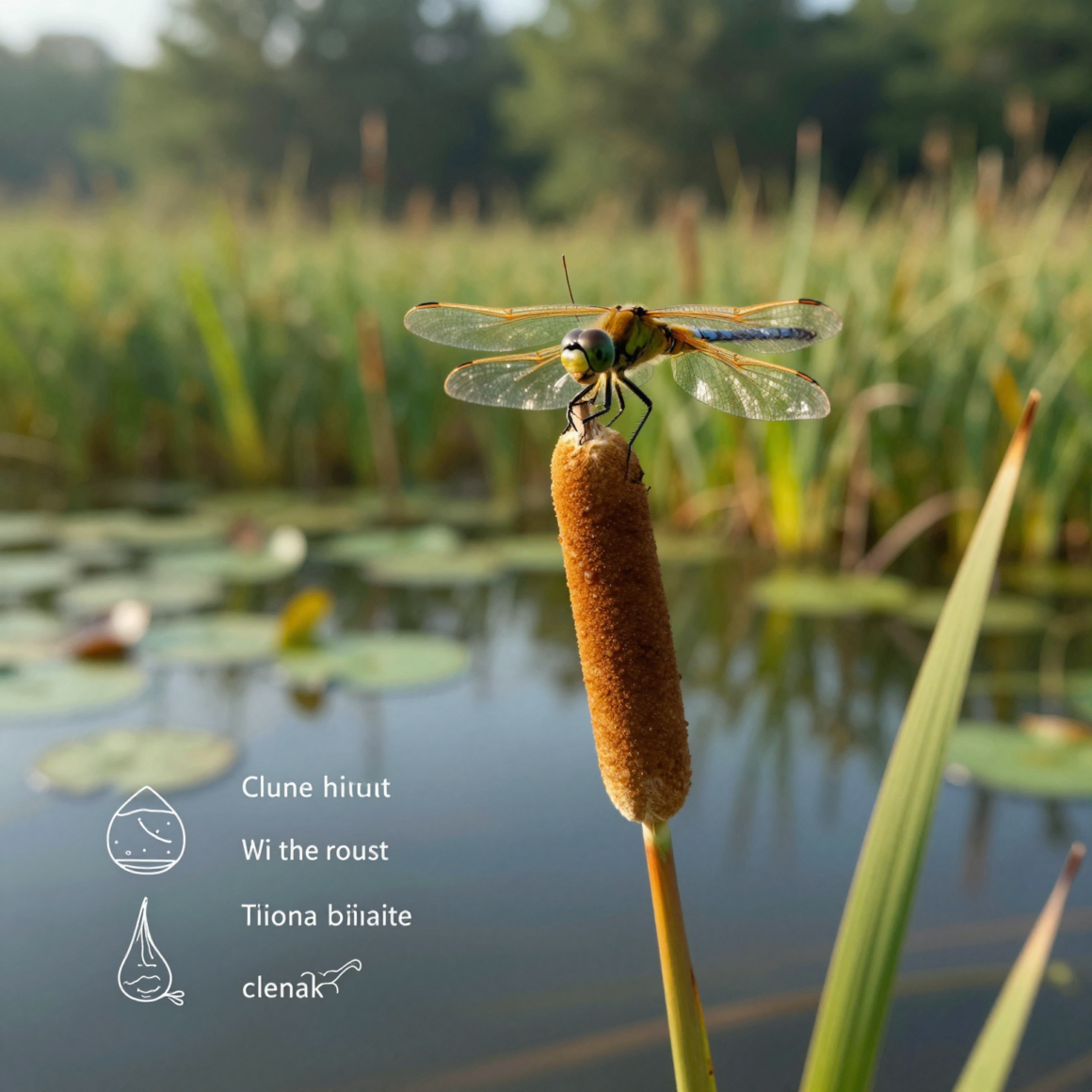
Dragonflies lay eggs in water or in mud near water, and many species also use floating plants as egg-laying spots. After the eggs hatch, dragonflies spend the majority of their life as nymphs (often months to even a couple of years). That means your goal isn’t only to attract adult dragonflies—it’s to make your yard a safe, stable home for nymphs too.
So when I’m planning my dragonfly setup, I’m really thinking in three layers: 1) Egg-laying water/mud 2) Nymph habitat (cover + stable conditions) 3) Adult perches and nearby flowers (for hunting and resting)
Once you think this way, the “how” gets much clearer.
Step 2: Create standing-water habitat that’s calm enough for nymphs
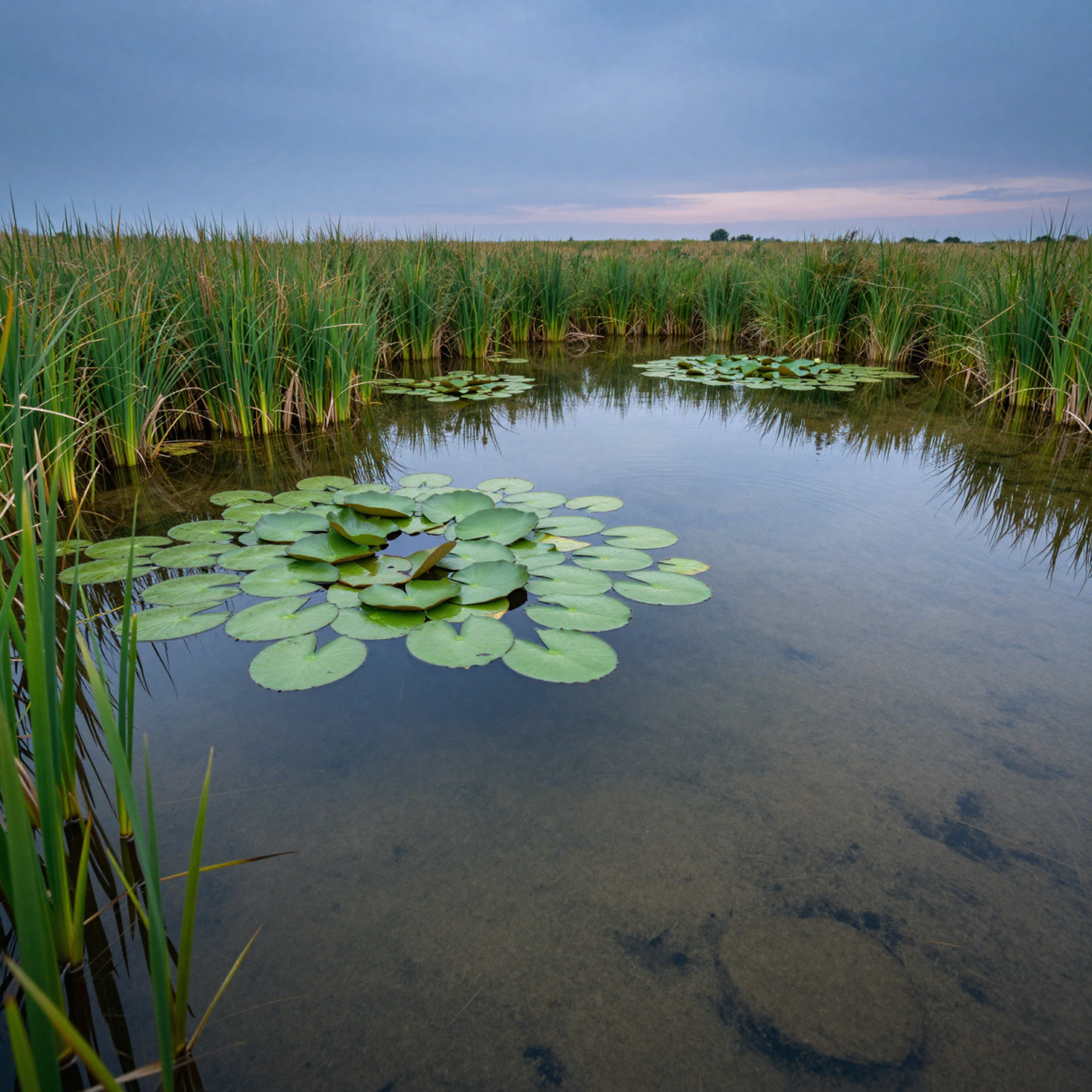
If you can build a pond, that’s the most straightforward option. But you don’t necessarily need a huge, showy pond. What matters is that there’s standing water where eggs can be laid and where nymphs can live without being constantly disturbed.
Here are the options I consider in my yard planning:
- Small pond or garden pond: Great for supporting a full life cycle. Keep edges planted.
- Water basin or wildlife-friendly container pond: Works well for smaller yards if you can maintain stable water and add the right plants.
- “Naturalized” standing-water zones (where safe and legal): Some yards can create dragonfly-friendly habitat without heavy digging—like a shallow, sheltered water area that holds during breeding months.
A big tip: avoid harsh agitation. A lot of people automatically want a strong waterfall, lots of splashing, or aggressive filtration. But dragonfly larvae are delicate, aquatic, and easy to disrupt. I’ve found that gentle circulation (or minimal disturbance) is usually better than anything that constantly churns the water surface.
Step 3: Add the right plants—so dragonflies have habitat at every life stage
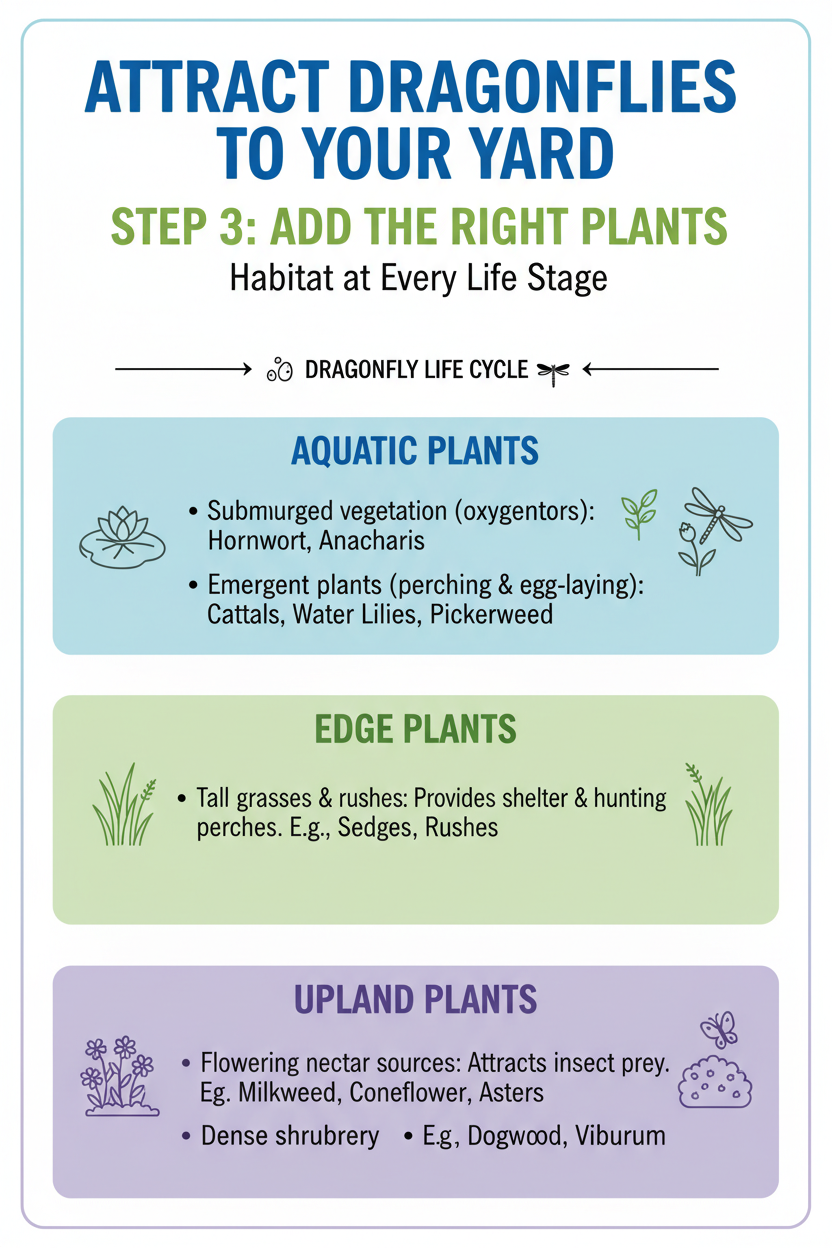
This is the step that turns “a water feature” into a dragonfly magnet.
Dragonflies don’t just need water—they need plants arranged so they can do different jobs:
- protect eggs and larvae
- provide oxygen and cover
- offer safe egg-laying areas
- give adults places to land while they hunt
My go-to plant mix strategy
I aim for a varied selection instead of a single plant. That way, dragonflies can find what they need whether they’re in egg, nymph, or adult mode.
- Oxygenating plants: These add oxygen to the water and provide cover for larvae.
- Emergent plants (stems that rise above the surface): These are helpful for egg-laying and give dragonflies structural places to interact with the water.
- Floating plants: Many dragonflies benefit from floating plants because larvae can hide under leaves and near their edges.
If you want a simple “shoreline” bonus, I also plant near-pond flowers in marsh-like conditions. For example, black-eyed Susan (Rudbeckia hirta) is known to attract dragonflies and other pollinators when planted near water in the right conditions. Even if it’s not directly in the water, it supports the overall ecosystem and brings more beneficial insects into the area.
Step 4: Build dragonfly-friendly edges (the “wet border” is where the magic happens)
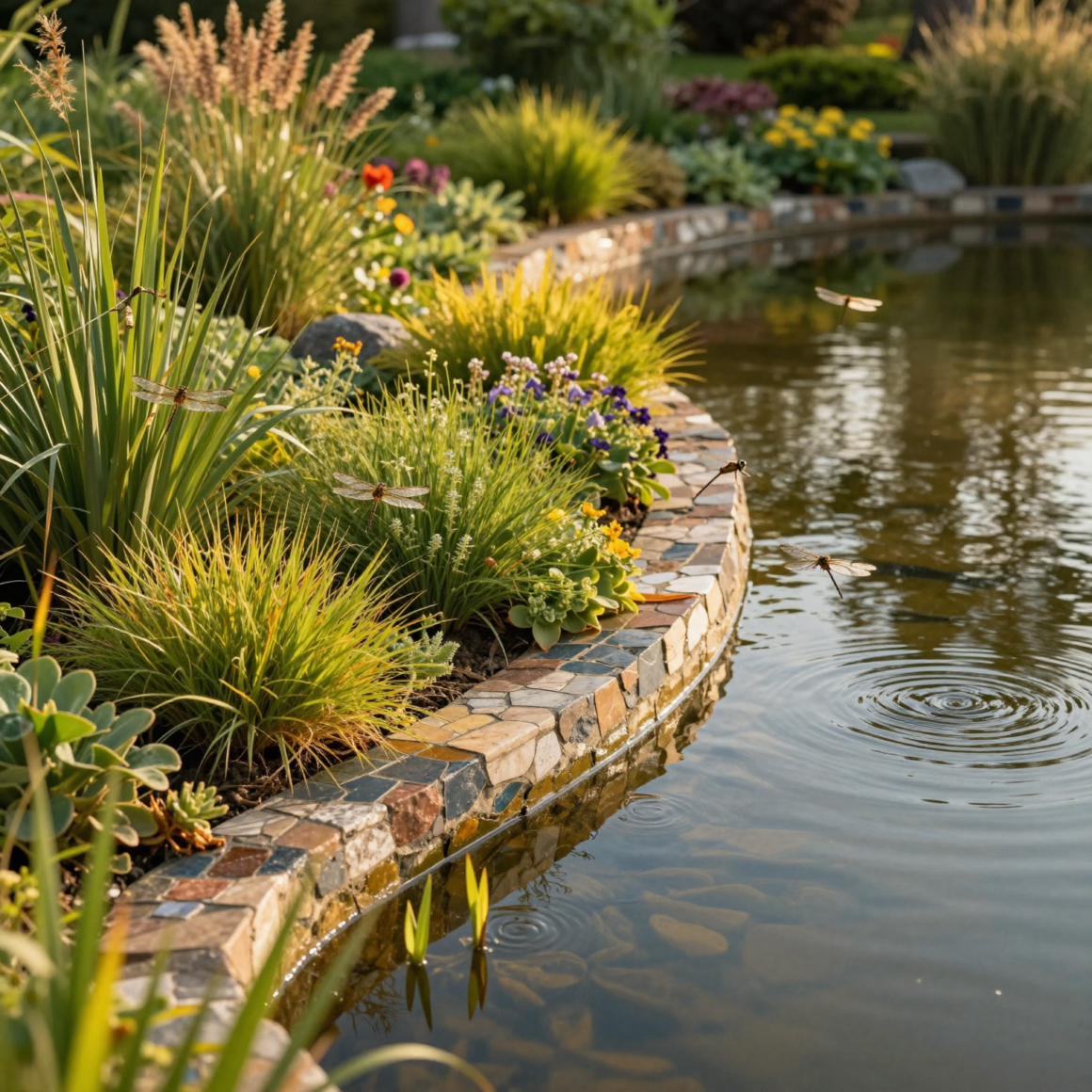
Dragonflies love edges—those in-between zones where water meets plants, mud, and sun.
When I set up a water feature, I don’t just think “water in the middle.” I think “habitat in layers”:
- Water zone: where eggs can be laid
- Shallow margins: where mud/wet areas may help egg-laying
- Plant zone: emergent and floating plants that create a safe, natural feel
- Sunny perching zone: nearby stems and grasses where adults can rest while they hunt
If your pond/basin is perfectly smooth and sterile, it’s harder for dragonflies to “settle.” But if it has natural-looking edges, rooted plants, and pockets of cover, it becomes much more inviting.
Step 5: Design your water feature so it’s stable—not stressful
This is where I try to balance two things: keeping water healthy and keeping it gentle.
Dragonfly nymphs develop in the water for a long time. So even if adults show up quickly, the real test is whether nymphs can survive and grow.
To keep things friendly:
- Use gentle circulation if you need help with water quality. If you add a fountain or pump, keep the flow unobtrusive so it doesn’t constantly disrupt larvae.
- Avoid strong splashing into shallow plant beds. Splashing can be fine for birds and humans, but it can be rough on underwater life.
- Keep the system consistent. Frequent draining and refilling resets habitat and removes eggs/larvae.
If you’re using a floating fountain or similar solution, the main idea is that movement should be careful and not create a constant “blender” effect. I think of it like this: dragonflies can handle nature-level motion, but I try not to add chaos where larvae live.
Step 6: Help the food web (dragonflies bring mosquito control, but they still need prey)
Dragonflies are famous for mosquito control—not because they “target” mosquitoes like a bug spray, but because dragonflies and their relatives (especially nymphs) prey on small insects in and around water.
So a healthy dragonfly habitat often naturally supports:
- mosquito larvae (as part of the food web)
- other small aquatic insects
- adult insects that dragonflies hunt in mid-air
One helpful side note: in some pond systems, fish (if present) can reduce mosquito larvae by eating them. That can indirectly affect how many mosquitoes are around. But if you go the fish route, you’ll want to think carefully, because fish may also eat other aquatic life.
My best approach is usually: focus on the dragonfly habitat itself (water + plants + gentle conditions), then let the ecosystem sort out the details over time.
Step 7: Time your efforts for late spring through summer
If I do everything right but start too early or drain the habitat during breeding season, I’m basically skipping the whole point.
Dragonflies commonly breed in late spring and summer. Eggs hatch in days to a couple of weeks, and then nymphs spend a long time developing in the water. That means:
- You should aim for a yard-ready setup before peak breeding begins.
- Keep water available and plants established through the warm months.
- Expect colonization time—dragonflies don’t always arrive overnight.
When I see the first adults show up, I treat it like a sign the habitat is working—not the finish line. The real success is whether nymph habitat is safe and stable long enough for the next generation.
Step 8: Maintain your dragonfly yard without “over-cleaning”
Maintenance is where a lot of people accidentally reduce dragonfly success.
Here’s what I try to do instead of constantly tidying the entire feature:
- Maintain plant coverage. If everything gets cut back hard, you remove cover for nymphs.
- Avoid total water replacement during the season. Small adjustments are better than “resetting” the habitat.
- Keep edges natural-looking. Clean, bare liner-only water can look tidy but can be less welcoming than a planted margin.
- Watch water clarity and balance. Some algae is normal, but if water becomes severely smelly or opaque, you may need to adjust nutrient input and plant balance.
If you want a simple mindset: nurture stability over perfection.
Tips
- Start small: A modest pond or basin plus the right plants can attract dragonflies faster than a huge feature with poor planting.
- Use a layered planting plan: oxygenating + emergent + floating plants creates habitat for eggs, nymphs, and adults.
- Prioritize sunlight: dragonflies are active in warm, sunny conditions, and many aquatic plants grow best with good light.
- Choose native plants when possible: natives often fit local weather and attract local insect life that dragonflies rely on.
- Avoid pesticides near the water: chemicals can reduce insect prey and may harm beneficial aquatic organisms.
- If digging isn’t practical, create a safer standing-water option: community discussions often focus on creative “no-dig” habitat ideas, but the rule is the same—stable standing water plus plant cover.
FAQ
Do dragonflies need a pond specifically?
A true pond helps a lot because it creates stable standing water for egg-laying and long nymph development. But you can sometimes attract dragonflies with smaller, safer standing-water features like basins or carefully managed naturalized water areas—especially if you can add plants and keep the water calm.
What plants attract dragonflies the most?
I focus on plant types, not just single species. Oxygenating plants support nymphs, emergent plants help with egg-laying, and floating plants provide protective cover. For shoreline/wet-edge flowers, water-tolerant perennials like black-eyed Susan can help create a lively, pollinator-friendly border near the water.
Will dragonflies help with mosquitoes?
Often, yes. Dragonflies and their nymphs eat small insects, including mosquito larvae, as part of the natural food web around water. If you also have other mosquito-control influences (like fish that eat larvae), mosquito numbers may drop even more—though you’ll want to choose carefully for your habitat goals.
How long until I see dragonflies in my yard?
It depends on location and weather, but don’t be surprised if it takes some time. If your yard becomes suitable in late spring or early summer, you may see adult dragonflies during that season. The clearest sign of success is ongoing activity and evidence of nymph habitat working over time.
Should I add a fountain or aerator?
You can, but I’d keep it gentle. Harsh splashing and strong water movement can disturb nymphs. If you want circulation, choose methods that reduce stagnation without creating constant turbulence in the areas where larvae live.
What’s the biggest mistake people make?
The biggest mistake is creating standing water without adding plant structure—or creating a feature that’s too disruptive. Dragonflies need calm, plant-covered water that supports eggs and long-term nymph development.
Conclusion
Attracting dragonflies to your yard is one of those nature projects that feels both simple and deeply rewarding. Once you give them standing water for egg-laying and a plant-rich environment for nymphs, dragonflies tend to follow. I’ve found the biggest wins come from thinking in life stages: water/mud for eggs, stable and covered habitat for nymphs, and sunny perches plus flowers nearby for adults. If digging a pond isn’t possible, you can still create habitat with smaller standing-water options—just keep it stable and gentle. Build the right conditions, keep them through late spring and summer, and your yard can turn into a dragonfly hotspot faster than you’d expect.

Samuel Michael
I've have been involved in Backyard Farm for over 15 years, especially livestock and market gardening. I blog at my free Time and ive My most helpful thoughts on this blog.