

What makes training a German Shepherd feel smooth instead of stressful—can the right method turn a stubborn pup into a confident partner? If you’re also searching for German Shepherd obedience training, German Shepherd training tips, or how to train a German Shepherd for service tasks, this guide will help you build skills that last through backyard fun, cozy nights in, and even busy holiday gatherings. German Shepherd training can look different for puppy training, behavior training, and leash training, but the basics stay beginner-friendly. Let’s get you started with a clear plan that fits your routine.
Key Takeaways
- You’ll train faster when you use short sessions, clear cues, and rewards your German Shepherd truly enjoys.
- Consistency matters more than intensity: practice the same rules every day.
- Start with handling, simple obedience, and calm leash walking before you add distractions.
- A German Shepherd learns best with positive reinforcement, steady boundaries, and predictable routines.
- If your dog shows fear, aggression, or intense frustration, pause and get help from a certified trainer.
Quick Answer
To train a German Shepherd, begin with a routine and positive reinforcement. Teach basic obedience skills like “sit,” “stay” (briefly), “come,” and “down” using short sessions and tasty rewards. Build confidence with calm handling and gentle exposure to sounds and everyday sights. Then move into leash training and real-life distractions gradually. Finish each session on a win, track what works, and adjust your plan when your dog gets confused or overwhelmed.
What You Need
| Item | Purpose | Notes |
|---|---|---|
| Treats your German Shepherd loves | Reinforcement during training | Keep them small so training stays fast |
| Treat pouch or pockets | Easy access while practicing | Reduces breaks and keeps attention |
| Clicker (optional) | Mark the exact moment your dog does it right | Use consistently if you choose it |
| Collar and secure leash | Safe control for practice | Use a harness if your dog pulls hard |
| Comfortable training space | Fewer distractions while learning | Start indoors, then move outdoors |
| High-value reward (toy or food topper) | Motivation for harder tasks | Save for “training moment” challenges |
| Notebook or phone notes | Track progress and patterns | Write down what you practiced and results |
| Crate or safe pen (optional) | Calm structure and rest | Make it a positive space, not punishment |
| Cleanup tools | Manage accidents calmly | Enzymatic cleaner helps reduce repeat spots |
Step 1: Choose a training goal and a daily routine
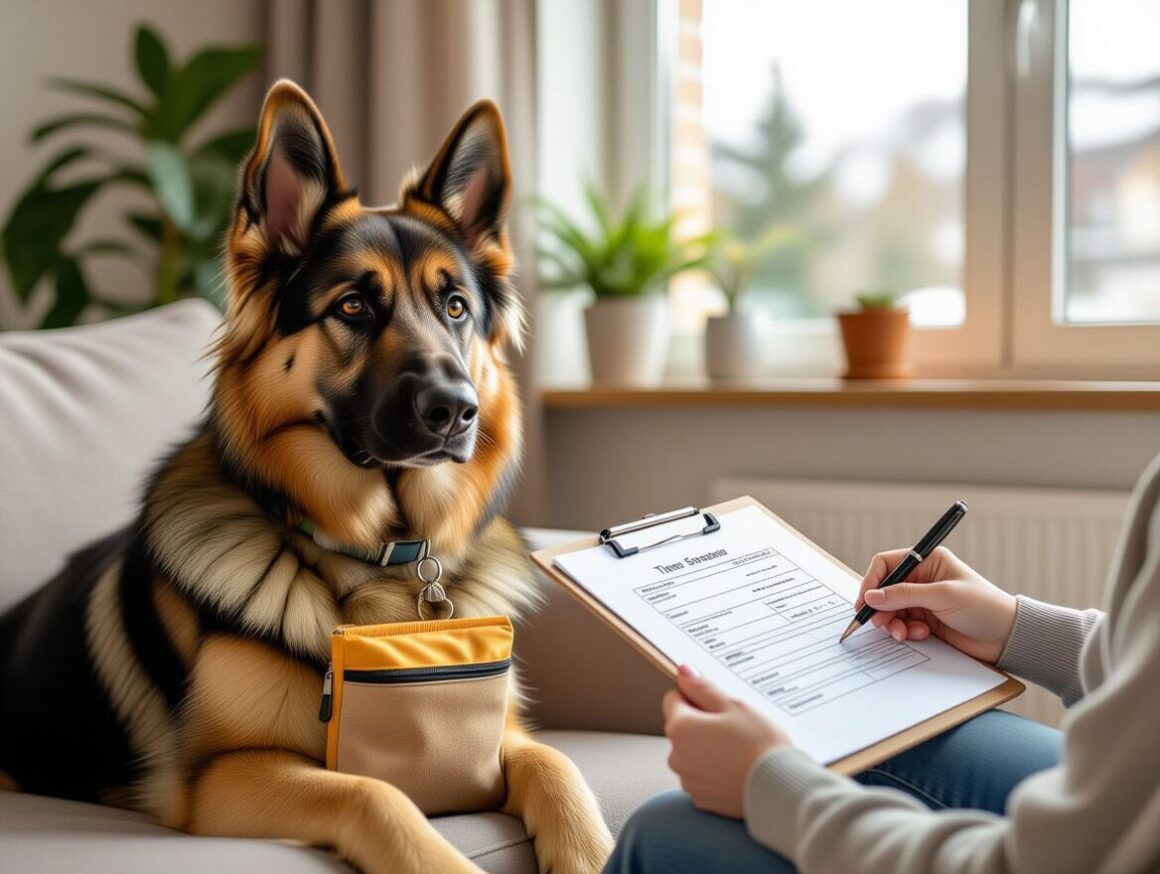
Before you teach a single cue, decide what “good” looks like for your life. For example, you may want a German Shepherd who can walk calmly on a leash, stay relaxed when visitors arrive, and respond reliably to basic commands. Then set a simple daily routine: practice once in the morning and once later in the day, keeping each session short.
German Shepherds are intelligent and can learn quickly, but they also notice everything. When your schedule is predictable and your expectations are clear, your dog spends less energy guessing what you want.
Make sessions short on purpose
Aim for sessions that last a few minutes at a time, several times per day. Short training helps your dog stay focused and prevents frustration. When you notice your dog’s attention fading, end early and end with success.
Step 2: Use positive reinforcement and set clear rules
I like to start with one core idea: reward what you want to happen again. If you yell while your dog jumps, you often end up rewarding the behavior with attention. Instead, reward calm behavior and teach the jump to “go away” by redirecting to something allowed, like sitting for greetings.
According to the American Veterinary Society of Animal Behavior (AVSAB), positive reinforcement-based training approaches are widely recommended for improving learning and welfare. That matters because German Shepherds can become anxious or reactive if training becomes confusing or harsh.
Pick your “reward menu”
Use rewards your dog values. Many German Shepherds work well with small, tasty treats. Some do best with a tug toy for training progress. If you’re training in a busy area, keep treats extra small so your dog can chew quickly and stay engaged.
Be consistent with cues
Use the same word every time, with the same meaning. If you say “sit” today and “sit down” tomorrow, your dog has to relearn the rule. You can add variety later, after your dog understands the basics.
Step 3: Teach handling basics and build trust fast
German Shepherd training gets easier when your dog is comfortable being touched and managed. Start with simple handling games: touch your dog’s shoulder, reward calmly, then touch your collar area, reward again. If your dog steps away, you pause and lower your expectations.
Research from the American Psychological Association (APA) and behavior science principles support that cooperative training improves learning when stress is reduced. While your dog may be excited, handling teaches “we’re safe together,” which becomes important for grooming, vet visits, and everyday life.
Practice a quick “consent check”
I recommend a quick routine: approach your dog calmly, offer a treat near your hand, and let your dog choose to come closer. If your dog leans away, give space. Your goal is comfort, not forcing.
Teach “check-in”
Your German Shepherd should learn to look at you during the walk or while you’re at the park. Use treats to reinforce eye contact or quick glances. This skill becomes your “reset button” when distractions get intense.
Step 4: Build foundational obedience: sit, down, stand, and come
Now you can teach the core cues that make training life easier. Start in a quiet area with few distractions. Keep a treat ready and reward quickly.
If you want a structured approach, the Association of Professional Dog Trainers (APDT) and similar professional bodies encourage using reward-based methods and clear progression from easy to harder environments.
Teach “sit” first
- Hold a treat close to your dog’s nose.
- Move your hand slightly upward and back so the dog’s head follows.
- The moment your dog sits, reward and add the cue word (“sit”).
Repeat until your dog begins sitting before you move your hand.
Teach “down” next
From sit, lure the treat forward and down. When your dog’s elbows touch the floor, reward. Keep “down” short at first, then gradually increase duration.
Teach “come” with a “safe setup”
Practice recall in a controlled area with a long line if needed. I like to call once with enthusiasm, then reward immediately when your dog comes. Avoid calling your dog to end all fun at first. You want recall to feel like a good choice, not like the end of the day.
Step 5: Train “stay” briefly and reward calm choices
“Stay” is one of the most useful cues, but beginners often make it too hard too soon. Instead, train short stays with big rewards. You’ll build reliability step by step.
Start with “stay” as a pause
Teach “sit,” then show your open palm like a “wait” signal. Take one step back, then return and reward. Gradually increase time and distance only if your dog stays calm.
Use a release word
Create a release cue like “okay” or “free.” Your German Shepherd should learn that staying is correct until you tell them it’s over. Without a release, some dogs feel stuck and tense.
Step 6: Solve leash pulling with engagement and gradual exposure
Leash training often becomes the main challenge for new German Shepherd owners. Pulling usually happens because the dog wants something: a sniff, a person, a smell, or a fun place. You’ll reduce pulling by teaching your dog to check in and by practicing in small steps.
According to the Karen Pryor Academy (positive reinforcement education), rewarding attention and teaching alternative behaviors reduces unwanted pulling over time. I’ve found that this works best when you’re proactive rather than only correcting.
Use the “lure and reward” method early
Start in a quiet area. Walk, then when your dog looks at you or walks near your leg, reward. If your dog pulls, stop moving for a moment and wait until the leash softens before you continue. This teaches “being loose on leash makes the walk move.”
Add distractions slowly
Begin with low distraction areas, then gradually increase difficulty. For example: quiet street → residential sidewalk → busier park. If your dog suddenly explodes into pulling, reduce the challenge and practice again.
Consider a harness
If your dog pulls hard, a harness can help you guide safely without hurting your dog’s neck. This doesn’t replace training, but it can reduce strain and make practice more comfortable.
Step 7: Teach impulse control and polite greetings
German Shepherds are often enthusiastic with people. That’s a good trait, but you need rules so excitement stays friendly.
Practice “greet and settle”
When someone approaches, ask for sit. Reward calm. If your dog jumps, calmly turn away or block access until the dog settles, then reward greeting. The key is timing: reward calm right away.
Teach “leave it” with common items
Use something tempting on the ground. Start with an easy version: move the item farther away or make it less exciting. When your dog looks at you or disengages, reward. Then gradually bring it closer once your dog improves.
Step 8: Train for real life: sounds, visitors, and everyday distractions
Training isn’t just commands in a quiet room. Your German Shepherd needs to handle the real world: doorbells, vacuum cleaners, strange men walking by, and kids running.
I like to use a “notice and recover” plan:
- Your dog sees the thing.
- You help them stay calm.
- You reward calm attention back toward you.
- You reduce difficulty if the dog gets too worked up.
Use short exposure sessions
If your dog is nervous, stop before they fully panic. End on a calm moment. Repeat later at an easier distance or lower intensity.
Don’t rush fear
If your dog shows signs of fear—tucking tail, backing away, shaking—you should slow down. Forcing exposure can backfire. When in doubt, involve a qualified trainer.
Step 9: Prevent behavior problems with exercise, enrichment, and structure
Training doesn’t fix a dog who’s bored or overwhelmed. German Shepherds need both physical movement and mental work. A tired dog is often easier to train, not because they “obey more,” but because they can focus better.
Build a simple enrichment rhythm
Rotate activities so your dog doesn’t get bored:
- Short obedience practice
- Sniff walks
- Puzzle treats
- Light fetch or tug (with rules and breaks)
- Training games like “find it” using treats
Add rest on purpose
Rest helps prevent over-arousal. If your dog can’t settle after exciting training, you may need more rest time. Crate training or a safe pen can help you manage rest safely.
Step 10: Track progress and adjust when training stalls
Sometimes German Shepherds “forget” what they learned. Usually the real issue is the environment got harder, your timing slipped, or the reward lost value. When that happens, don’t assume your dog is stubborn. Rebuild success at an easier level.
According to Deborah Jones and other established trainers who teach marker training principles, good training depends on precise timing and clear reward delivery. In practice, that means: reward the exact behavior you want, then repeat the setup.
Keep a quick training log
Write down:
- What cue you practiced
- Where you practiced
- What reward you used
- How your dog responded
- What you’ll change next
This helps you spot patterns and avoid repeating the same mistake.
Tips
- Use a calm, upbeat voice during training; harsh energy often increases stress.
- Keep treats tiny so your dog stays focused on learning, not eating.
- Practice on a full stomach is often easier than right after a big meal.
- Stop while your dog is still doing well to keep motivation high.
- If you need help, choose a trainer who uses humane methods and can explain progress in plain language.
- Avoid punishment-based “corrections” as your main strategy; they can create fear and confusion.
- Train in different locations once skills are reliable, but increase difficulty slowly.
- If your dog shows aggression or intense fear, get professional guidance immediately.
FAQ
Q: How long does it take to train a German Shepherd? Training timelines vary by dog, age, and consistency. Many owners see basic improvements within a few weeks when sessions are short and daily. More reliable leash manners and calm greetings can take longer because real-life distractions are harder than home practice. Focus on steady progress: if your dog keeps responding better to cues, you’re on track.
Q: What treats work best for German Shepherd training? Use treats your dog loves enough to focus on you, especially when distractions show up. Small, soft treats are helpful because your dog can chew quickly and stay engaged. Some German Shepherds love high-value options like tiny pieces of cooked chicken or freeze-dried bites. If your dog loses interest, adjust the treat size, reward timing, and practice location.
Q: Why does my German Shepherd pull on the leash so much? Pulling usually happens because your dog wants something ahead, like smells, people, or movement. Also, if the walk keeps moving when your dog pulls, pulling gets accidentally rewarded. Start practicing in easier areas, reward loose-leash walking, and pause when the leash becomes tight. Gradually increase distractions as your dog improves.
Q: How do I stop my German Shepherd from jumping on people? Teach a “settle” behavior before greetings happen. Ask for sit as people approach, reward calm contact, and redirect excitement to something allowed. If your dog jumps, calmly manage the situation so attention does not come from jumping. Over time, your German Shepherd learns that calm behavior leads to greetings and rewards.
Q: My puppy bites a lot during training, what should I do? Biting is common when puppies are excited or overstimulated. Use training sessions that are shorter, calmer, and more rewarding for gentle behavior. If biting increases, end the session and give a rest, then try again later. Provide appropriate chew items so your puppy can practice mouthy behavior safely while learning boundaries.
Q: Is it okay to use a clicker for German Shepherds? Yes, clicker training works well for many dogs because it marks the exact moment you reward. If you choose a clicker, always pair it with a treat at first so your dog learns that the sound means “reward time.” Then you can use the clicker to teach new cues faster and make timing more consistent for you.
Q: Why won’t my German Shepherd listen in public places? Public places are full of sights and smells that can overpower training cues. This does not mean your dog is ignoring you on purpose. Start in calmer areas and practice cues until they work reliably, then add distractions slowly. Use high-value rewards and ask for easier versions of the behavior when your dog gets overwhelmed.
Q: How can I teach “stay” without my dog getting frustrated? Keep the first stays very short and easy. Reward your dog for staying still for just one or two seconds before increasing time. Use a clear release word so your dog knows when it’s over. If your German Shepherd starts to pace, reduce the distance or duration and practice again with calmer energy.
Q: What should I do if my German Shepherd seems fearful of strangers? Fear improves with gentle, gradual practice. Avoid forcing greetings. Instead, work at a distance where your dog can notice the stranger and stay calm, then reward calm attention and backing away from fear triggers. If fear escalates, or there is growling or biting risk, get help from a qualified trainer to keep everyone safe.
Q: Can I train a German Shepherd without professional help? You can make great progress using beginner-friendly methods, especially for basic obedience and leash skills. However, some situations benefit from professional support, like serious aggression, intense fear, or biting that cannot be managed safely. If you feel stuck, consider working with a reputable trainer who uses humane, positive reinforcement techniques and can show you how to adjust your plan.
Conclusion
Training a German Shepherd is a journey, not a one-day project. When you use positive reinforcement, keep sessions short, and build skills in easy steps, your dog learns faster and you feel more confident. Start with trust and simple cues, then expand into leash manners and real-world distractions. If you ever feel unsafe or stuck, professional guidance can help you move forward with clarity.
Latest Updates or ## 2026 Trends
In 2026, more owners keep shifting toward reward-based training education, marker training, and structured progress tracking (especially through app notes and home training logs). The biggest trend I see is focusing on humane methods and gradual exposure rather than quick fixes. If you want one modern advantage, it’s this: you can break training into measurable steps, so your German Shepherd gets better without overload. Next, choose one skill to work on this week and make it your “win.”
References
- American Veterinary Society of Animal Behavior. (2019). AVSAB position statement: Humane Training of Animals. https://avsab.org/avsab-policies/
- Karen Pryor Academy. (n.d.). Marker Training and Clicker Training basics. https://www.karenpryoracademy.com/
- Association of Professional Dog Trainers (APDT). (n.d.). Positive training principles and education resources. https://apdt.com/
- Deborah Jones. (n.d.). Training and marker-based learning resources. https://www.deborahjones.net/

Samuel Michael
I've have been involved in Backyard Farm for over 15 years, especially livestock and market gardening. I blog at my free Time and ive My most helpful thoughts on this blog.