

If your yard gets lots of sun and feels hot in the summer, you’re in luck—many plants actually thrive there. Below are 14 great options, from bright flowers to tough shrubs and even herbs, all chosen because they handle heat and full sun really well.
Key Takeaways
- Most heat-loving plants want full sun (6–8+ hours) and well-draining soil.
- During the hottest weeks, even sun lovers may need deep watering (not just a quick splash).
- Mulch helps, but don’t bury plants too deeply.
- If you’re in a very dry area, choose drought-tolerant plants. If you’re humid, watch for fungal issues and improve airflow.
Introduction
I love sunny gardens. There’s something satisfying about stepping outside and seeing flowers that look like they’re glowing—even when the weather is scorching. The good news is that you don’t need a “cool shade garden” to have great plants. Many common garden favorites actually love sunshine and heat.
In this listicle, I’m sharing 14 plants that do well in hot, bright conditions, plus tips on how to grow them so you and your garden get the best results.
When you’re choosing plants, a few simple ideas will help a lot: aim for full sun, pick plants that can handle dry spells, and make sure the soil doesn’t stay soggy. If your yard bakes and water sits in puddles, you’ll want to fix drainage first.
Let’s get into the list.
1. Sunflower

Sunflowers are basically the poster child for sunshine. If you’ve ever seen a sunflower turning toward the sun, you already know why it belongs on this list.
Why they love heat: They grow fast and handle warm weather really well. Best conditions: Full sun, and soil that drains well. Planting tip: Plant after the last frost. If you want a longer bloom season, plant a few batches every couple of weeks.
2. Lavender

Lavender is one of my favorite “hot weather” plants because it’s both pretty and practical. It smells amazing, too.
Why it loves heat: It’s drought-tolerant and enjoys dry, sunny spots. Best conditions: Full sun and well-drained soil (think sandy or rocky). Watch-outs: Lavender usually hates “wet feet,” so avoid overwatering.
3. Rosemary
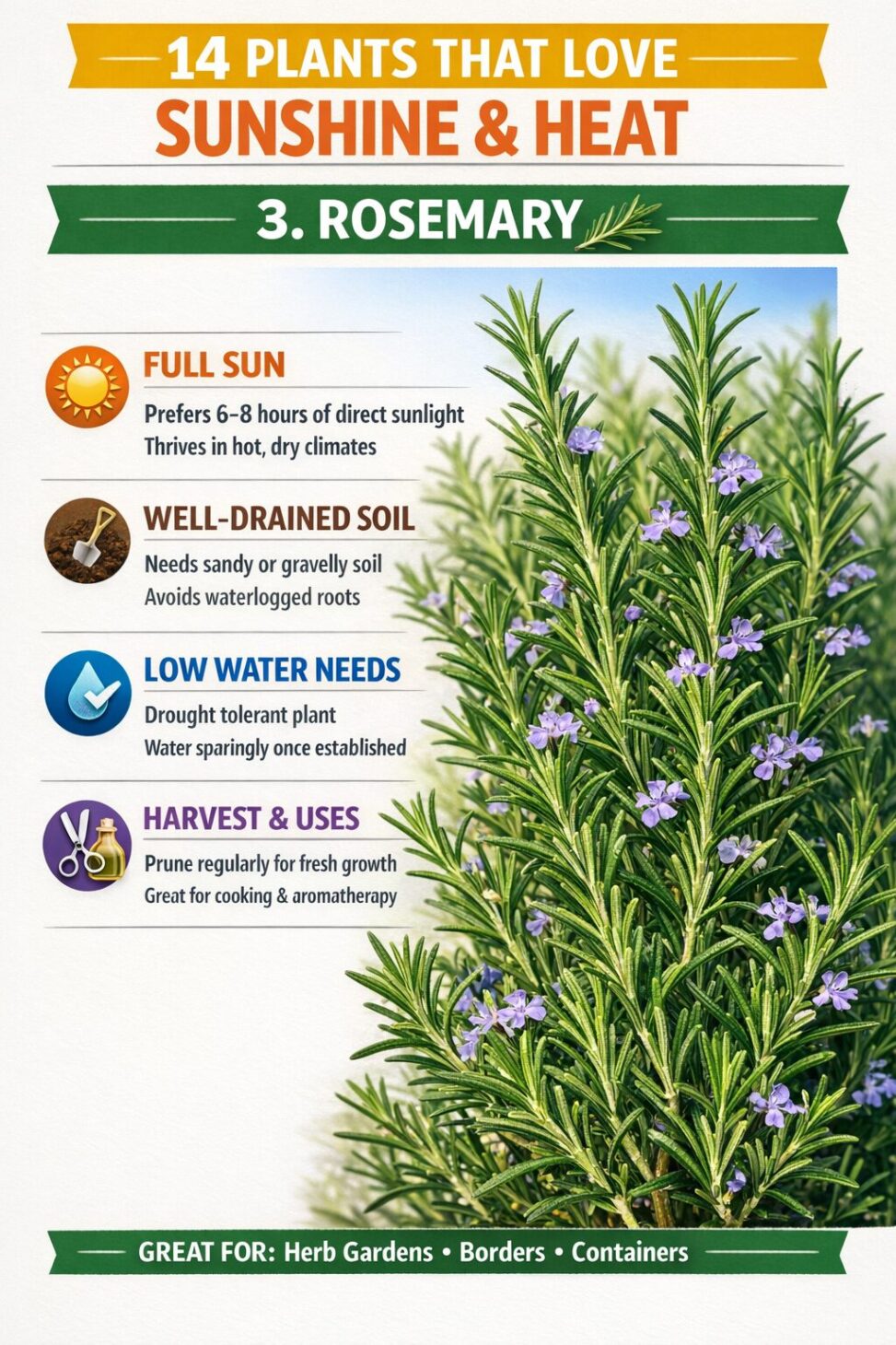
Rosemary is a sunny, heat-loving herb that looks great and tastes even better.
Why it loves heat: It thrives in warm weather and doesn’t mind some dryness. Best conditions: Full sun; loosen the soil so water drains well. Easy win: Plant it near a kitchen door where you’ll actually harvest it.
4. Gazania

If you want a plant that looks bold and stays colorful, gazania is a fun choice.
Why it loves heat: It’s a low-growing plant that does well in bright, hot conditions. Best conditions: Full sun and dry-to-average watering once established. Bonus: Some varieties close up at night, which can be kind of neat to watch.
5. Lantana

Lantana brings nonstop color and draws pollinators. It’s also known for being tough.
Why it loves heat: It handles high temperatures and can tolerate drought once it’s established. Best conditions: Full sun; water regularly at first, then less often later. Design tip: Use it as a border plant or in a container for a “spillover” look.
6. Sedum (Stonecrop)

Sedums are succulent-like plants that store water, so they can handle hot weather better than many flowers.
Why it loves heat: Thick leaves help them survive dry spells. Best conditions: Full sun to part sun, with excellent drainage. Quick care: Too much water is the bigger problem than not enough.
7. Coneflower (Echinacea)

Coneflowers are tough perennials that look great in sunny beds. They also support butterflies.
Why it loves heat: Once established, they handle summer heat and dry periods fairly well. Best conditions: Full sun, well-drained soil. Care tip: Deadhead spent blooms if you want more flowers.
8. Black-Eyed Susan

Similar to coneflowers, black-eyed Susan is a classic sun lover. It’s bright, cheerful, and hardy.
Why it loves heat: It can tolerate warm temperatures and isn’t too picky once it’s growing. Best conditions: Full sun and average soil (with decent drainage). Look for: Types that fit your space—some are taller, some stay more compact.
9. Zinnia

Zinnias are colorful and fast. If you want a “quick payoff” plant for summer, these are a great pick.
Why it loves heat: They thrive in warm weather and love lots of sun. Best conditions: Full sun; keep soil evenly moist while seeds/seedlings are getting established. Pro tip: Water at the base to reduce mildew risk.
10. Marigold
Marigolds are easy, bright, and great for beginner gardeners. They’re also wonderful for borders and container planting.
Why it loves heat: Marigolds handle sunny weather well and keep blooming. Best conditions: Full sun; don’t overwater. Bonus: They can help fill gaps in your garden during the hottest months.
11. Portulaca (Moss Rose)
Portulaca is a heat champ. You’ll often see it in dry, sunny areas because it doesn’t need much fuss.
Why it loves heat: It’s drought-tolerant and loves dry, bright sun. Best conditions: Full sun; sandy or well-drained soil works best. Note: In very rainy climates, improve drainage so roots don’t rot.
12. Yarrow
Yarrow is a hardy flower that can look delicate but is actually tough. It also supports pollinators.
Why it loves heat: It handles dry heat and doesn’t require constant watering. Best conditions: Full sun; well-drained soil. How to use it: Great for natural-looking beds and pollinator gardens.
13. Heat-Loving Grasses (Blue Fescue / Fountain Grass)
If you want movement and texture, grasses are a smart choice. Many ornamental grasses look best in sun and heat.
Why they love heat: Many are drought-tolerant and prefer dry-ish conditions. Best conditions: Full sun; avoid soggy soil. Styling tip: Pair grasses with flowering plants for contrast—soft flowers + spiky structure looks amazing.
14. Canna Lily
Canna lilies bring dramatic height and vibrant blooms. They look like they belong in a tropical garden.
Why it loves heat: They enjoy warm temperatures and can grow vigorously in summer. Best conditions: Full sun to part sun; water more regularly than drought-tolerant plants. Important tip: If you live somewhere cold, you may need to treat them as annuals or dig them up (depending on your climate).
Common Mistakes
Even sun-loving plants can struggle if a few common issues show up. Here are the biggest mistakes I try to avoid, and you can too:
- Planting in soil that holds water
Heat plants often need good drainage. If the soil stays wet for days, many of these plants won’t be happy.
- Underwatering too early
When plants are young, they still need steady moisture. Once they’re established, many become drought-tolerant—but don’t skip watering right away.
- Overwatering to “help” them
For drought-tolerant plants like lavender, rosemary, sedum, and portulaca, too much water can cause root problems.
- Using the wrong plant for your climate
A plant that loves heat in one region might not do well in another where winters are harsh or summers are humid. Pick based on your local weather and sunlight.
- Not giving enough sun
These plants are “sun lovers” for a reason. If your space only gets 3–4 hours of direct sun, you’ll get weaker growth and fewer blooms.
- Ignoring airflow in humid areas
In places with high humidity, some flowering plants can develop mildew. Water at the base and give plants enough space to breathe.
- Planting too close together
Crowded plants don’t dry out well and can compete for water. Follow spacing instructions and thin seedlings if needed.
- Forgetting the basics: mulch and weed control
Mulch can help keep soil temperatures stable and reduce evaporation. Just don’t pile mulch against stems.
FAQ
What counts as “full sun” for these plants?
For most of these plants, full sun means at least 6 hours of direct sunlight per day. Some can handle part sun, but they’ll usually bloom better with more sun.
How often should I water heat-loving plants?
It depends on your plant and your soil. As a general guide:
- New plants: water more regularly until roots are established.
- Established plants: often need less water, especially for drought-tolerant types like lavender, sedum, yarrow, and portulaca.
A simple test is to check the soil—if the top couple inches are dry, it’s usually time for a deep watering.
Do heat-loving plants still need care in extreme summer?
Yes. Even tough plants appreciate good care during the hottest weeks. I recommend:
- Deep watering (when needed)
- Keeping weeds down (they compete for water)
- Using mulch
- Watching for pests or stress signs (wilting that doesn’t bounce back can mean dry soil)
Are these plants good for containers?
Many are! Lavender, rosemary, portulaca, marigolds, and zinnias do especially well in containers as long as you use draining potting mix and don’t let the roots sit in water.
Which plants are best if I’m in a very dry area?
If you’re dealing with drought, I’d start with:
- Lavender
- Rosemary
- Sedum
- Portulaca
- Yarrow
- Gazania
These tend to handle dry conditions better than plants like canna lily, which prefers more regular moisture.
Can I mix these plants in one bed?
Absolutely. I often like to mix “thirst levels” by grouping plants that have similar watering needs. For example, combine lavender/rosemary/sedum with plants like gazania or portulaca. If you include canna lily, give it a spot with a bit more moisture.
Conclusion
If your yard is sunny and hot, you don’t have to fight your climate—you can work with it. These 14 plants are strong choices that love bright light, handle warm temperatures, and can keep your garden looking great through summer.
If you want the easiest path to success, focus on three things: full sun, well-drained soil, and smart watering. Once you do that, you’ll be amazed how many plants actually thrive in conditions that might seem “too hot” for gardening.
Now it’s your turn: pick a few from the list, match them to your sunlight and soil, and enjoy the kind of summer garden that feels like sunshine in plant form.

Samuel Michael
I've have been involved in Backyard Farm for over 15 years, especially livestock and market gardening. I blog at my free Time and ive My most helpful thoughts on this blog.

