
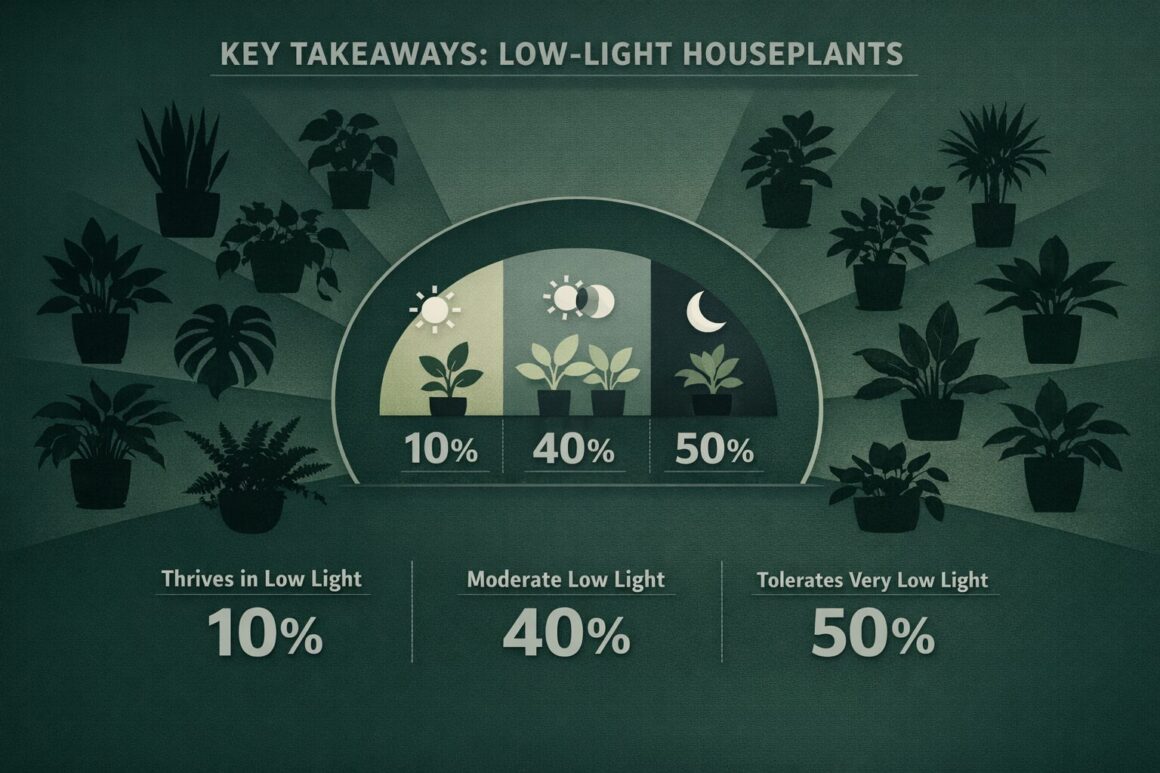

Yes, there are many indoor plants that can live well without direct sun. The best 15 plants that dont need Sunlight are low-light houseplants like snake plant, ZZ plant, pothos, and cast iron plant because they tolerate dim rooms, indirect light, and beginner mistakes better than most.
Key Takeaways
- Low light does not mean no light at all. Most plants still need some ambient light.
- The easiest picks for beginners are snake plant, ZZ plant, pothos, and spider plant.
- Bathrooms, offices, bedrooms, and hallways are common low-light spots for these plants.
- Overwatering is the main reason low-light plants fail indoors.
- Choose plants with thicker leaves if you forget to water.
- Choose plants like ferns, prayer plants, and peace lilies if your home has higher humidity.
- Some low-light plants are toxic to pets, so check safety before buying.
- If a plant gets leggy or pale, it likely needs brighter indirect light, not more water.
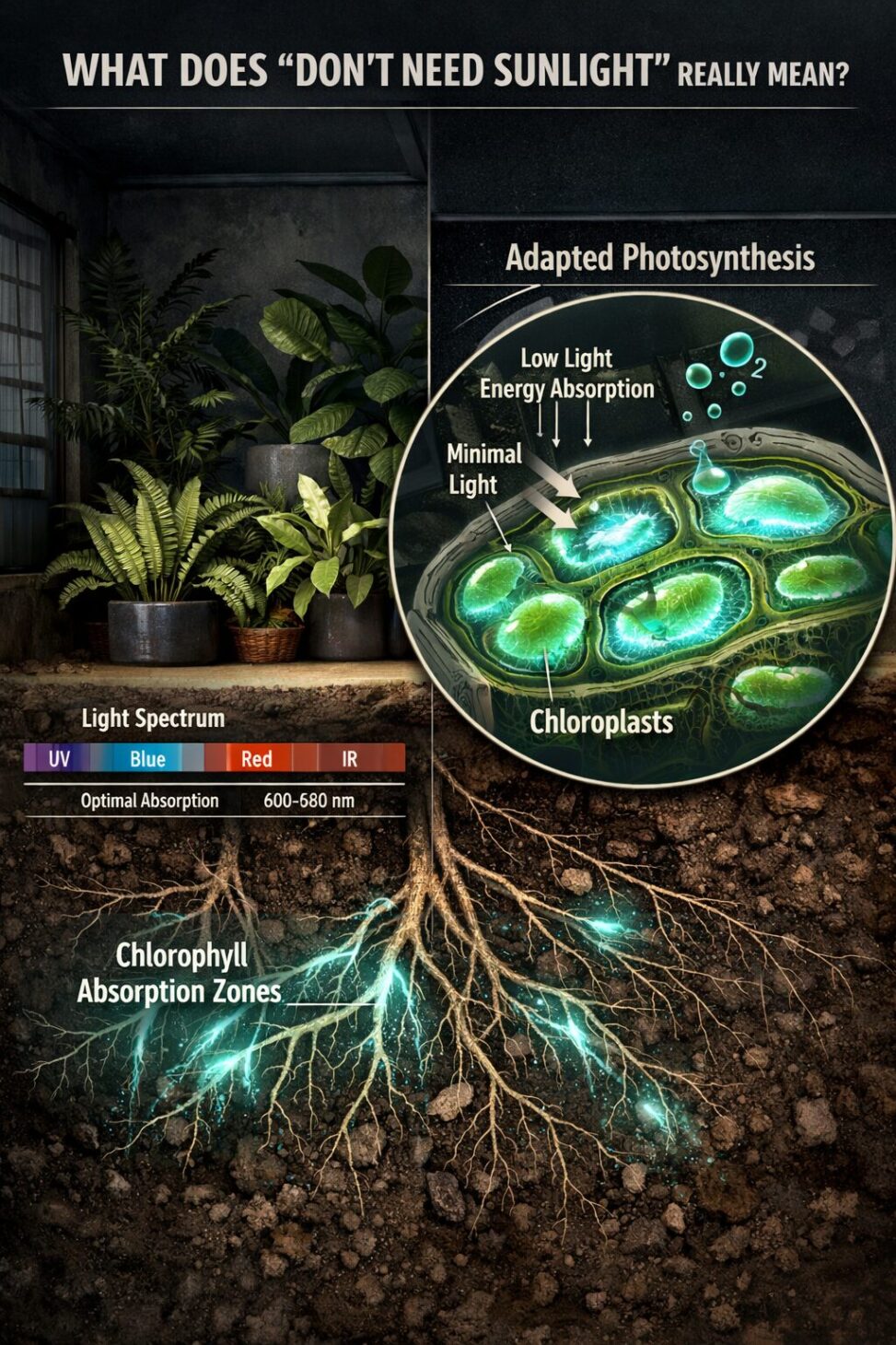
What does “don’t need sunlight” really mean?
Plants that “don’t need sunlight” usually mean plants that do not need direct sunlight. Most of these houseplants still need low or medium indirect light from a nearby window, lamp-lit room, or bright indoor space.
That distinction matters because many people lose plants by putting them in a truly dark corner. A low-light plant can survive in:
- A room with north-facing windows
- A hallway with borrowed light
- A bathroom with frosted glass
- An office with fluorescent or LED overhead lighting
A low-light plant usually won’t thrive in a windowless closet long term. Choose artificial grow lights if the space has almost no natural light.
“Low light” means enough light to read a book comfortably, but not strong sun hitting the leaves.
Which are the best 15 plants that dont need Sunlight?
The best 15 plants that dont need Sunlight are reliable indoor plants that handle dimmer conditions and inconsistent care. If you want the short list fast, start with snake plant, ZZ plant, and pothos.
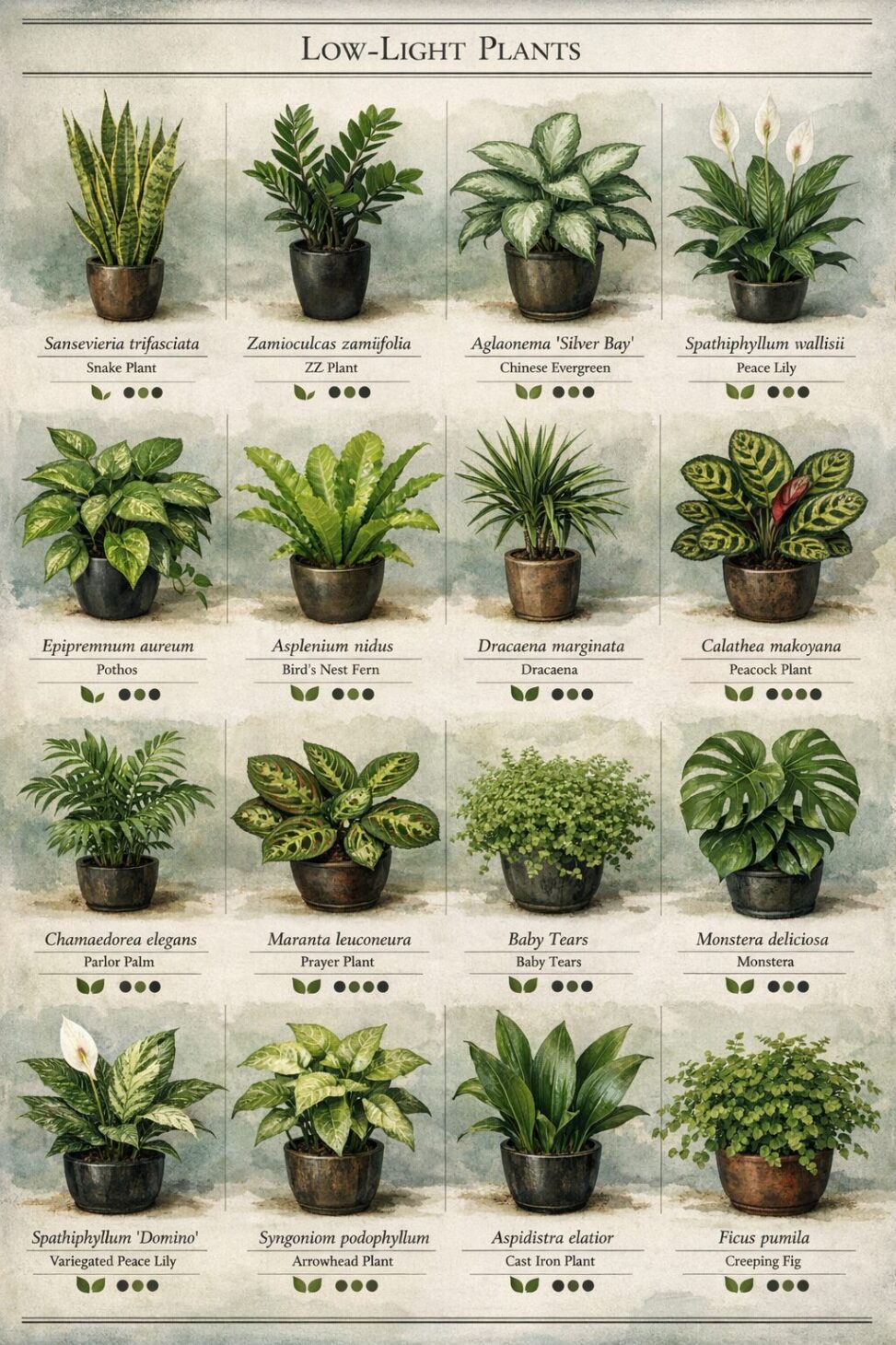
Here are the 15 best options, with quick reasons to choose each one:
Snake Plant
Choose snake plant if you want the easiest care. It handles low light, dry air, and missed waterings.ZZ Plant
Choose ZZ plant if your room is dim and you want glossy leaves. It stores water in thick rhizomes, so it forgives neglect.Pothos
Choose pothos if you want a trailing vine for shelves. It grows in low light, though variegated types may lose some color.Heartleaf Philodendron
Choose heartleaf philodendron if you like soft trailing greenery. It adapts well to apartments and offices.Cast Iron Plant
Choose cast iron plant if you need something tough. It tolerates low light, temperature swings, and less-than-perfect care.Peace Lily
Choose peace lily if you want a flowering low-light plant. It prefers consistent moisture and may droop clearly when thirsty.Chinese Evergreen
Choose Chinese evergreen if you want patterned leaves. It does well in low light and is often easy for beginners.Parlor Palm
Choose parlor palm if you want a softer, feathery look. It fits bedrooms and shaded corners well.Dracaena
Choose dracaena if you want upright growth with a modern look. It handles lower light but dislikes soggy soil.Spider Plant
Choose spider plant if you want a forgiving plant that makes baby offshoots. It likes indirect light but tolerates lower light.Lucky Bamboo
Choose lucky bamboo if you want a compact desk plant. It grows in water or soil and prefers indirect light.Bird’s Nest Fern
Choose bird’s nest fern if your home is humid. It likes low to medium indirect light and steady moisture.Nerve Plant
Choose nerve plant if you want colorful leaf veins. It stays small and works well in terrariums or bathrooms.Prayer Plant
Choose prayer plant if you want leaves that move with day and night cycles. It likes humidity and softer light.Aglaonema cultivars
Many aglaonema varieties deserve a separate mention because some have silver, pink, or red tones that still do fairly well in low light.
Common mistake: treating all low-light plants the same. Snake plant and ZZ plant like to dry out more than peace lily or fern.
How do I choose among the 15 plants that dont need Sunlight?
The right plant depends on your room, watering habits, and whether pets live in the home. If you match the plant to your lifestyle first, success gets much easier.
Quick comparison table
| Plant | Best for | Water needs | Pet caution |
|---|---|---|---|
| Snake Plant | Beginners, bedrooms, offices | Low | Yes |
| ZZ Plant | Very dim rooms, busy owners | Low | Yes |
| Pothos | Shelves, hanging baskets | Low to medium | Yes |
| Heartleaf Philodendron | Trailing décor | Medium | Yes |
| Cast Iron Plant | Tough spots, low care | Low to medium | Generally safer choice to research by cultivar |
| Peace Lily | Flowers, bathrooms | Medium | Yes |
| Chinese Evergreen | Low-light color | Medium | Yes |
| Parlor Palm | Soft tropical look | Medium | Generally considered pet-friendlier, verify source |
| Dracaena | Upright modern style | Low to medium | Yes |
| Spider Plant | Easy propagation | Medium | Generally considered pet-friendlier |
| Lucky Bamboo | Desks, small spaces | Medium | Yes |
| Bird’s Nest Fern | Humid rooms | Medium | Generally considered pet-friendlier |
| Nerve Plant | Small spaces, terrariums | Medium to high | Best to verify by species |
| Prayer Plant | Decorative foliage | Medium | Often considered pet-friendlier |
| Aglaonema | Stylish leaf patterns | Medium | Yes |
Choose by situation
- Choose snake plant or ZZ plant if you forget to water.
- Choose peace lily, bird’s nest fern, or prayer plant if your bathroom stays humid.
- Choose pothos or philodendron if you want vines on a shelf.
- Choose parlor palm or dracaena if you want height.
- Choose spider plant if you want to propagate baby plants.
Where should I place low-light houseplants indoors?
Low-light plants do best in bright rooms without direct sun, not in total darkness. Place them a few feet away from a window, or in spaces with soft filtered light.
Good placements include:
- North-facing windows
- East-facing rooms with no harsh afternoon sun
- Bathrooms with natural light
- Hallways that receive borrowed daylight
- Desks and offices under steady indoor lighting
Placement rules I follow
- If the plant casts a soft shadow during the day, the light is often enough.
- If the room feels gloomy all day, rotate the plant closer to a brighter spot weekly.
- Keep leaves away from hot vents, cold drafts, and glass that gets very cold or hot.
Edge case: A windowless room can still work if you use a grow light on a timer. That’s often the best fix for dark offices.
How do I care for 15 plants that dont need Sunlight without killing them?
The simplest rule is to water less than you think. Most low-light plants grow more slowly, so they use less water than plants sitting in bright sun.
Low-light plant care checklist
- Check the soil before watering
- Use pots with drainage holes
- Empty saucers after watering
- Wipe dust off leaves every few weeks
- Rotate plants every week or two
- Trim yellow or dead leaves
- Repot only when roots outgrow the container
A simple watering guide
- Let soil dry more: snake plant, ZZ plant, dracaena
- Keep lightly moist: peace lily, prayer plant, nerve plant, bird’s nest fern
- Middle ground: pothos, philodendron, spider plant, Chinese evergreen
Common mistake: watering on a set schedule. In low light, soil dries slowly, especially in winter.
What are the pros and cons of low-light plants?
Low-light plants are great for indoor living, but they do have trade-offs. They’re easier to place around the home, yet they usually grow slower and may become leggy in very dim rooms.
Pros
- Fit apartments and offices well
- Need less direct sun
- Often need less frequent watering
- Many are beginner-friendly
- Great for adding greenery to shaded spaces
Cons
- Growth is usually slower
- Some lose variegation in lower light
- Overwatering happens easily
- Many common low-light plants are not pet-safe
- “Low light” still is not “no light”
If you want fast growth, choose brighter indirect light. If you want easy maintenance, choose a tougher plant and accept slower growth.
What problems happen most with low-light plants?
The most common problems are overwatering, root rot, yellow leaves, and weak growth. Most issues come from giving a low-light plant too much water and too little airflow.
Quick troubleshooting
Yellow leaves
Usually caused by overwatering, poor drainage, or old leaves aging naturally.
Drooping leaves
Peace lilies often droop when thirsty. ZZ plants and snake plants may droop if roots are damaged by soggy soil.
Brown crispy tips
Dry air, inconsistent watering, or salt buildup can cause this.
Leggy growth
The plant needs brighter indirect light. This is common with pothos and philodendron.
Moldy soil
The mix is staying wet too long. Improve airflow and water less often.
Fast fix steps
- Check the soil with your finger 1 to 2 inches deep.
- Remove standing water from saucers.
- Move the plant to brighter indirect light.
- Trim damaged leaves.
- Repot into fresh, well-draining soil if roots smell rotten.
Are there alternatives if my home is extremely dark?
If your home is extremely dark, a grow light is usually a better solution than searching for a plant that likes total darkness. Even the toughest plants need some usable light source to stay alive over time.
Good alternatives include:
- LED grow lights on a timer
- Rotating plants between a dim room and a brighter room
- Choosing artificial plants for windowless corners
- Using moss displays for décor where live plants struggle
Choose a grow light if the room has no windows, no borrowed daylight, and no strong overhead lighting.
FAQ
Can plants live with no sunlight at all?
Most common houseplants cannot live long term with no light at all. They need at least indirect natural light or artificial grow light.
What is the easiest low-light plant for beginners?
Snake plant is one of the easiest low-light plants because it handles neglect, dry air, and missed waterings.
Which low-light plant grows fastest?
Pothos and heartleaf philodendron are often among the faster growers when they get decent indirect light.
Are low-light plants good for bathrooms?
Yes, many low-light plants do well in bathrooms, especially peace lily, bird’s nest fern, and prayer plant if the room has some light.
Do low-light plants need less water?
Usually yes. Lower light means slower growth, and slower growth usually means the soil stays wet longer.
Which low-light plants are safest for pets?
Spider plant, parlor palm, bird’s nest fern, and prayer plant are often considered better pet-friendly choices, but always verify the exact species from a trusted source.
Why is my low-light plant turning yellow?
Yellow leaves usually point to overwatering, poor drainage, or old leaves dying off naturally.
Can I put a snake plant in a dark corner?
A snake plant can tolerate a darker corner better than many plants, but it still grows best with some indirect light.
Conclusion
The best 15 plants that dont need Sunlight are really plants that handle low light and no direct sun. If you want the easiest wins, start with snake plant, ZZ plant, pothos, or cast iron plant. If you want softer texture or more humidity-loving choices, try peace lily, parlor palm, bird’s nest fern, or prayer plant.
My advice is simple: pick one plant that matches your room and your habits. Then place it near indirect light, use a pot with drainage, and wait until the soil starts to dry before watering again. That one change prevents most plant problems.
Next steps:
- Start with one beginner-friendly plant
- Put it in bright indirect light
- Check soil before watering
- Upgrade to a grow light if your room is very dark
If you do those four things, low-light houseplants become much easier to keep alive in 2026.

Samuel Michael
I've have been involved in Backyard Farm for over 15 years, especially livestock and market gardening. I blog at my free Time and ive My most helpful thoughts on this blog.

