


Dragonflies are like tiny aerial hunters—and when they move into my yard, everything feels more alive. The best part? I don’t have to “trick” them with perfume or fancy gimmicks. I can make my garden feel like a safe buffet and a great place to start a new generation.
If you want dragonflies to visit (and stick around), you need the right mix of flowers and aquatic-style habitat. The plants that help most aren’t just pretty—they provide cover, places to perch, and structure for egg-laying. With the right planting zones, you’ll increase the chances dragonflies find your yard for hunting and breeding. And even if you don’t have a big pond, I can still show you how to attract them indirectly with prey-friendly blooms and water-edge structure.
Ready to build a dragonfly-friendly garden that actually works? Let’s do it.
Key Takeaways
- Dragonflies don’t “fall for” fragrance—plant choice works better when it creates habitat and food opportunities.
- For true attraction, I focus on a mix of fully aquatic, semi-aquatic, floating, and marginal plants (these support different life stages).
- Flowering plants can bring dragonflies in indirectly by supporting prey and pollinator activity.
- Structural cues like emergent stems matter because dragonflies use them for egg-laying.
- The best results usually come from planting in zones around water, not just scattering flowers.
Quick Answer
My go-to “9 best” list for attracting dragonflies combines flower power plus habitat plants: Black-Eyed Susan, Yarrow (and related yarrow types), White/Common/Western Yarrow, Spiked water-milfoil, Emergent-stem plants (category), Floating frogbit (category example), Semi-aquatic/perch plants (marginal/wet-edge category), Marginal edge plants (category), and extra varied habitat plants to fill gaps in depth and structure.
What You Need
| Item | Purpose | Notes |
|---|---|---|
| A water feature (small pond, stock tank, rain garden, or pond-like container) | Provides the breeding and shelter habitat dragonflies need | Even a modest setup can help, especially with plant variety |
| Fully aquatic plants | Support larvae with oxygenation and hiding cover | Larvae live in water—this is key for attraction |
| Floating plants | Provide cover and support for larval stages | Frogbit is a popular example |
| Marginal/wet-edge plants | Create shoreline structure and perching spots | Emergent growth around edges is crucial |
| Flowering plants for adults | Increase activity by supporting prey and pollinators | Dragonflies hunt other insects, so more insects = more hunting |
| Water thermometer/optional observation check | Helps you notice what’s working | Not required, but it can reassure you that the pond is stable |
| Scissors/pruners or gentle plant-tidying tools | Helps maintain habitat without destroying structure | Avoid clearing too aggressively during peak seasons |
Step 1: Learn what dragonflies actually need (it’s not just “prettiness”)
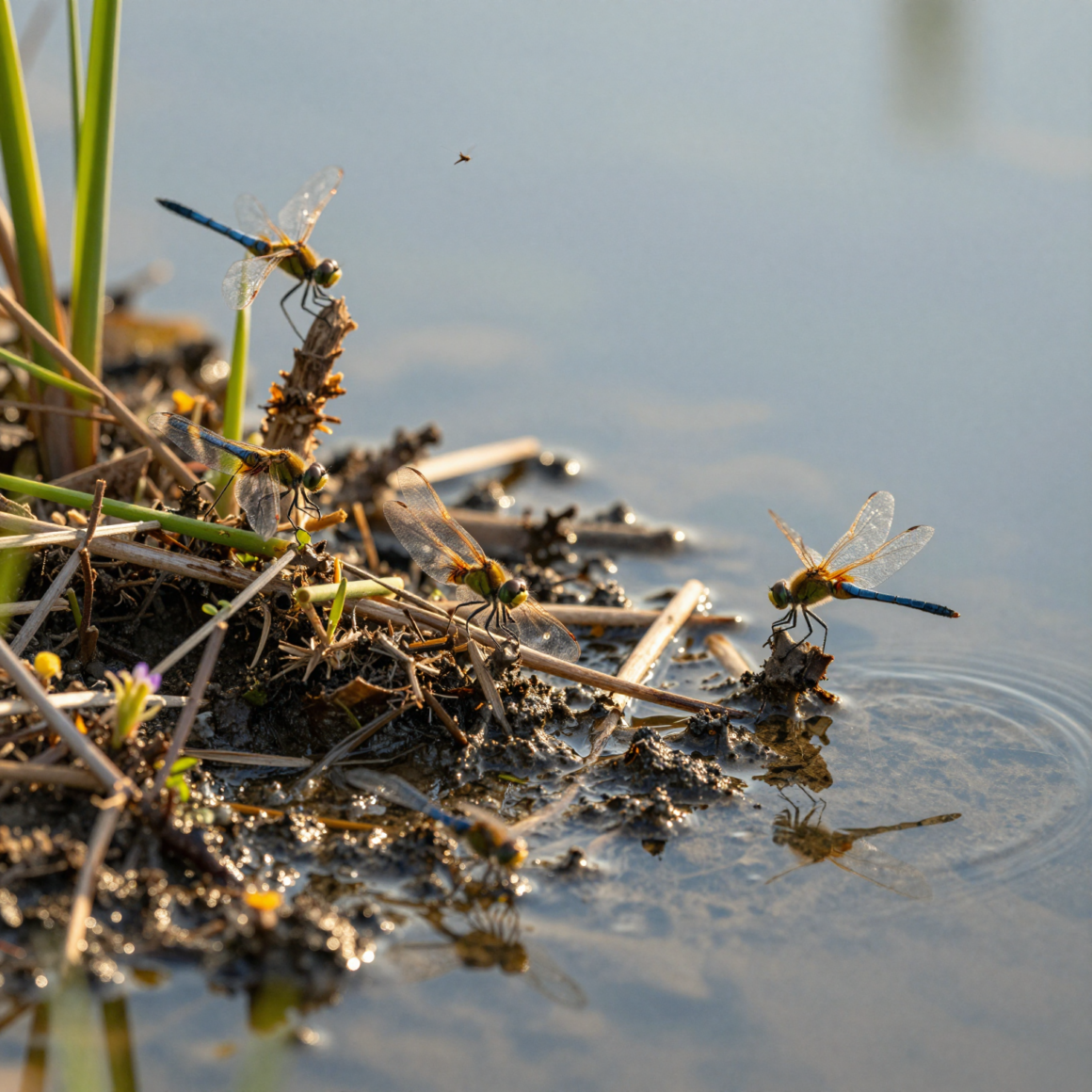
When I first tried to attract dragonflies with “dragonfly flowers,” I assumed the flowers themselves were the main target. Then I learned the real story: dragonflies need resources across their life stages.
Here’s how I think about it in plain terms:
- Larvae need water habitat. This means plants that are fully aquatic (plus oxygenating plants and shelter).
- New adult dragonflies need transition support. During emergence, they use structures in and around water to climb out and rest.
- Adults need hunting opportunities. Flowers matter because they can help bring in pollinators and prey insects—dragonflies don’t usually eat nectar the way butterflies do.
So when I choose plants, I aim for a garden that supports:
- breeding,
- emergence,
- and hunting.
That’s why my list includes both flowers and aquatic/edge plants.
Step 2: Use a life-stage planting approach (aquatic, floating, marginal, and flowers)

Instead of treating your yard like one big planting bed, I divide it into zones. Dragonflies benefit from plant variety, because different plant types help different parts of the life cycle.
I picture my garden like four “jobs”:
1) Fully aquatic zone (larvae-friendly)
These plants grow underwater and provide cover and oxygen. Oxygenating aquatic plants are especially helpful because they support a healthy pond environment for larvae.
2) Floating zone (larvae hiding + support)
Floating plants create a protected “in-between” area where larvae can hide.
3) Emergent and shallow-water zone (egg-laying + emergence)
Dragonflies lay eggs using plant structure. Stems and emergent parts help them complete that process.
4) Marginal edge + nearby bloom zone (adults hunting)
Marginal plants along the edge offer perching and easy access to insects. Meanwhile, flowering plants nearby bring more insect activity, which can increase dragonfly visits.
And one important mindset shift: I don’t try to “scent attract” them. There’s no strong scientific evidence that dragonflies are attracted to a specific fragrance. My best results come from habitat and food opportunities, not smell.
Step 3: Choose plants based on function, not just reputation

If I’m building a “best flowers for dragonflies” list, I make sure it includes plants that match real functions. That keeps me from wasting money on pretty plants that don’t support the life cycle.
When I evaluate a candidate plant, I ask:
- Does it help larvae (fully aquatic or pond-friendly cover)?
- Does it help emergence (emergent stems in shallow water)?
- Does it help adults (perching, hunting support, or insect-friendly flowers)?
- Does it contribute to variety (so the garden supports multiple stages)?
That’s also why I include a few “categories” (like emergent stems and marginal edge plants). In real yards, you might not find the exact plant name I recommend, but you can still create the structure the dragonflies need.
Step 4: The 9 best flowers/plants that attract dragonflies (and why)

Below are my “9 best” picks. Some are classic flowering perennials, and some are aquatic habitat plants. Together, they make my yard feel like a complete dragonfly destination.
Plant 1: Black-Eyed Susan (Rudbeckia hirta)
Why it helps: I use Black-Eyed Susan as a support flower. It’s not a direct “dragonfly magnet” because dragonflies don’t hunt nectar. But it helps bring in insects and pollinators that dragonflies may prey on. Where I plant it: In the adjacent land/bloom zone near my water feature so dragonflies can hunt around the activity.
Plant 2: Yarrow (Achillea millefolium and related yarrow types)
Why it helps: Yarrow is commonly recommended in dragonfly-friendly planting lists because it tends to support a lively ecosystem of nectar and insect activity. How I use it: I treat it as an adult-supporting bloom—more insects in the garden can mean more dragonfly hunting.
Plant 3: White Yarrow / Common Yarrow / Western Yarrow (grouped)
Why it helps: Yarrow types can add both flower structure and long-lasting interest. That matters because dragonfly presence often depends on consistent prey flow and ongoing insect activity. My tip: If you’re choosing among yarrow types, pick what grows best in your region and gives you the most reliable blooms.
Plant 4: Spiked water-milfoil (oxygenating aquatic cover)
Why it helps: This is one of my favorite “behind the scenes” plants. Oxygenating aquatic plants like spiked water-milfoil can provide both oxygen and protective cover for larvae. What dragonflies get: A healthier aquatic habitat for larvae to develop safely.
Plant 5: Emergent stems from aquatic plants (category)
Why it helps: Emergent stems are one of the most important structural cues. Dragonflies rely on plant structure for egg-laying, and emergence often happens near these stems. How I apply it: I don’t just want plants present in water—I want some parts coming up. Think of it like providing “rails” and “platforms” in the pond edge zone.
Plant 6: Floating plants such as frogbit
Why it helps: Floating plants (like frogbit) can help provide cover for larval stages and a protected micro-area on the water surface. Where I place it: In a floating zone so larvae can hide and navigate among the plant cover.
Plant 7: Semi-aquatic perch/support plants (marginal/wet-edge category)
Why it helps: These plants help create perching areas where dragonflies can rest and scan for prey. My approach: I plant them right along the edges so dragonflies can quickly move between hunting and safe resting spots.
Plant 8: Marginal edge plants (general marginal plants)
Why it helps: Marginal plants add shoreline structure and support the water-edge zones that dragonflies use for various life-cycle steps (including easy access for adults and egg-laying near plant structures). What to look for: Plants that thrive with “wet feet” and create a natural edge—not a bare, hard shoreline.
Plant 9: Additional habitat plants for a varied dragonfly-friendly palette
Why it helps: Dragonflies benefit from variety across depths and zones. If I only plant one type (like flowers alone), I’m missing the structure larvae need. How I fill gaps: I add more aquatic, floating, and marginal plants so I cover different habitat niches—shelter, oxygenation, and emergence support.
Step 5: Build your planting layout (where each type goes in my yard)
This is the part that changed everything for me. When I placed plants without a plan, dragonflies were scarce. When I zoned my garden, the activity increased.
Here’s how I map it:
Deep-water zone: fully aquatic plants
- Put spiked water-milfoil here (or other fully aquatic oxygenating/sheltering plants).
- This zone is mainly for larval habitat.
Shallow-water/emergent zone: plants with emergent stems
- Add plants that send stems upward.
- The goal is structure for egg-laying and emergence.
Floating zone: floating plants
- Add frogbit (or other floating options).
- Aim for partial coverage (not total blockage of the surface).
Edge/marginal zone: marginal/wet-edge plants
- Plant along the perimeter where the water meets soil.
- This supports perching and shoreline structure.
Adjacent land/bloom zone: flowers for hunting support
- Plant Black-Eyed Susan and yarrow nearby.
- Keep them within easy flying distance so dragonflies can hunt the insect activity those blooms attract.
If you’re working with a tiny pond or container, I still do the same concept—just scaled down. Even small zones can work as long as you keep the structure variety.
Step 6: Maintain your habitat (so dragonflies keep coming back)
Attraction isn’t a one-day event. I keep my dragonfly setup stable and welcoming, year after year.
Here’s what I focus on:
- Don’t strip the pond of stems and cover. Dragonflies and their larvae rely on structure and hiding spaces. If I remove everything, I’m basically removing the “neighborhood” they need.
- Keep some emergent stems. If you tidy too aggressively and remove all the vertical plant structure, you lose egg-laying and emergence support.
- Prioritize habitat quality over scent. As mentioned earlier, there’s no strong evidence that dragonflies are drawn to specific fragrances. I focus on plant function.
- Encourage prey and pollinator activity. When yarrow and other blooms stay active, more insects move through the area, and dragonflies have more to hunt.
Seasonally, I usually do gentle maintenance: remove only what’s clearly dead or blocking the entire pond, and leave enough structure for dragonfly life stages.
Step 7: If you don’t have a pond, do the “closest realistic version”
I get it—some yards can’t handle a full pond. I still try to help dragonflies using the next-best option.
Without a pond, I focus on two strategies:
- Create water-like habitat (a rain garden, a shallow basin, a stock tank with plants, or a small pond container).
- Plant prey-support flowers (like Black-Eyed Susan and yarrow) so dragonflies have hunting opportunities.
While a real aquatic habitat is best for breeding, you can still attract dragonflies indirectly by making the area rich in prey insects and by adding water-edge structure.
Tips
- Aim for variety, not perfection. Dragonflies do better when multiple plant types are present across zones.
- Choose plants that grow well for your water conditions. If a plant can’t survive your local wet/dry patterns, it won’t provide the structure dragonflies need.
- Use structure as your guide. Emergent stems and marginal edges often matter as much as any specific bloom.
- Watch for dragonfly behavior, not just sightings. If you see perching or repeated passes, your habitat is working even before you see eggs or larvae.
FAQ
Do dragonflies follow flower scent?
I can’t claim “yes” or “no” with a simple rule, but here’s what matters: there isn’t scientific evidence that dragonflies are attracted to a specific fragrance the way some insects are. My best results come from habitat and food opportunities—especially plant structure for larvae and emergence.
Can you attract dragonflies without a pond?
Yes, partly. Without aquatic habitat, dragonflies may still visit to hunt, especially if you plant prey-friendly flowers. But for consistent breeding and stronger attraction, a pond or pond-like water feature with the right plant zones is the big win.
What’s more important: aquatic plants or flowering plants?
In my experience, aquatic and structural habitat are the key for reproduction (larvae and egg-laying). Flowering plants are still useful because they support prey and insect activity for adults, but they work best as a companion to water-based plants.
How many of these plants do I need?
You don’t need all nine at once. A practical starting point for me is:
- at least one fully aquatic/oxygenating plant,
- at least one emergent/stem-forming plant or shallow-edge structure,
- and 2–3 flowering plants nearby for adult hunting support.
Then I add floating and extra marginal options if I can.
When will I see dragonflies?
Timing depends on climate and how quickly plants establish. If your habitat is ready, dragonflies may appear within weeks for hunting. For more noticeable breeding-related activity, it often takes longer as the aquatic plants establish and support larvae.
Conclusion
My “9 best flowers that attract dragonflies” list is really two ideas working together: habitat structure and food opportunities. The flowers—like Black-Eyed Susan and yarrow types—help drive insect activity that dragonflies hunt. The aquatic and edge plants—like spiked water-milfoil, floating frogbit, and emergent/marginal vegetation—support the life cycle parts dragonflies can’t skip.
If you want results, don’t just pick a pretty plant. Build a varied garden around your water feature with aquatic, floating, emergent, marginal, and bloom zones. That’s how I turn a quiet yard into a dragonfly-friendly place—and then I get to enjoy their aerial visits all season long.

Samuel Michael
I've have been involved in Backyard Farm for over 15 years, especially livestock and market gardening. I blog at my free Time and ive My most helpful thoughts on this blog.

