
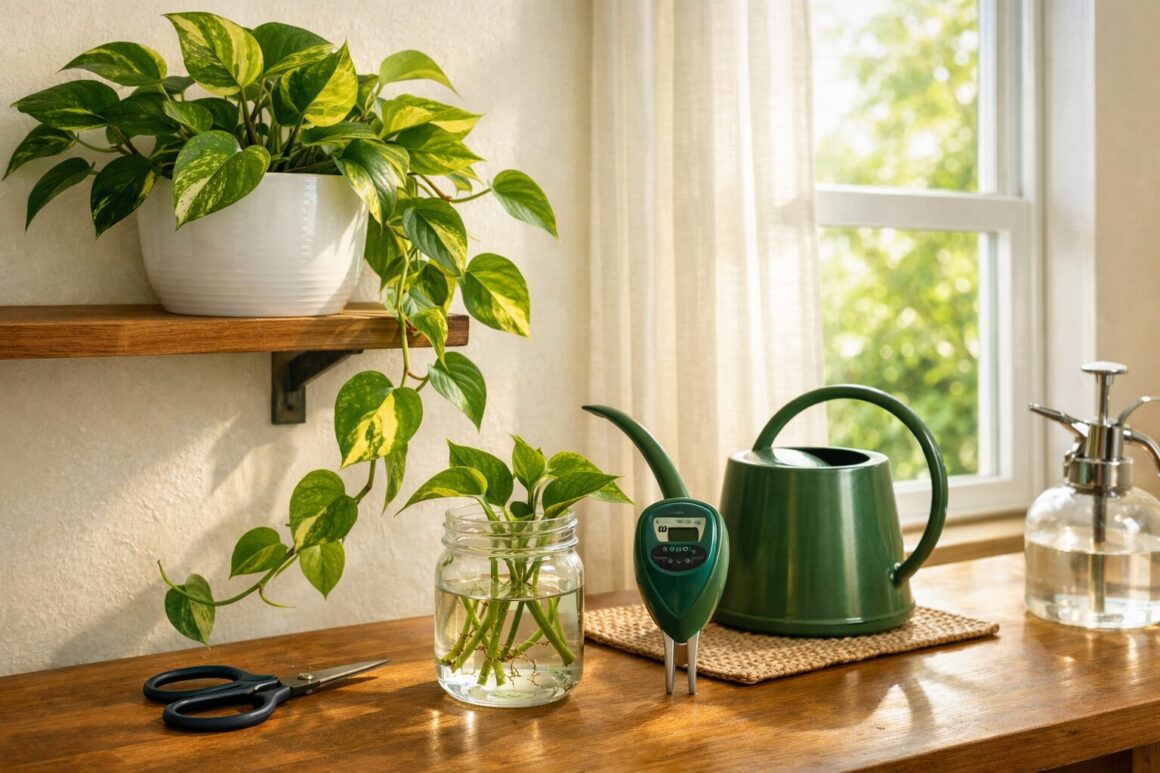

The best 12 pothos growing tips and tricks tomake pothos plant thrive comes down to three things: give pothos bright indirect light, water only when the top layer of soil dries out, and prune often enough to keep vines full. If you also use a well-draining mix, propagate from healthy nodes, and fix yellowing or leggy growth early, pothos is one of the easiest houseplants to grow well.
Key Takeaways
- Bright indirect light gives pothos the best color and fuller growth.
- Overwatering is the most common mistake with pothos.
- Water when the top 1 to 2 inches of soil feel dry.
- A pot with drainage holes matters more than a fancy container.
- Pruning above a node helps pothos branch and look bushier.
- Pothos cuttings root easily in water or moist soil.
- Smaller leaves and long bare vines usually mean not enough light.
- Yellow leaves often point to watering issues, especially soggy soil.
- Pothos grows best in a loose, airy potting mix.
- Regular cleaning and pest checks help you catch problems early.
“If a pothos looks sad, I check light first, then soil moisture, then roots.”
What are the best 12 pothos Growing tips and tricks for beginners?
The best 12 pothos tips and tricks for beginners are simple, low-risk habits that improve growth fast. Start with light, watering, soil, pruning, and propagation before worrying about fertilizer or styling.
Here’s the full list I’d use for almost any pothos variety:
- Put pothos in bright indirect light.
- Water only when the top inch or two is dry.
- Use a pot with drainage holes.
- Plant in a well-draining soil mix.
- Rotate the pot every week or two.
- Prune vines to make the plant bushier.
- Propagate from healthy nodes.
- Feed lightly during active growth.
- Wipe leaves to remove dust.
- Watch for yellow leaves, soft stems, and pests.
- Repot only when roots are crowded.
- Match care to the variety and your room conditions.
Choose this beginner approach if: you want a healthy pothos without tracking a strict schedule.
Common mistake: treating pothos like a thirstier tropical plant and watering on the same day every week no matter what.
How much light does pothos really need?
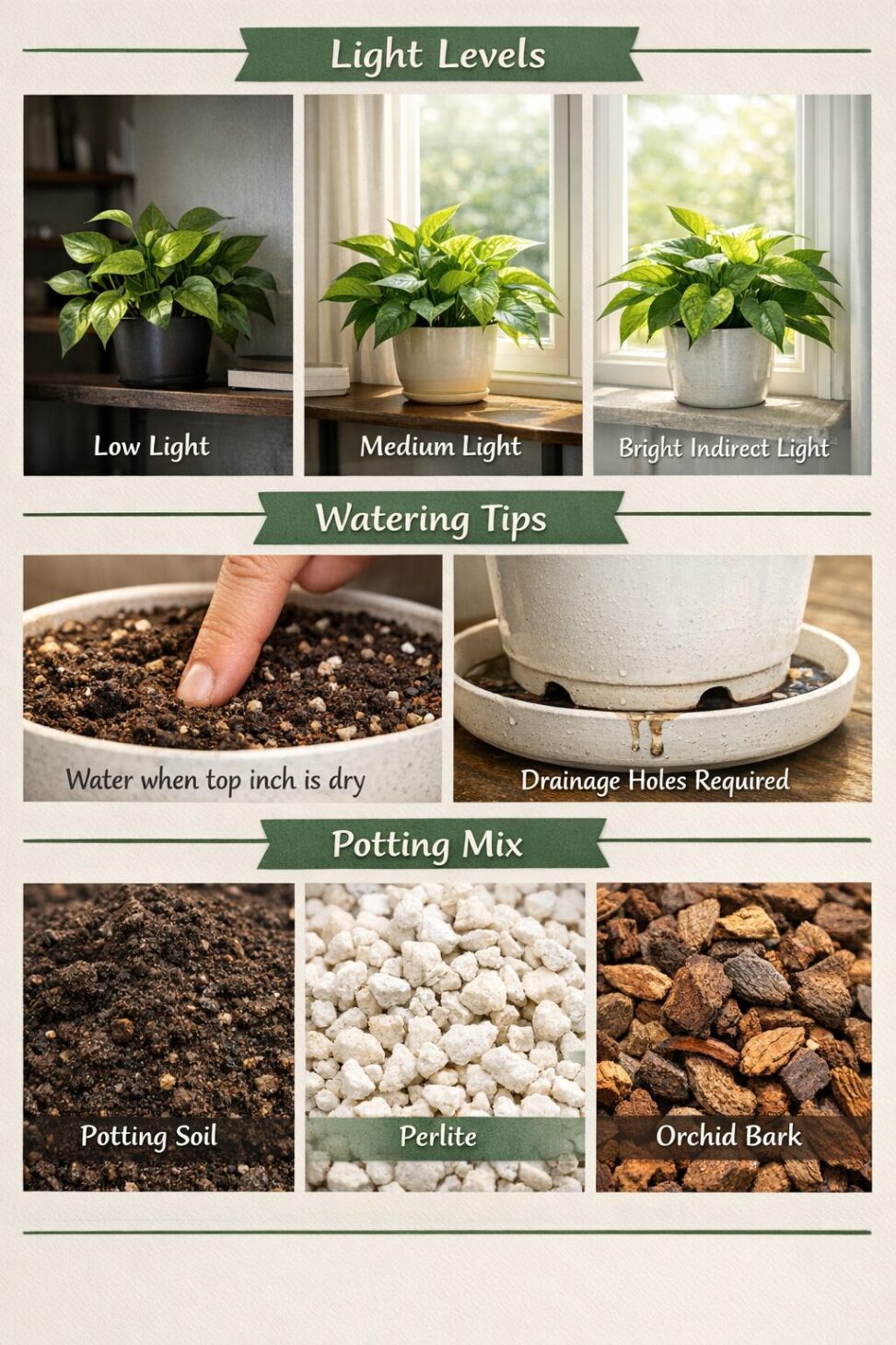
Pothos grows in lower light, but pothos looks fuller and healthier in bright indirect light. More light usually means better variegation, larger leaves, and shorter gaps between leaves.
Quick light rules
- Best spot: near an east window, or a few feet back from a south or west window
- Okay spot: medium indirect light in a bright room
- Not ideal: dark corners, unless you accept slower growth
- Avoid: harsh direct afternoon sun on leaves
Different types react a bit differently:
- Golden pothos: forgiving, does well in medium light
- Marble Queen or N’Joy: need more light to keep variegation
- Jade pothos: handles lower light better than heavily variegated types
Decision rule: choose brighter indirect light if your pothos is getting leggy, losing variegation, or growing tiny leaves.
Quick example: If vines stretch out with long spaces between leaves, move the plant closer to a window before changing anything else.
How often should you water pothos?
Pothos should be watered when the top 1 to 2 inches of soil feel dry, not by the calendar. In warmer, brighter rooms, pothos dries faster. In cooler, dimmer rooms, pothos stays wet longer.
A simple watering method
- Stick your finger into the soil.
- If the top layer feels dry, water thoroughly.
- Let extra water drain out fully.
- Empty the saucer so roots do not sit in water.
Signs your pothos needs less water
- Yellow leaves
- Soft stems
- Sour-smelling soil
- Fungus gnats
- Soil staying wet for many days
Signs your pothos may need more water
- Limp leaves
- Crispy brown edges
- Soil pulling away from the pot
- Vines looking dull and flat
Common mistake: giving small sips of water. Pothos does better with a full soak followed by a dry-down period.
What soil and pots work best for pothos?
Pothos grows best in a loose potting mix that drains well and still holds some moisture. A standard indoor potting soil improved with airy ingredients is usually enough.
Good pothos soil mix
You can use:
- 2 parts houseplant potting mix
- 1 part perlite
- 1 part orchid bark, coco chips, or coarse pumice
That mix helps roots get air and lowers the risk of rot.
Best pot choices
- Pots with drainage holes are the safest choice
- Plastic pots hold moisture longer
- Terracotta dries faster
- Cachepots are fine if the nursery pot can drain separately
| Option | Best for | Watch out for |
|---|---|---|
| Plastic pot | Dry homes, forgetful waterers | Soil may stay wet longer |
| Terracotta pot | Heavy waterers, humid rooms | Dries out faster |
| Decorative pot without drainage | Looks nice | High rot risk unless used as outer cover |
Choose terracotta if: you tend to overwater.
Choose plastic if: your home is dry and your pothos dries fast.
How do you make pothos fuller instead of long and sparse?
To make pothos fuller, prune the vines and give the plant more light. Pothos gets long and sparse when stems stretch for light or when old vines are never cut back.
How I prune for fullness
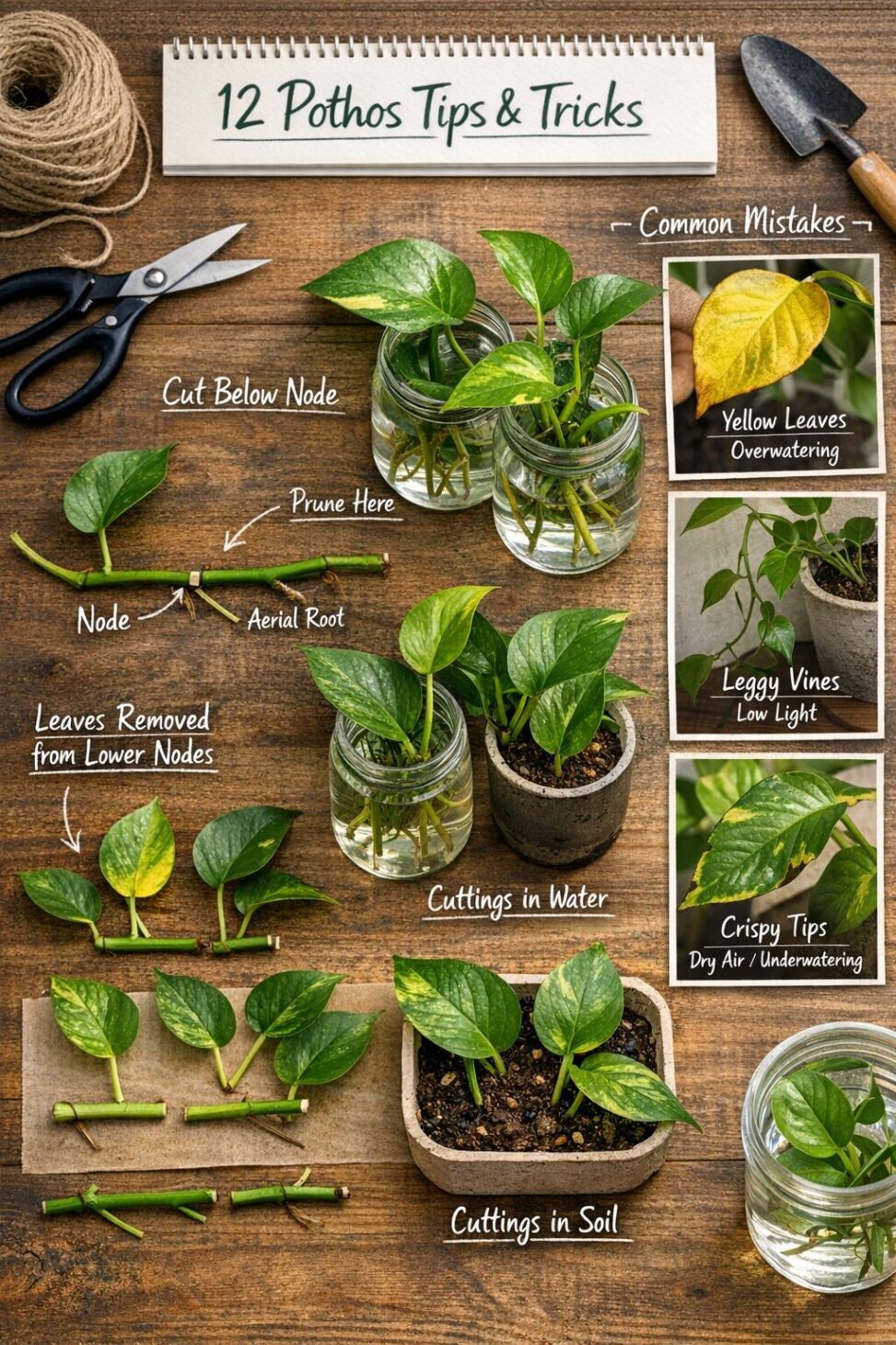
- Find a node where a leaf grows from the stem
- Cut just above a node on the main plant
- Save healthy cuttings for propagation
- Repeat on the longest vines first
Pruning encourages branching from lower points, which helps the pot look fuller.
Extra tricks for a bushier pot
- Plant rooted cuttings back into the same pot
- Rotate the pot every 1 to 2 weeks
- Keep the brightest side from facing only one direction
- Do not let one vine become much longer than the rest
Edge case: A very old pothos with bare vines may need a hard cutback plus new cuttings added to the pot.
How do you propagate pothos successfully?
Pothos propagates best from stem cuttings with at least one node. If the cutting has a healthy node and you keep it warm with steady moisture, rooting is usually easy.
Water propagation steps
- Cut below a node.
- Remove the leaf that would sit under water.
- Place the node in clean water.
- Change water every few days or when cloudy.
- Pot up after roots are a few inches long.
Soil propagation steps
- Cut below a node.
- Place the node into moist potting mix.
- Keep the mix lightly moist, not soaked.
- Give bright indirect light.
- Tug gently after a few weeks to check for rooting.
Water vs. soil propagation
- Water: easier to monitor roots
- Soil: fewer transplant issues later
Choose water if: you want a simple visual method.
Choose soil if: you want to avoid moving delicate water roots into potting mix.
Should you fertilize pothos, and how often?
Pothos benefits from light feeding during active growth, but pothos does not need heavy fertilizer. Too much fertilizer can burn roots and create weak, salty soil.
A practical feeding approach
- Feed in spring and summer
- Use a balanced houseplant fertilizer at reduced strength
- Skip feeding in winter if growth slows
- Flush the pot with plain water now and then to reduce buildup
Common mistake: fertilizing a stressed pothos that actually needs better light or better watering.
Quick example: If leaves are small because the plant sits in a dark corner, fertilizer won’t fix the core problem.
What are the most common pothos problems and fixes?
Most pothos problems come from too much water, too little light, or poor drainage. Start with the roots, the soil, and the light level before trying sprays or supplements.
Fast troubleshooting guide
- Yellow leaves: often overwatering, sometimes normal leaf aging
- Brown crispy edges: underwatering, dry air, or salt buildup
- Black mushy stems: root rot risk, act fast
- Leggy vines: not enough light
- Drooping plant with wet soil: root trouble
- Sticky leaves or specks: check for pests like mealybugs or spider mites
What to do first
- Remove badly damaged leaves
- Check whether the soil is soggy or bone dry
- Inspect roots if symptoms are severe
- Move to better light if growth is weak
- Isolate the plant if pests are present
Decision rule: if pothos is yellowing and the soil is wet, hold water and inspect roots before doing anything else.
When should you repot pothos?
Repot pothos when roots are crowded, watering becomes unusually frequent, or the soil has broken down. Most pothos does not need frequent repotting, so check the plant instead of following a fixed yearly rule.
Signs it’s time to repot
- Roots circling the bottom of the pot
- Water rushing straight through
- Growth slowing in the growing season
- The pot drying out much faster than before
- Soil compacting into a dense mass
Repotting tips
- Move up one pot size, not several
- Repot in spring or early summer if possible
- Water lightly after repotting
- Keep the plant out of strong direct sun while it settles
Common mistake: putting pothos into a much larger pot. Extra soil can stay wet too long and stress roots.
Are there any pothos care tricks for pets, décor, and low-light homes?
Yes, but the main trick is matching pothos to your space honestly. Pothos is flexible, but pothos is not the right plant for every room or every household.
Important edge cases
- Pets and kids: pothos is considered toxic if chewed, so place it out of reach
- Very dark rooms: pothos may survive, but growth will be slow and sparse
- Hanging baskets: dry faster than tabletop pots in some homes
- Moss poles or trellises: can encourage larger leaves over time
Choose based on your setup
- Choose a hanging pot if you want trailing vines.
- Choose a pole or trellis if you want upward growth and larger foliage.
- Choose a variegated variety only if you have stronger indoor light.
FAQ
Is pothos easy for beginners?
Yes. Pothos is one of the easiest houseplants because it tolerates missed watering better than many tropical plants.
Can pothos live in low light?
Yes, pothos can live in low light, but pothos usually grows slower and gets leggier there.
How do I know if I overwatered pothos?
Yellow leaves, soggy soil, and soft stems are the clearest signs of overwatered pothos.
Where do I cut pothos to propagate?
Cut just below a node because the node is where new roots will form.
Why is my pothos not bushy?
A pothos usually stays sparse because of low light, lack of pruning, or both.
Should I mist pothos?
Misting is optional and usually not necessary. Better watering and airflow matter more than misting.
Can pothos grow in water long term?
Yes, pothos can grow in water long term, but pothos in water needs regular water changes and occasional nutrients.
How often should I rotate pothos?
Rotate pothos every week or two if one side leans toward the light.
Conclusion
The most useful 12 pothos tips and tricks are not fancy. Give pothos bright indirect light, let the soil dry a bit between waterings, prune often, and use healthy nodes for propagation. Those four habits solve most pothos problems before they become serious.
If you want to improve your plant this week, do these three things first:
- Move your pothos to better indirect light.
- Check soil moisture before your next watering.
- Trim one or two long vines and root the cuttings.
That’s enough to make a real difference. Start small, watch how your pothos responds, and adjust from there.

Samuel Michael
I've have been involved in Backyard Farm for over 15 years, especially livestock and market gardening. I blog at my free Time and ive My most helpful thoughts on this blog.

