

Key Takeaways
- Simple household items can be transformed into engaging puzzle toys that challenge your dog’s mind
- DIY puzzle toys cost under $5 each and take 10-15 minutes to make
- Mental stimulation through puzzle toys reduces destructive behavior and boredom
- Safety first – always supervise your dog and inspect homemade toys for wear
- Start easy then gradually increase difficulty as your dog masters each puzzle
Quick Answer
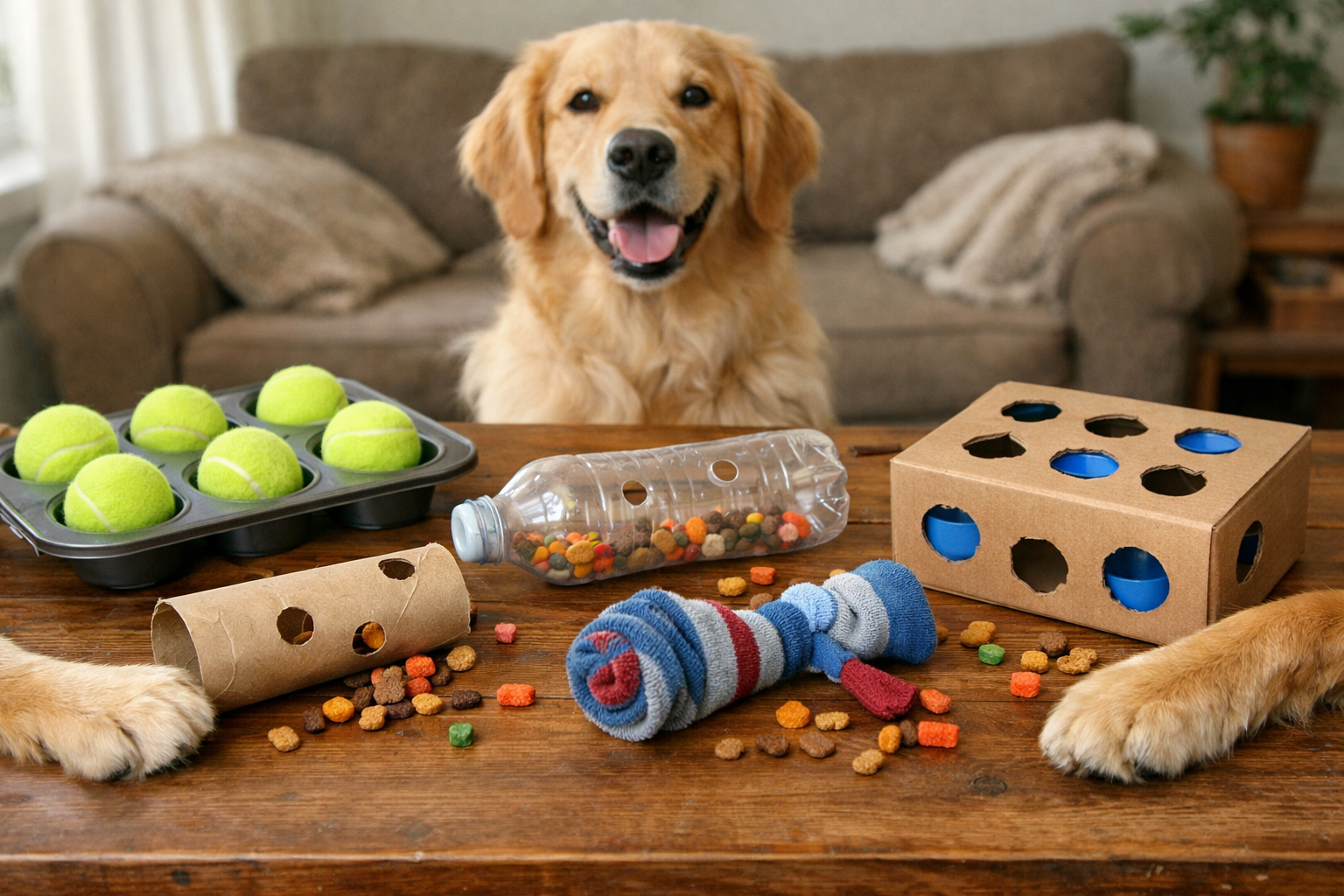
You can create effective dog puzzle toys using common household items like muffin tins, toilet paper rolls, plastic bottles, and cardboard boxes. These 10 homemade dog puzzle toys for fun easy engagement provide mental stimulation, slow down fast eaters, and keep dogs entertained for 15-30 minutes per session. Most projects require no special skills and cost less than $5 to make.
Why Make Your Own Dog Puzzle Toys?
Store-bought puzzle toys can cost $20-50 each, while homemade versions deliver the same mental benefits for under $5. Your dog’s brain needs exercise just like their body, and puzzle toys provide that crucial mental workout.
I’ve been making DIY dog toys for my own pets for years, and I’ve learned that dogs often prefer simple, food-motivated puzzles over expensive gadgets. The key is understanding what makes a good puzzle: it should be challenging but not frustrating, safe to use unsupervised, and easy to clean.
Mental stimulation through puzzle play can reduce anxiety, prevent destructive chewing, and tire out high-energy dogs more effectively than a long walk. When dogs have to work for their food or treats, it satisfies their natural foraging instincts and makes mealtime more engaging.
What Makes an Effective Homemade Dog Puzzle Toy?
An effective DIY puzzle toy challenges your dog’s problem-solving skills while remaining safe and appropriately difficult for their experience level. The best homemade puzzles combine food motivation with physical manipulation tasks.
Key elements of successful homemade puzzle toys include:
- Food motivation – treats or kibble hidden inside motivate engagement
- Multiple steps – dogs must perform 2-3 actions to access rewards
- Appropriate difficulty – challenging but not impossible for your dog’s skill level
- Safe materials – no small parts that could be swallowed or sharp edges
- Easy cleaning – washable or disposable components
Choose materials based on your dog’s size and chewing habits. Heavy chewers need sturdier options like thick cardboard or hard plastic, while gentle dogs can safely use toilet paper rolls and fabric items.
Common mistake: Making puzzles too difficult initially. Start with easy wins to build your dog’s confidence, then gradually increase complexity.
10 Simple DIY Dog Puzzle Toys You Can Make Today
1. Muffin Tin Treat Hunt
Hide treats in muffin tin cups and cover each cup with a tennis ball. Your dog must remove the balls to access the hidden rewards.
Materials needed:
- Standard 12-cup muffin tin
- 12 tennis balls (slightly larger than cup openings)
- Small treats or kibble
Instructions:
- Place 2-3 treats in each muffin cup
- Cover each cup with a tennis ball
- Show your dog the setup and let them figure it out
- Start with only 3-4 cups covered for beginners
This puzzle works well for dogs who like to carry things in their mouths. The tennis balls provide a satisfying texture, and the muffin tin creates defined spaces that make the puzzle visually clear.
2. Toilet Paper Roll Treat Dispenser
Flatten toilet paper rolls, fill with treats, and fold the ends to create a crinkly puzzle package. Dogs must manipulate and potentially destroy the roll to access treats.
Materials needed:
- Empty toilet paper rolls
- Small treats
- Optional: tape for extra challenge
Instructions:
- Flatten the toilet paper roll completely
- Fold one end over and crease firmly
- Add 5-6 small treats through the open end
- Fold and crease the other end
- For added difficulty, tape the ends shut
Safety note: Only use this with dogs who don’t typically eat cardboard. Remove any large pieces they might try to swallow.
3. Plastic Bottle Puzzle Feeder
Cut holes in a clean plastic bottle and fill with kibble to create a rolling treat dispenser. As dogs push and roll the bottle, kibble falls out through the holes.
Materials needed:
- Large plastic bottle (20 oz or bigger)
- Drill or sharp knife
- Kibble or small treats
- Sandpaper (optional)
Instructions:
- Remove all labels and wash the bottle thoroughly
- Cut 3-4 holes slightly larger than your dog’s kibble
- Sand rough edges smooth
- Fill 1/3 full with kibble
- Replace cap securely
Choose this if: Your dog enjoys pushing toys around and you want to slow down their eating pace.
4. Sock and Ball Puzzle
Place a tennis ball inside a clean sock and tie the end shut. Dogs must work to extract the ball, providing both mental and physical engagement.
Materials needed:
- Clean tube sock (adult size)
- Tennis ball
- Optional: treats
Instructions:
- Place tennis ball deep in the toe of the sock
- Add a few treats around the ball (optional)
- Tie the sock end in a firm knot
- Leave some sock length beyond the knot for gripping
This puzzle appeals to dogs’ natural desire to “kill” prey by shaking and pulling. The fabric provides interesting texture and the ball creates an enticing shape.
5. Cardboard Box Treasure Hunt
Create a multi-level puzzle by placing smaller boxes with treats inside a larger box, adding paper padding for extra challenge. Dogs must dig and explore to find all the hidden rewards.
Materials needed:
- One large cardboard box
- 3-4 smaller boxes or containers
- Shredded paper or newspaper
- Various treats
Instructions:
- Place treats in smaller boxes, leaving them open
- Put small boxes inside the large box
- Fill remaining space with shredded paper
- Let your dog excavate and explore
Edge case: Some dogs become overwhelmed by too many options. Start with just one small box inside the large one, then add complexity.
6. Frozen Kong Alternative
Layer treats and wet food in a plastic container, then freeze for a long-lasting puzzle. This homemade version costs less than commercial frozen puzzle toys.
Materials needed:
- Small plastic container with lid
- Wet dog food or plain yogurt
- Small treats or kibble
- Peanut butter (xylitol-free)
Instructions:
- Spread peanut butter on the container bottom
- Add a layer of kibble
- Fill halfway with wet food or yogurt
- Add more treats
- Freeze for 2-3 hours
Pro tip: Make several at once and rotate them to always have a frozen puzzle ready.
7. Towel Wrap Puzzle
Roll treats inside an old towel, creating pockets and folds that dogs must navigate to access rewards. This puzzle satisfies dogs who love to dig and burrow.
Materials needed:
- Old towel or blanket
- Various sized treats
- Optional: rope or elastic to secure
Instructions:
- Lay towel flat and place treats in a line down the center
- Fold one side over the treats
- Place more treats on the fold
- Continue rolling, adding treats between layers
- Secure with rope if needed for extra challenge
Choose this if: Your dog enjoys digging in blankets or has a gentle mouth that won’t destroy fabric.
8. Egg Carton Treat Puzzle
Place treats in egg carton compartments and close the lid. Dogs must figure out how to open the carton and access individual compartments.
Materials needed:
- Clean cardboard egg carton
- Small treats
- Optional: tape for added difficulty
Instructions:
- Place 1-2 treats in each egg compartment
- Close the carton lid
- For beginners, leave the lid slightly open
- Advanced version: tape the lid shut
Safety consideration: Remove immediately once your dog starts eating large pieces of cardboard.
9. PVC Pipe Treat Roller
Drill holes in a PVC pipe, cap the ends, and fill with treats to create a durable rolling puzzle. This version works well for heavy chewers who destroy softer materials.
Materials needed:
- 4-inch diameter PVC pipe, 8 inches long
- Two end caps
- Drill with various bit sizes
- Sandpaper
- PVC primer and cement
Instructions:
- Sand the pipe smooth
- Drill holes slightly larger than your dog’s treats
- Cement one end cap permanently
- Fill with treats and attach removable end cap
- Sand all rough edges
This works best for: Large dogs or heavy chewers who need indestructible puzzle options.
10. Snuffle Mat Alternative
Tie fleece strips through a rubber doormat to create a foraging surface. Dogs must use their noses to find treats hidden in the fabric strips.
Materials needed:
- Rubber doormat with holes
- Fleece fabric cut into 6-inch strips
- Scissors
- Small treats
Instructions:
- Cut fleece into strips about 1 inch wide, 6 inches long
- Tie each strip through a hole in the mat
- Continue until the mat is covered with fleece
- Hide treats deep in the fleece strips
- Let your dog sniff and forage
This puzzle works well for: Dogs who love to use their noses and prefer gentler, foraging-style challenges over manipulation puzzles.
Safety Guidelines for Homemade Dog Puzzle Toys
Always supervise your dog with homemade puzzle toys and inspect them before each use for damage or loose parts. While DIY toys are cost-effective and engaging, they require more vigilance than commercial products.
Essential safety practices include:
- Size appropriately – pieces should be too large to swallow whole
- Check for wear – replace toys when they show significant damage
- Know your dog’s habits – heavy chewers need different materials than gentle players
- Remove when unsupervised – homemade toys aren’t designed for solo play
- Clean regularly – wash or replace toys that contact food
Red flags to watch for: If your dog tries to eat large pieces of material, becomes possessive over the toy, or shows frustration rather than engagement, discontinue use immediately.
Common mistake: Leaving puzzle toys out all day. Rotate toys every few days to maintain novelty and interest.
How to Introduce New Puzzle Toys Successfully
Start with the easiest version of each puzzle and gradually increase difficulty as your dog masters the basic concept. Most dogs need 2-3 sessions to understand a new puzzle type.
Introduction steps:
- Show the reward – let your dog see you hiding treats
- Start easy – make the first attempt almost impossible to fail
- Celebrate success – praise enthusiastically when they solve it
- Increase difficulty – add steps or complexity gradually
- Rotate regularly – switch between different puzzle types
If your dog loses interest quickly: The puzzle might be too difficult, the treats might not be motivating enough, or they might be full. Try higher-value treats or attempt puzzle time before meals when they’re hungry.
For puzzle-experienced dogs: Combine multiple puzzles or create obstacle courses where they must solve several challenges in sequence.
Troubleshooting Common Puzzle Toy Problems
Dogs who give up quickly usually face puzzles that are too difficult for their current skill level. Success builds confidence, while repeated failure creates frustration and avoidance.
Problem: Dog ignores the puzzle entirely
- Solution: Use higher-value treats or try when the dog is hungrier
- Alternative approach: Show them how it works by solving part of it yourself
Problem: Dog destroys the puzzle immediately
- Solution: Switch to more durable materials or supervise more closely
- Prevention: Start with easier puzzles that provide quicker rewards
Problem: Dog becomes possessive or aggressive
- Solution: Practice “drop it” commands with regular toys first
- Safety note: Remove puzzle toys if resource guarding develops
Problem: Multiple dogs competing
- Solution: Separate dogs during puzzle time or give each their own puzzle
- Management tip: Use different rooms to prevent competition stress
Frequently Asked Questions
How long should puzzle toy sessions last?
Most dogs stay engaged for 10-20 minutes per puzzle session. Stop while they’re still interested rather than waiting for them to lose focus completely.
Can I leave homemade puzzle toys out when I’m not home?
No, homemade puzzle toys require supervision since they’re not tested for unsupervised use like commercial products. Remove them when you leave.
What treats work best in puzzle toys?
Small, high-value treats like training treats, small pieces of cheese, or kibble work well. Avoid anything that could spoil quickly in warm weather.
How often should I rotate puzzle toys?
Rotate toys every 2-3 days to maintain novelty. Store unused puzzles out of sight so they feel “new” when reintroduced.
Are there puzzle toys suitable for puppies?
Yes, but use softer materials and larger pieces. The towel wrap and muffin tin puzzles work well for puppies with appropriate supervision.
What if my dog has food allergies?
Use their regular kibble or approved treats in the puzzles. The mental stimulation comes from the challenge, not special treats.
How do I clean homemade puzzle toys?
Wash hard materials with soap and water. Replace disposable items like cardboard regularly. Fabric items can go in the washing machine.
Can senior dogs use puzzle toys?
Absolutely. Choose easier puzzles that don’t require extensive physical manipulation, like the snuffle mat or simple treat-hiding games.
What’s the best puzzle for dogs who eat too fast?
The plastic bottle feeder or frozen container puzzles work well to slow down eating while providing mental stimulation.
How do I know if a puzzle is too difficult?
If your dog tries for 2-3 minutes then walks away, or shows signs of frustration like whining or pawing frantically, simplify the puzzle.
Key Takeaways
- Start simple and gradually increase puzzle difficulty as your dog builds confidence and skills
- Safety first – always supervise homemade puzzle toys and inspect them regularly for wear
- Cost-effective engagement – most DIY puzzles cost under $5 and provide 15-30 minutes of mental stimulation
- Rotate regularly – switch between different puzzle types every 2-3 days to maintain interest
- Match the puzzle to your dog – consider size, chewing habits, and experience level when choosing projects
- High-value treats increase engagement and motivation to solve challenging puzzles
- Mental exercise can tire dogs as effectively as physical activity, making puzzles perfect for rainy days
- Build success by making initial attempts easy, then adding complexity once your dog understands the concept
- Clean and maintain homemade toys regularly to ensure safety and hygiene
- Remove when unsupervised since DIY toys aren’t designed for solo play like commercial products
Conclusion
Creating your own dog puzzle toys transforms ordinary household items into engaging brain games that cost a fraction of store-bought alternatives. These 10 homemade dog puzzle toys for fun easy engagement prove that mental stimulation doesn’t require expensive gadgets – just creativity and understanding of what motivates your dog.
The beauty of DIY puzzle toys lies in their customization potential. You can adjust difficulty levels, use your dog’s favorite treats, and create new challenges as their skills develop. Whether you’re dealing with a bored puppy, a senior dog who needs gentle mental exercise, or a high-energy breed that needs extra stimulation, these homemade solutions provide safe, effective engagement.
Your next steps: Choose 2-3 puzzles that match your dog’s current skill level and the materials you have available. Start with the muffin tin or towel wrap puzzles since they’re forgiving for beginners. Make puzzle time a regular part of your dog’s routine, ideally before meals when they’re most food-motivated.
Remember that consistency matters more than complexity. A simple toilet paper roll puzzle used regularly provides more benefit than an elaborate creation used once. Focus on building your dog’s confidence and problem-solving skills gradually, and you’ll both enjoy the mental workout these engaging toys provide.

Samuel Michael
I've have been involved in Backyard Farm for over 15 years, especially livestock and market gardening. I blog at my free Time and ive My most helpful thoughts on this blog.